Department of Psychology, Sapienza University of Rome, Rome, Italy.
IRCCS Fondazione Santa Lucia, Rome, Italy.
Mol Autism. 2020 Oct 21;11(1):81. doi: 10.1186/s13229-020-00371-0.
Face individual identity recognition skill is heritable and independent of intellectual ability. Difficulties in face individual identity recognition are present in autistic individuals and their family members and are possibly linked to oxytocin polymorphisms in families with an autistic child. While it is reported that developmental prosopagnosia (i.e., impaired face identity recognition) occurs in 2-3% of the general population, no prosopagnosia prevalence estimate is available for autism. Furthermore, an autism within-group approach has not been reported towards characterizing impaired face memory and to investigate its possible links to social and communication difficulties.
The present study estimated the prevalence of prosopagnosia in 80 autistic adults with no intellectual disability, investigated its cognitive characteristics and links to autism symptoms' severity, personality traits, and mental state understanding from the eye region by using standardized tests and questionnaires.
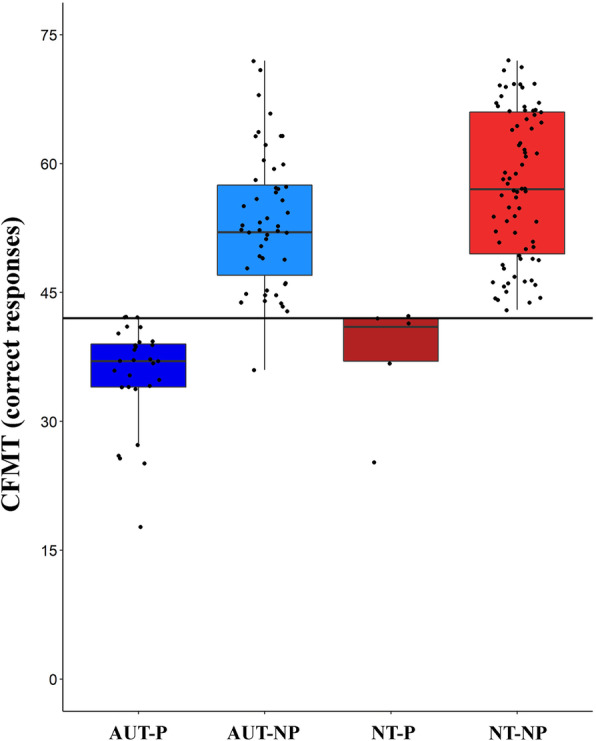
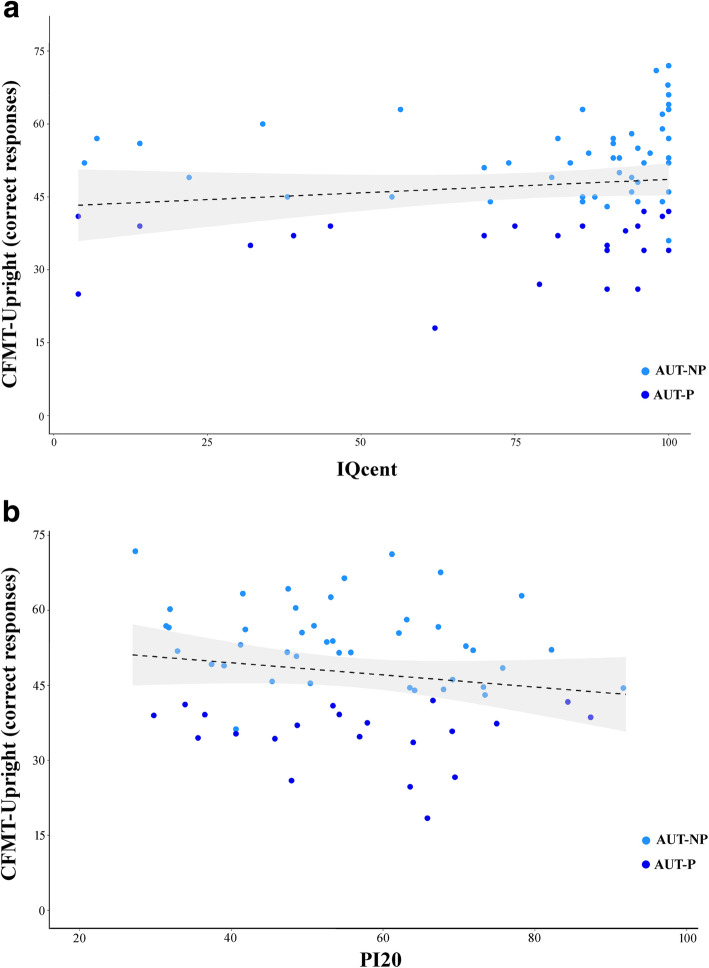
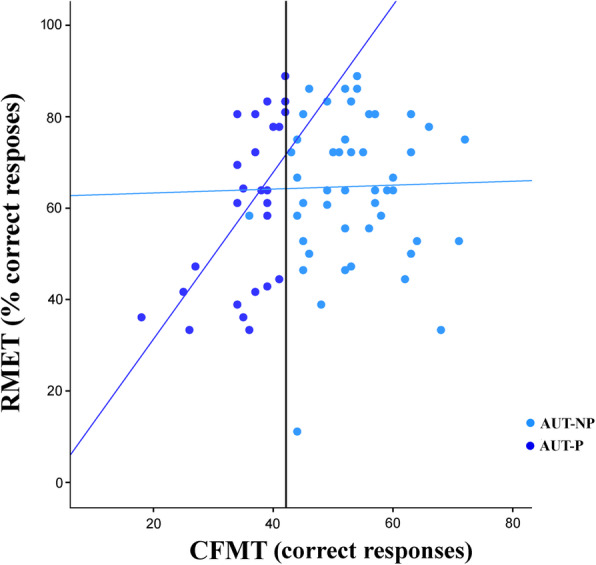
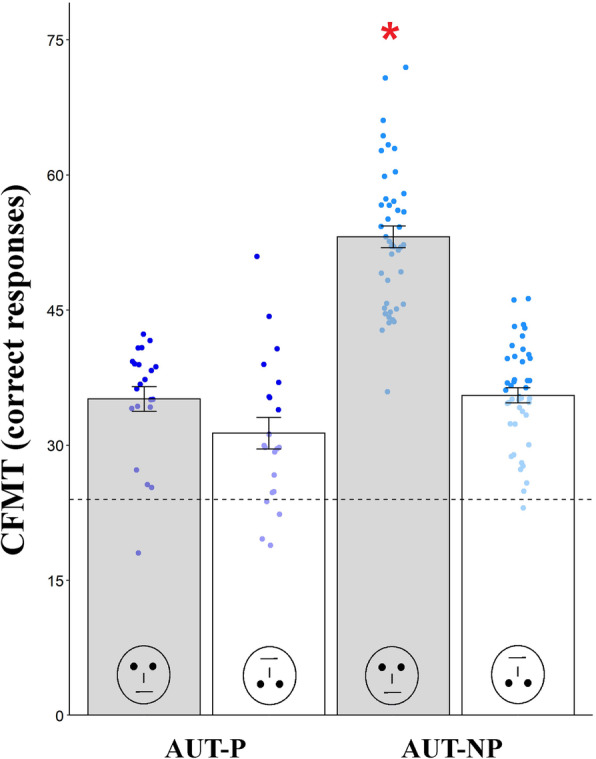
More than one third of autistic participants showed prosopagnosia. Their face memory skill was not associated with their symptom's severity, empathy, alexithymia, or general intelligence. Face identity recognition was instead linked to mental state recognition from the eye region only in autistic individuals who had prosopagnosia, and this relationship did not depend on participants' basic face perception skills. Importantly, we found that autistic participants were not aware of their face memory skills.
We did not test an epidemiological sample, and additional work is necessary to establish whether these results generalize to the entire autism spectrum.
Impaired face individual identity recognition meets the criteria to be a potential endophenotype in autism. In the future, testing for face memory could be used to stratify autistic individuals into genetically meaningful subgroups and be translatable to autism animal models.
面部个体身份识别能力是可遗传的,且独立于智力。在自闭症个体及其家庭成员中存在面部个体身份识别困难,这可能与自闭症儿童家庭中的催产素多态性有关。虽然据报道,发育性面孔失认症(即面部身份识别受损)在普通人群中发生率为 2-3%,但自闭症中并无面孔失认症的流行率估计。此外,尚无自闭症内群体方法用于描述受损的面部记忆,并调查其与社交和沟通困难的可能联系。
本研究在 80 名无智力障碍的自闭症成人中估计了面孔失认症的患病率,通过使用标准化测试和问卷,从眼部区域研究了其认知特征及其与自闭症症状严重程度、人格特质和心理状态理解的可能联系。
超过三分之一的自闭症参与者表现出面孔失认症。他们的面部记忆技能与症状严重程度、共情、述情障碍或一般智力无关。相反,只有在患有面孔失认症的自闭症个体中,面孔身份识别与眼部区域的心理状态识别有关,并且这种关系不依赖于参与者的基本面孔感知技能。重要的是,我们发现自闭症参与者没有意识到他们的面部记忆技能。
我们没有测试一个流行病学样本,需要进一步的工作来确定这些结果是否适用于整个自闭症谱系。
受损的面部个体身份识别符合自闭症潜在表型的标准。未来,测试面部记忆可以用于将自闭症个体分为具有遗传意义的亚组,并可转化为自闭症动物模型。