Lasjerdi Zohreh, Ghanbarian Hossein, Mohammadi Yeganeh Samira, Seyyed Tabaei Seyyed Javad, Mohebali Mehdi, Taghipour Niloofar, Koochaki Ameneh, Hamidi Faezeh, Gholamrezaei Mostafa, Haghighi Ali
Department of Medical Parasitology and Mycology, School of Medicine, Student Research Committee, Shahid Beheshti University of Medical Sciences, Tehran, Iran.
Department of Medical Parasitology and Mycology, School of Medicine, Shahid Beheshti University of Medical Sciences, Tehran, Iran.
Iran J Parasitol. 2020 Jul-Sep;15(3):332-340. doi: 10.18502/ijpa.v15i3.4197.
Cutaneous Leishmaniasis (CL) is an emerging uncontrollable and neglected infectious disease worldwide including Iran. The aim of this study was to investigate the expression profile of apoptosis-related miRNA and its target gene in macrophages.
This study was carried out in the Department of Medical Parasitology and Mycology, School of Medicine, Shahid Beheshti University of Medical Sciences, Tehran, Iran from January 2016 to November 2018. Applying literature reviews, bioinformatics software, and microarray expression analysis, we selected miRNA-24-3p interfering in apoptosis pathway. The expression profile of this miRNA and target gene were investigated in (MRHO/IR/75/ER)-infected primary and RAW 264.7 macrophages (IBRC-C10072) compared with non-infected macrophages (control group) using quantitative Real-time PCR.
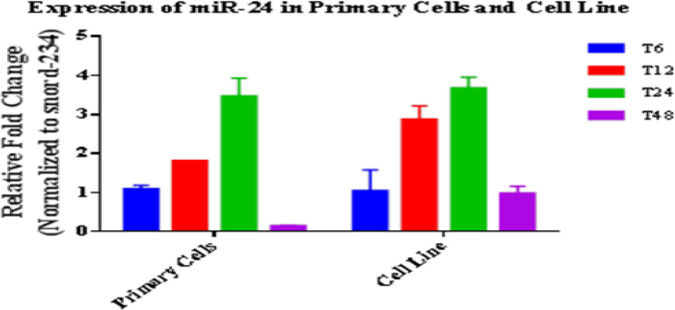
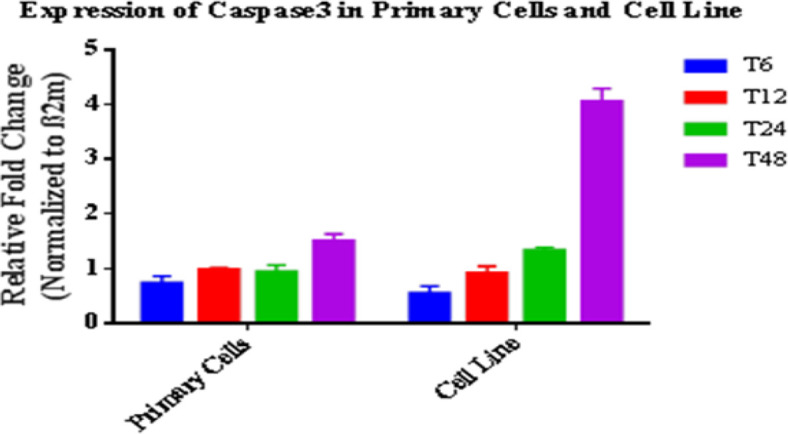
Results of bioinformatics analysis showed that miR-24-3p as anti-apoptotic miRNA inhibits pro-apoptotic genes (Caspases 3 and 7). Microarray expression data presented in Gene Expression Omnibus (GEO) revealed a significant difference in the expression level of selected miRNA and its target gene between two groups. QRT-PCR results showed that the expression of miR-24-3p was upregulated in infectioned macrophages that approved the results of bioinformatics and microarray analysis.
Parasite can alter miRNAs expression pattern in the host cells to establish infection and its survival. Alteration in miRNAs levels likely plays an important role in regulating macrophage functions following infection. These results could highlight current understanding and new insights concerning the gene expression in macrophages during leishmaniasis and will help to development of novel strategies for control and treatment of CL.
皮肤利什曼病(CL)是一种在包括伊朗在内的全球范围内新出现的、难以控制且被忽视的传染病。本研究的目的是调查凋亡相关微小RNA(miRNA)及其靶基因在巨噬细胞中的表达谱。
本研究于2016年1月至2018年11月在伊朗德黑兰沙希德·贝赫什提医科大学医学院医学寄生虫学和真菌学系开展。通过文献综述、生物信息学软件和微阵列表达分析,我们选择了干扰凋亡途径的miRNA-24-3p。使用定量实时聚合酶链反应(qRT-PCR),将感染了(MRHO/IR/75/ER)的原代巨噬细胞和RAW 264.7巨噬细胞(IBRC-C10072)与未感染的巨噬细胞(对照组)进行比较,研究该miRNA及其靶基因的表达谱。
生物信息学分析结果显示,作为抗凋亡miRNA的miR-24-3p抑制促凋亡基因(半胱天冬酶3和7)。基因表达综合数据库(GEO)中呈现的微阵列表达数据显示,两组之间所选miRNA及其靶基因的表达水平存在显著差异。qRT-PCR结果表明,感染巨噬细胞中miR-24-3p的表达上调,这证实了生物信息学和微阵列分析的结果。
寄生虫可改变宿主细胞中miRNA的表达模式以建立感染并存活。miRNA水平的改变可能在利什曼原虫感染后调节巨噬细胞功能方面发挥重要作用。这些结果可能会突出当前对利什曼病期间巨噬细胞基因表达的理解和新见解,并将有助于开发控制和治疗皮肤利什曼病的新策略。