Respiratory Medicine Department, University of Thessaly, School of Medicine, Larissa, Greece.
Louvain University Center for Sleep and Wake Disorders, Leuven, Belgium.
Can Respir J. 2020 Oct 5;2020:1283590. doi: 10.1155/2020/1283590. eCollection 2020.
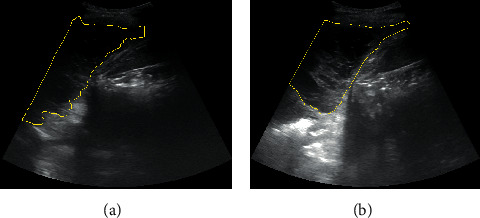
Thoracic ultrasound is an essential tool in the daily clinical care of pleural effusions and especially parapneumonic pleural effusions (PPEs), in terms of diagnosis, management, and follow-up. Hypoechogenicity index (HI) is a quantitative marker of pleural fluid echogenicity. We aimed to examine associations of HI with pleural inflammation in patients with PPE.
All patients included underwent a thoracic ultrasound with HI determination at the first day of their admission for a PPE. Thoracentesis was performed in all patients. Demographics, laboratory measurements, and clinical data were collected prospectively and recorded in all subjects.
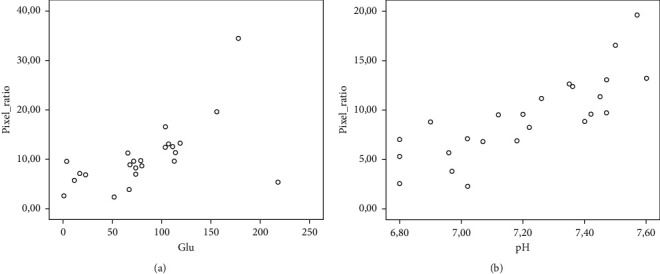
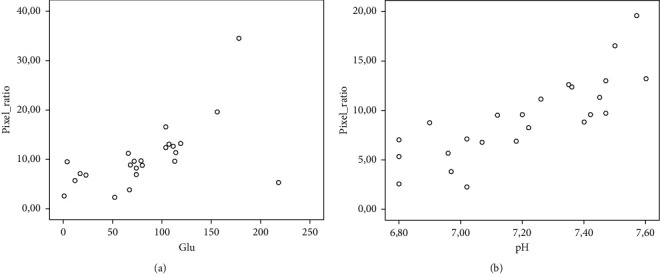
Twenty-four patients with PPE were included in the study. HI was statistically significantly correlated with intensity of inflammation as suggested by pleural fluid LDH ( < 0.001, = -0.831), pleural fluid glucose (=0.022, = 0.474), and pleural fluid pH ( < 0.001, = 0.811). HI was correlated with ADA levels (=0.005, = -0.552). We observed a statistically significant correlation of HI with pleural fluid total cell number ( < 0.001, = -0.657) and polymorphonuclears percentage (=0.02, = -0.590), as well as days to afebrile (=0.046, = -0.411), duration of chest tube placement ( < 0.001, = -0.806), and days of hospitalization (=0.013, = -0.501). . HI presents a fast, easily applicable, objective, and quantitative marker of pleural inflammation that reliably reflects the intensity of pleural inflammation and could potentially guide therapeutic management of PPE.
在胸腔积液的日常临床护理中,尤其是在治疗类肺炎性胸腔积液(PPE)时,超声检查是一种必不可少的工具,可用于诊断、治疗和随访。低回声指数(HI)是胸腔积液回声强度的定量标志物。我们旨在研究 HI 与 PPE 患者胸腔炎症之间的关联。
所有纳入的患者在 PPE 入院的第一天均进行了胸腔超声检查并测定 HI。所有患者均进行了胸腔穿刺术。所有患者均前瞻性地收集了人口统计学、实验室测量和临床数据,并记录在所有患者中。
本研究共纳入 24 例 PPE 患者。HI 与胸腔积液 LDH(<0.001,r=-0.831)、胸腔积液葡萄糖(=0.022,r=0.474)和胸腔积液 pH(<0.001,r=0.811)提示的炎症强度呈统计学显著相关。HI 与 ADA 水平(=0.005,r=-0.552)相关。我们观察到 HI 与胸腔积液总细胞数(<0.001,r=-0.657)和多形核细胞百分比(=0.02,r=-0.590)呈统计学显著相关,与退热天数(=0.046,r=-0.411)、胸腔引流管放置时间(<0.001,r=-0.806)和住院时间(=0.013,r=-0.501)也呈统计学显著相关。
HI 是一种快速、易于应用、客观和定量的胸腔炎症标志物,能够可靠地反映胸腔炎症的强度,可能有助于指导 PPE 的治疗管理。