Toxicology and Chemotherapy Unit, German Cancer Research Center (DKFZ), 69120, Heidelberg, Germany.
Department of Molecular Biology, Central Institute of Mental Health, 68159, Mannheim, Germany.
J Cancer Res Clin Oncol. 2021 Feb;147(2):361-371. doi: 10.1007/s00432-020-03428-y. Epub 2020 Oct 20.
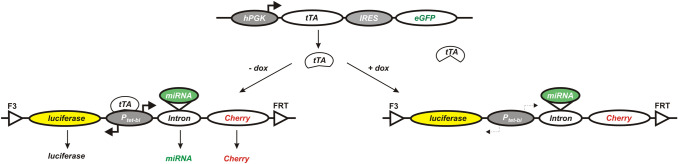
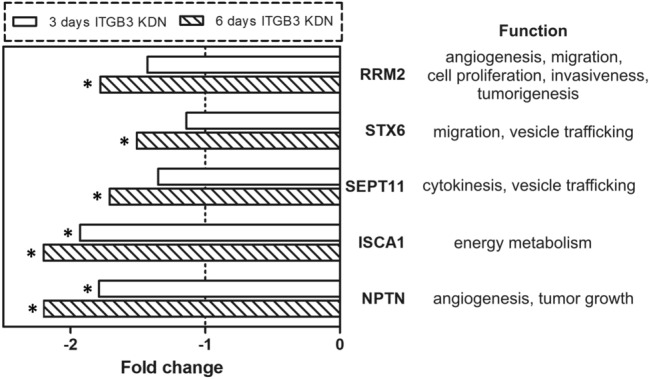
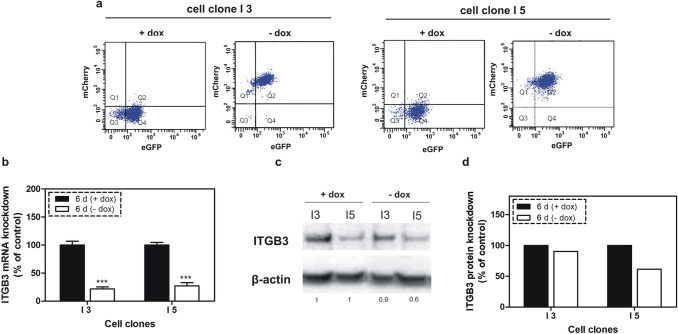
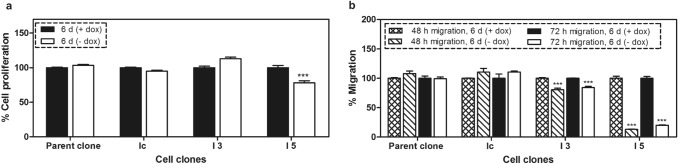
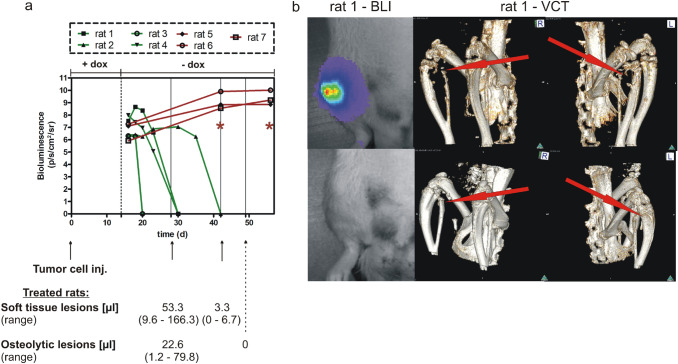
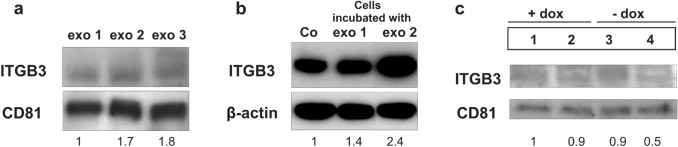
Integrin β3 (ITGB3) is probably related to skeletal metastasis, which is the most frequent complication in breast cancer progression. We aimed to define its role and suitability as target for anti-metastatic therapy. We generated two MDA-MB-231 cell clones with conditional miRNA-mediated ITGB3 knockdown for analyzing the resulting effects in vitro regarding mRNA expression, proliferation and migration, as well the impact on skeletal metastasis in a nude rat model. Furthermore, ITGB3 levels were analyzed in exosomes from plasma of rats with skeletal metastases, and from MDA-MB-231 cells incubated with these vesicles, as well as from exosomes secreted by cells with conditional ITGB3 knockdown. This inhibition of ITGB3 expression decreased cellular proliferation and more distinctly inhibited cellular migration. Reduction and even complete remissions of respective soft tissue and osteolytic lesions were detected after ITGB3 knockdown in vivo. Furthermore, ITGB3 levels were increased in exosomes isolated from plasma of rats harboring MDA-MB-231 lesions as well as in respective cells incubated with these vesicles in vitro. ITGB3 was distinctly decreased in exosomes from cells with ITGB3 knockdown. The observed in vitro and in vivo anti-ITGB3 effects can be explained by downregulation of specific genes, which have roles in angiogenesis (NPTN, RRM2), tumor growth (NPTN), energy metabolism (ISCA1), cytokinesis (SEPT11), migration (RRM2, STX6), cell proliferation, invasiveness, senescence, tumorigenesis (RRM2) and vesicle trafficking (SEPT11, STX6). ITGB3 has a role in breast cancer skeletal metastasis via gene expression modulation, as mirrored for ITGB3 in exosomes, thus it could serve as target for anti-metastatic therapy.
整合素 β3(ITGB3)可能与骨骼转移有关,这是乳腺癌进展中最常见的并发症。我们旨在确定其作为抗转移治疗靶标的作用和适用性。我们生成了两个 MDA-MB-231 细胞克隆,通过条件性 miRNA 介导的 ITGB3 敲低来分析体外分析中基因表达、增殖和迁移的影响,以及在裸鼠模型中对骨骼转移的影响。此外,还分析了来自有骨骼转移的大鼠血浆的外泌体中的 ITGB3 水平,以及来自用这些囊泡孵育的 MDA-MB-231 细胞的外泌体,以及来自条件性 ITGB3 敲低的细胞分泌的外泌体。这种 ITGB3 表达的抑制降低了细胞增殖,并更明显地抑制了细胞迁移。在体内敲低 ITGB3 后,检测到相应的软组织和溶骨性病变的减少甚至完全消退。此外,在携带 MDA-MB-231 病变的大鼠的血浆中分离的外泌体中以及在体外用这些囊泡孵育的相应细胞中,ITGB3 水平升高。在 ITGB3 敲低的细胞的外泌体中,ITGB3 明显降低。在体外和体内观察到的抗 ITGB3 作用可以通过下调特定基因来解释,这些基因在血管生成(NPTN、RRM2)、肿瘤生长(NPTN)、能量代谢(ISCA1)、细胞分裂(SEPT11)、迁移(RRM2、STX6)、细胞增殖、侵袭性、衰老、肿瘤发生(RRM2)和囊泡转运(SEPT11、STX6)中发挥作用。ITGB3 通过基因表达调节在乳腺癌骨骼转移中发挥作用,如外泌体中的 ITGB3 所示,因此它可以作为抗转移治疗的靶标。