Department of Cardiovascular Medicine, The First Affiliated Hospital, Xi'an Jiaotong University, Xi'an, Shaanxi, PR China; Center for Metabolic Disease Research, Lewis Katz School of Medicine, Temple University, Philadelphia, PA, USA.
Center for Metabolic Disease Research, Lewis Katz School of Medicine, Temple University, Philadelphia, PA, USA.
Redox Biol. 2020 Oct;37:101759. doi: 10.1016/j.redox.2020.101759. Epub 2020 Oct 10.
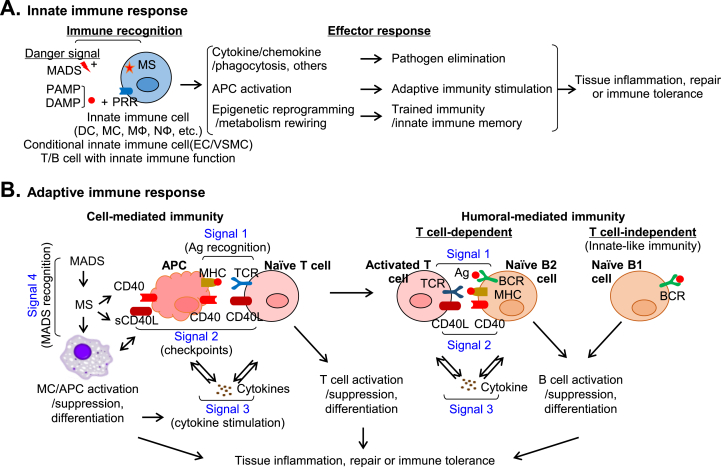
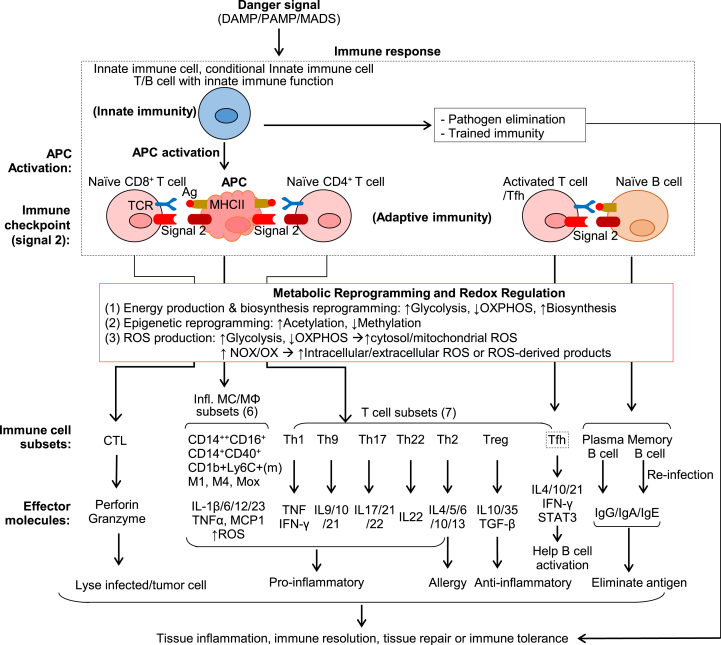
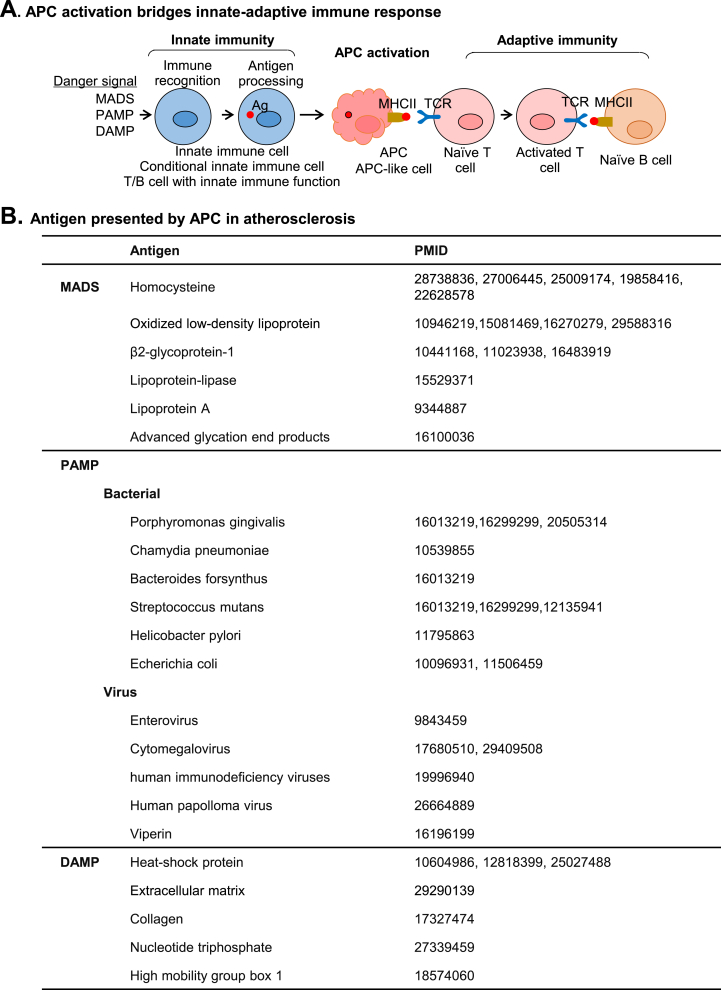
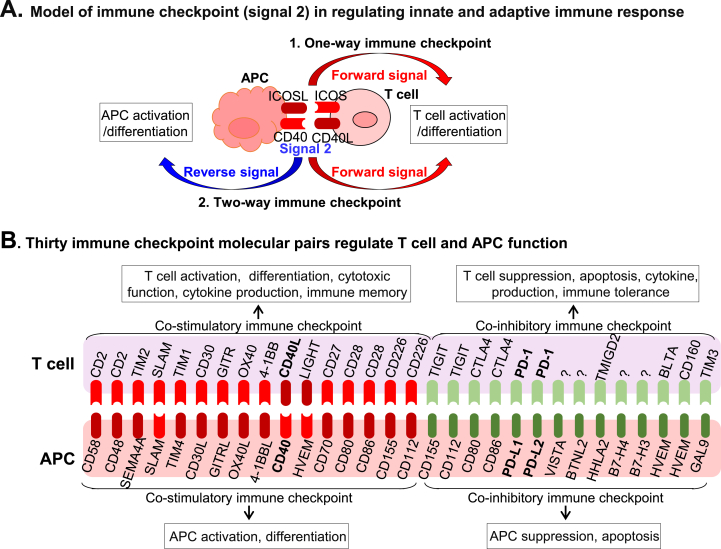
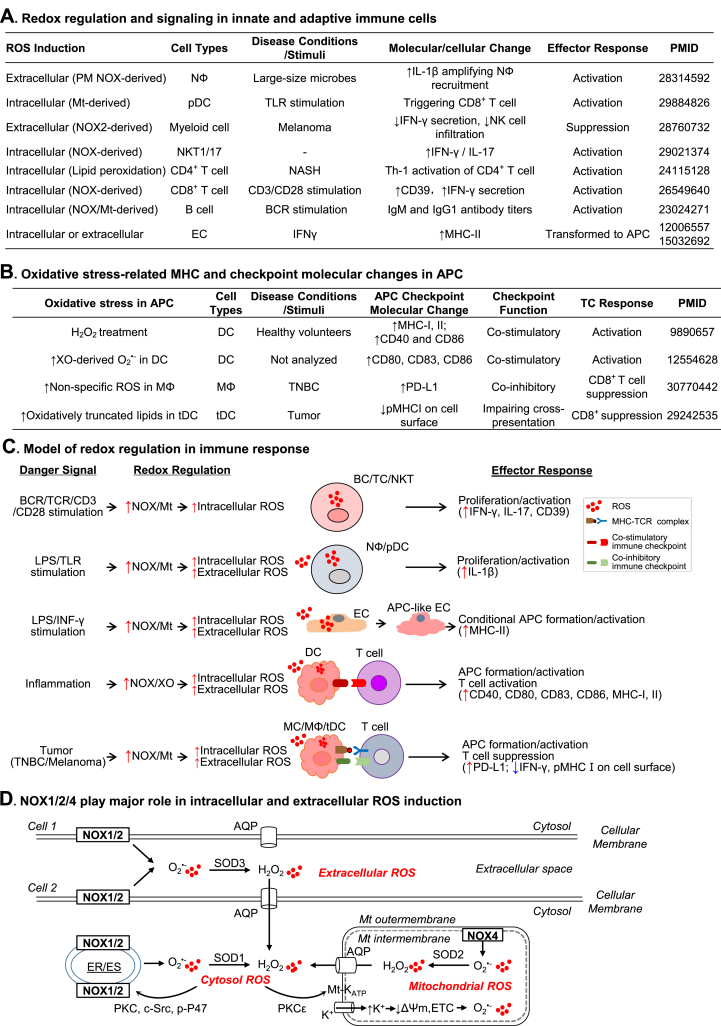
Innate and adaptive immune cell activation and infiltration is the key characteristic of tissue inflammation. The innate immune system is the front line of host defense in which innate immune cells are activated by danger signals, including pathogen- and danger-associated molecular pattern, and metabolite-associated danger signal. Innate immunity activation can directly contribute to tissue inflammation or immune resolution by phagocytosis and secretion of biologically active molecules, or indirectly via antigen-presenting cell (APC) activation-mediated adaptive immune responses. This review article describes the cellular and molecular interplay of innate-adaptive immune systems. Three major mechanisms are emphasized in this article for their role in facilitating innate-adaptive immunity interplay. 1) APC can be formed from classical and conditional innate immune cells to bridge innate-adaptive immune response. 2) Immune checkpoint molecular pairs connect innate and adaptive immune cells to direct one-way and two-way immune checkpoint reactions. 3) Metabolic reprogramming during immune responses leads to excessive cytosolic and mitochondrial reactive oxygen species (ROS) production. Increased NADPH oxidase-derived extracellular and intracellular ROS are mostly responsible for oxidative stress, which contributes to functional changes in immune cells. Further understanding of innate-adaptive immunity interplay and its underlying molecular basis would lead to the identification of therapeutic targets for immunological and inflammatory disease.
先天免疫和适应性免疫细胞的激活和浸润是组织炎症的关键特征。先天免疫系统是宿主防御的第一道防线,其中先天免疫细胞被危险信号激活,包括病原体和危险相关分子模式以及代谢物相关危险信号。先天免疫激活可以通过吞噬作用和生物活性分子的分泌直接导致组织炎症或免疫缓解,或者通过抗原呈递细胞 (APC) 激活介导的适应性免疫反应间接导致。本文描述了先天-适应性免疫系统的细胞和分子相互作用。本文强调了三个主要机制,因为它们在促进先天-适应性免疫相互作用中发挥作用。1) APC 可以由经典和条件性先天免疫细胞形成,以桥接先天-适应性免疫反应。2) 免疫检查点分子对将先天免疫和适应性免疫细胞连接起来,以指导单向和双向免疫检查点反应。3) 免疫反应期间的代谢重编程导致细胞溶质和线粒体活性氧 (ROS) 产生过多。NADPH 氧化酶衍生的细胞外和细胞内 ROS 增加主要负责氧化应激,这导致免疫细胞的功能变化。进一步了解先天-适应性免疫相互作用及其潜在的分子基础将有助于确定免疫和炎症性疾病的治疗靶点。