
情境线索对儿童在替代用途任务中的创造力的影响以及选择性注意的调节作用。
The Influence of Situational Cues on Children's Creativity in an Alternative Uses Task and the Moderating Effect of Selective Attention.
作者信息
van Dijk Marloes, Blom Elma, Kroesbergen Evelyn H, Leseman Paul P M
机构信息
Department of Pedagogy and Education: Development & Education of Youth in Diverse Societies, Utrecht University, Heidelberglaan 1, 3584CS Utrecht, The Netherlands.
Department of Language and Culture, UiT The Arctic University of Norway, P.O. Box 6050 Langnes, NO-9037 Tromsø, Norway.
出版信息
J Intell. 2020 Oct 19;8(4):37. doi: 10.3390/jintelligence8040037.
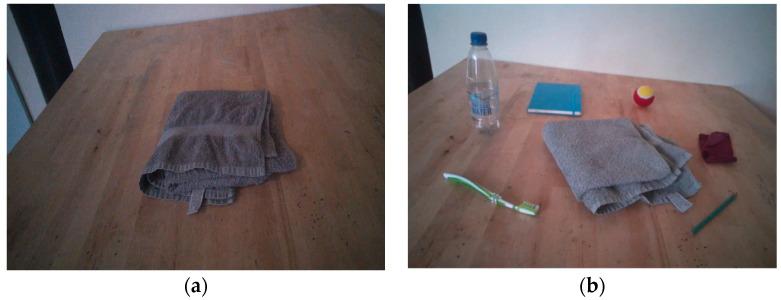
Taking a perception-action perspective, we investigated how the presence of different real objects in children's immediate situation affected their creativity and whether this effect was moderated by their selective attention. Seventy children between ages 9 and 12 years old participated. Verbal responses on a visual Alternative Uses Task with a low stimulus and high stimulus condition were coded on fluency, flexibility, and originality. Selective attention was measured with a visual search task. Results showed that fluency was not affected by stimulus condition and was unrelated to selective attention. Flexibility was positively associated with selective attention. Originality, net of fluency and flexibility, showed a main effect of stimulus condition in an unexpected direction, as children gave more original responses in the low stimulus condition compared to the high stimulus condition. A significant moderation effect revealed that children with better selective attention skills benefitted from a low stimulus environment, whereas children with weaker selective attention performed better in a high stimulus environment. The findings demonstrate differential effects of the immediate situation and selective attention, and support the hypothesis that creativity is impacted by immediate situation and selective attention, yet in unexpected ways.
从感知 - 行动的角度出发,我们研究了儿童当前环境中不同真实物体的存在如何影响他们的创造力,以及这种影响是否会受到他们选择性注意力的调节。70名9至12岁的儿童参与了研究。在低刺激和高刺激条件下的视觉替代用途任务中的言语反应,根据流畅性、灵活性和独创性进行编码。通过视觉搜索任务来测量选择性注意力。结果表明,流畅性不受刺激条件的影响,且与选择性注意力无关。灵活性与选择性注意力呈正相关。在排除流畅性和灵活性的影响后,独创性呈现出刺激条件的主效应,且方向出乎意料,因为与高刺激条件相比,儿童在低刺激条件下给出了更多独创性的回答。一个显著的调节效应表明,具有较好选择性注意力技能的儿童从低刺激环境中受益,而选择性注意力较弱的儿童在高刺激环境中表现更好。这些发现证明了当前环境和选择性注意力的不同影响,并支持了创造力受到当前环境和选择性注意力影响,但方式出乎意料的假设。

 Zotero 插件