Ugbolue Ukadike Chris, Duclos Martine, Urzeala Constanta, Berthon Mickael, Kulik Keri, Bota Aura, Thivel David, Bagheri Reza, Gu Yaodong, Baker Julien S, Andant Nicolas, Pereira Bruno, Rouffiac Karine, Clinchamps Maëlys, Dutheil Frédéric
Faculty of Sports Science, Ningbo University, Ningbo 315211, China.
Institute for Clinical Exercise & Health Science, School of Health and Life Sciences, University of the West of Scotland, South Lanarkshire G72 0LH, Scotland, UK.
J Clin Med. 2020 Oct 19;9(10):3352. doi: 10.3390/jcm9103352.
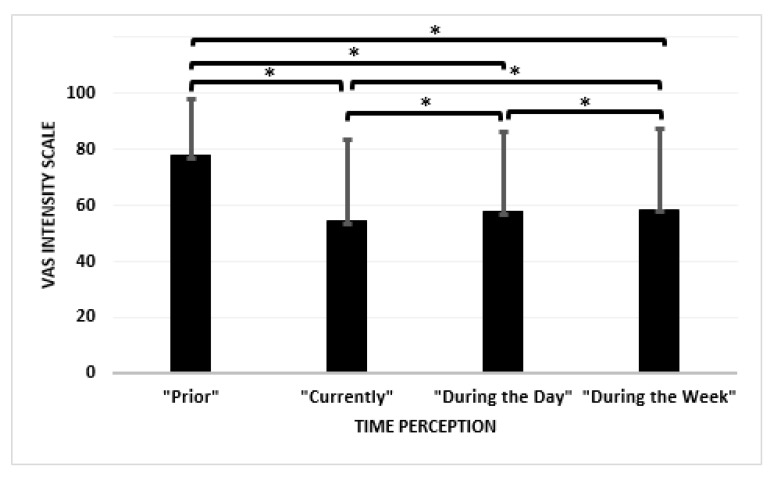
Globally the COVID-19 pandemic outbreak has triggered an economic downturn and a rise in unemployment. As a result, global communities have had to face physical, health, psychological and socio-economical related stressors. The purpose of this study was to assess and report the impact of isolation and effect of coronavirus on selected psychological correlates associated with emotions. Following ethical approval, a mixed methods observational study was conducted using the validated COVISTRESS questionnaire. Two observational study scenarios were evaluated namely "Prior" to the COVID-19 outbreak and "Currently", i.e., during the COVID-19 pandemic. 10,121 participants from 67 countries completed the COVISTRESS questionnaire. From the questionnaire responses only questions that covered the participant's occupation; sociodemographic details, isolation and impact of coronavirus were selected. Further analyses were performed on output measures that included leisure time, physical activity, sedentary time and emotions. All output measures were evaluated using the Visual Analogue Scale (VAS) with an intensity ranging from 0-100. Descriptive statistics, Wilcoxon signed-rank test and Spearman correlational analysis were applied to the leisure time, physical activity, sedentary time and emotional feeling datasets; = 0.05 was set as the significance level. Both males and females displayed similar output measures. The Wilcoxon signed rank test showed significant differences with respect to "Prior" COVID-19 and "Currently" for sedentary activity (Z = -40.462, < 0.001), physical activity (Z = -30.751, < 0.001) and all other emotional feeling output measures. A moderate correlation between "Prior" COVID-19 and "Currently" was observed among the Males (r = 0.720) in comparison to the Females (r = 0.639) for sedentary activity while weaker correlations (r < 0.253) were observed for physical activity and emotional feeling measurements, respectively. Our study reported incremental differences in the physical and psychological output measures reported, i.e., "Prior" COVID-19 and "Currently". "Prior" COVID-19 and "Currently" participants increased their sedentary habits by 2.98%, and the level of physical activity reduced by 2.42%, depression levels increased by 21.62%, anxiety levels increased by 16.71%, and stress levels increased by 21.8%. There were no correlations (r) between leisure, physical activity and sedentary action (i.e., "Prior" = -0.071; "Currently" = -0.097); no correlations (r) between leisure physical activity and emotion (i.e., -0.071 > r > 0.081) for "Prior"; and poor correlations (r) between leisure, physical activity and sedentary action (i.e., -0.078 > r > 0.167) for "Current". The correlations (r) between sedentary action and emotion for "Prior" and "Currently" were (-0.100 > r > 0.075) and (-0.040 > r > 0.041) respectively. The findings presented here indicate that the COVISTRESS project has created awareness in relation to the physical and psychological impact resulting from the COVID-19 pandemic. The findings have also highlighted individual distress caused by COVID-19 and associated health consequences for the global community.
在全球范围内,新冠疫情的爆发引发了经济衰退和失业率上升。因此,全球各界不得不面对与身体、健康、心理和社会经济相关的压力源。本研究的目的是评估并报告隔离措施以及新冠病毒对与情绪相关的特定心理关联因素的影响。在获得伦理批准后,我们使用经过验证的COVISTRESS问卷进行了一项混合方法观察性研究。评估了两种观察性研究场景,即新冠疫情“之前”和“当前”,也就是在新冠疫情期间。来自67个国家的10121名参与者完成了COVISTRESS问卷。从问卷回复中,仅选取了涵盖参与者职业、社会人口学细节、隔离情况以及新冠病毒影响的问题。对包括休闲时间、身体活动、久坐时间和情绪等输出指标进行了进一步分析。所有输出指标均使用视觉模拟量表(VAS)进行评估,强度范围为0 - 100。对休闲时间、身体活动、久坐时间和情绪感受数据集应用了描述性统计、威尔科克森符号秩检验和斯皮尔曼相关性分析;设定显著性水平α = 0.05。男性和女性的输出指标表现相似。威尔科克森符号秩检验显示,在久坐活动方面(Z = -40.462,P < 0.001)、身体活动方面(Z = -30.751,P < 0.001)以及所有其他情绪感受输出指标方面,新冠疫情“之前”和 “当前” 存在显著差异。在久坐活动方面,男性(r = 0.720)相比女性(r = 0.639),新冠疫情“之前”和“当前”之间观察到中等程度的相关性,而在身体活动和情绪感受测量方面,分别观察到较弱的相关性(r < 0.253)。我们的研究报告了所报告的身体和心理输出指标在新冠疫情“之前”和“当前”的增量差异。新冠疫情“之前”和“当前”的参与者久坐习惯增加了2.98%,身体活动水平降低了2.42%,抑郁水平增加了21.62%,焦虑水平增加了16.71%,压力水平增加了21.8%。休闲、身体活动和久坐行为之间不存在相关性(r)(即“之前”r = -0.071;“当前”r = -0.097);对于新冠疫情“之前”,休闲身体活动和情绪之间不存在相关性(r)(即 -0.071 > r > 0.081);对于“当前”,休闲、身体活动和久坐行为之间相关性较差(r)(即 -0.078 > r > 0.167)。新冠疫情“之前”和“当前”,久坐行为与情绪之间的相关性(r)分别为(-0.100 > r > 0.075)和(-0.040 > r > 0.041)。此处呈现的研究结果表明,COVISTRESS项目提高了人们对新冠疫情所造成的身体和心理影响的认识。这些结果还突出了新冠疫情给个人带来的困扰以及对全球社会造成的相关健康后果。