Rancho Los Amigos National Rehabilitation Center, Downey, CA 90242, USA.
Clinical Professor of Medicine, David Geffen School of Medicine at University of California, Los Angeles, CA 90095, USA.
Toxins (Basel). 2020 Oct 19;12(10):661. doi: 10.3390/toxins12100661.
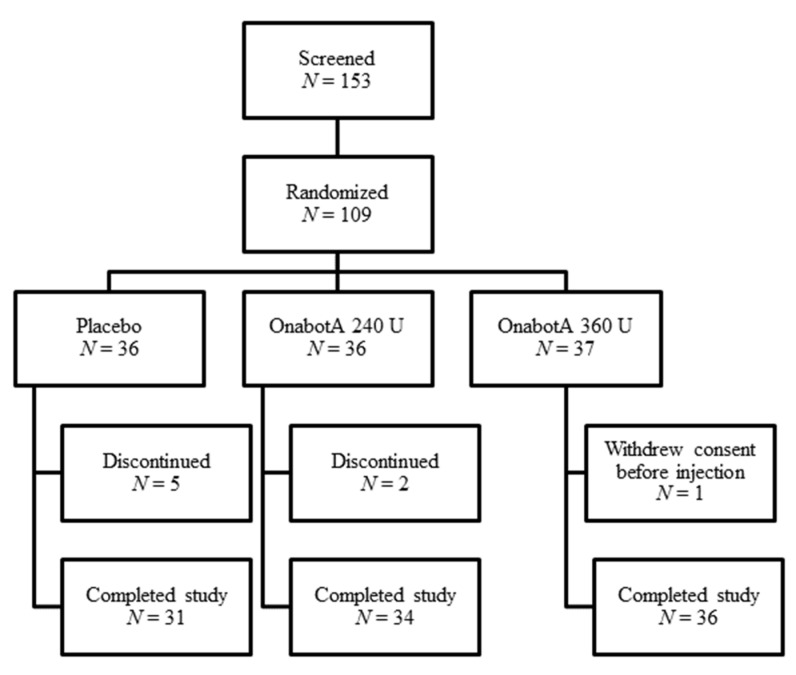
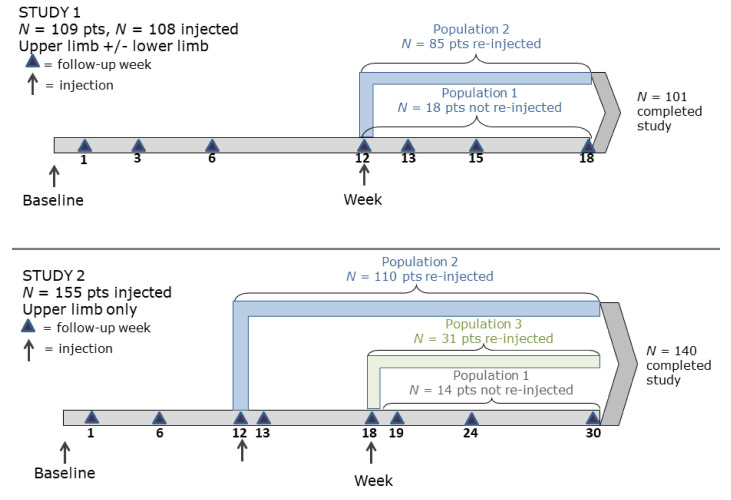
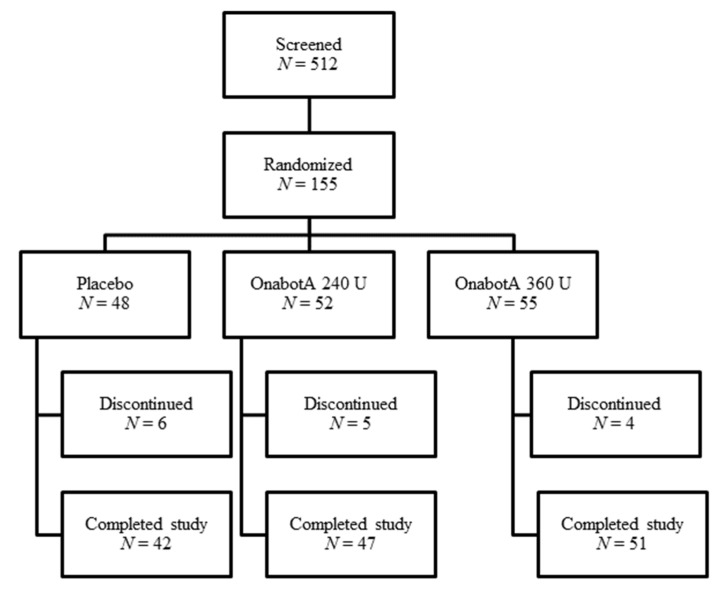
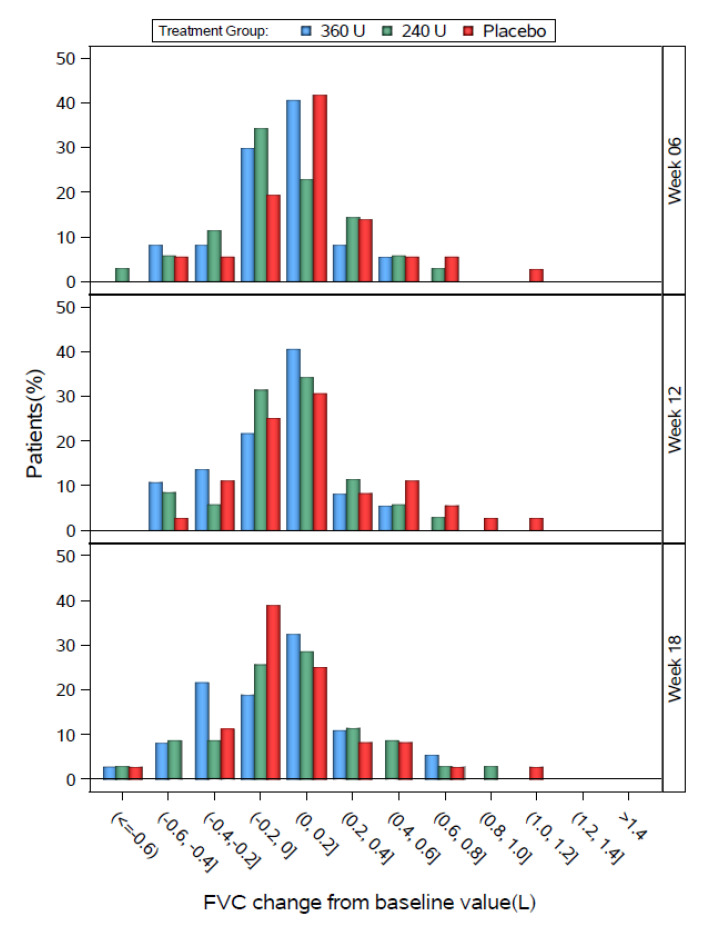
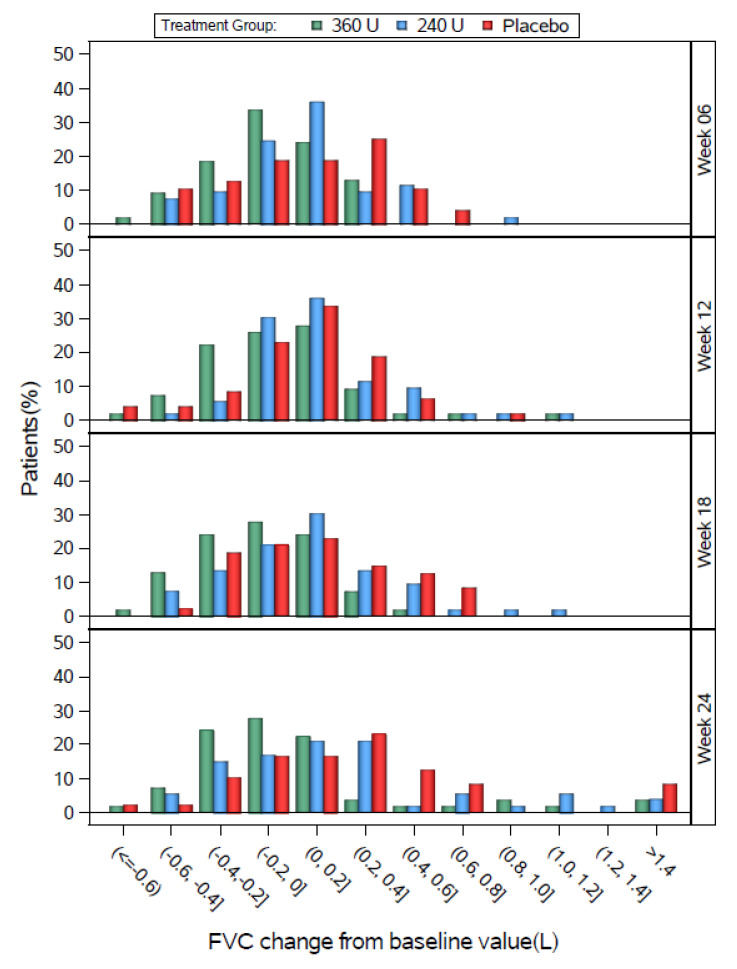
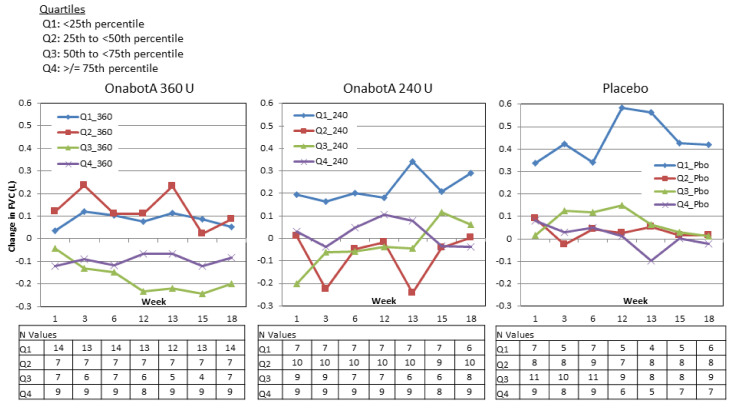
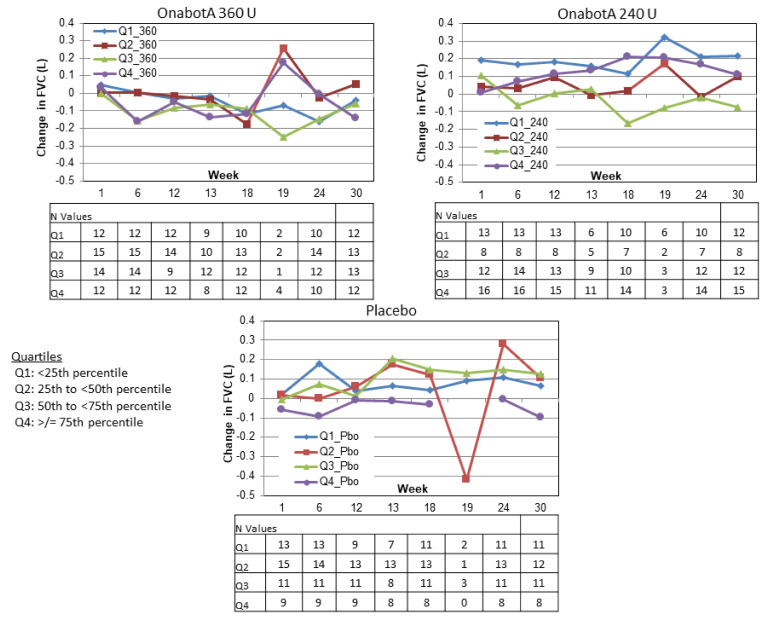
Two randomized, placebo-controlled studies evaluated the pulmonary function safety of onabotulinumtoxinA (onabotA) for treatment of upper and/or lower limb spasticity. Patients with stable baseline respiratory status received one or two treatments with placebo, 240 U, or 360 U of onabotA. Pulmonary function tests, adverse events, and efficacy were measured at least every 6 weeks for 18 weeks (Study 1) or 30 weeks (Study 2). Study 1 enrolled 109 patients ( = 36-37/group) and Study 2 enrolled 155 patients ( = 48-54/group). Mean baseline forced vital capacity (FVC) was 76-78% of predicted per group in Study 1 and 71% of predicted per group in Study 2. In Study 1, change from baseline FVC values were significantly ( < 0.05) decreased vs. placebo at weeks 3 (240 U -57 mL vs. placebo +110 mL) and 12 (360 U -6 mL vs. +167 mL placebo). In Study 2, change from baseline FVC values were significantly decreased in the 360 U group vs. placebo at weeks 6 (-78 mL vs. +49 mL placebo), 13 (-60 mL vs. +119 mL placebo), 18 (-128 mL vs. +80 mL placebo), and 24 (-82 mL vs. +149 mL placebo). Individual pulmonary function-related adverse events were not correlated with PFT decreases. The most frequent pulmonary-related adverse events were nasopharyngitis (Study 1) and upper respiratory tract infection (Study 2). Ashworth scores were significantly improved at multiple time points in both studies. Injection of onabotA for spasticity in patients with decreased pulmonary function, at single and repeated doses of up to 360 U, was associated with small but statistically significant decreases in FVC or forced expiratory volume 1 s (FEV1) (>12% and 200 mL) that were subclinical and not correlated with any adverse clinical pulmonary events.
两项随机、安慰剂对照研究评估了肉毒毒素 A(onabotA)治疗上肢和/或下肢痉挛的肺功能安全性。基线呼吸状况稳定的患者接受安慰剂、240U 或 360U onabotA 单次或两次治疗。在 18 周(研究 1)或 30 周(研究 2)期间,每 6 周至少测量一次肺功能测试、不良事件和疗效。研究 1 纳入 109 例患者(每组 36-37 例),研究 2 纳入 155 例患者(每组 48-54 例)。研究 1 中每组患者的基线用力肺活量(FVC)平均为预测值的 76-78%,研究 2 中每组患者的基线 FVC 平均为预测值的 71%。在研究 1 中,与安慰剂相比,第 3 周(240U-57mL vs.安慰剂+110mL)和第 12 周(360U-6mL vs.安慰剂+167mL)时,FVC 值自基线的变化显著降低(<0.05)。在研究 2 中,与安慰剂相比,第 6 周(360U-78mL vs.安慰剂+49mL)、第 13 周(360U-60mL vs.安慰剂+119mL)、第 18 周(360U-128mL vs.安慰剂+80mL)和第 24 周(360U-82mL vs.安慰剂+149mL)时,FVC 值自基线的变化显著降低。个别与肺功能相关的不良事件与 PFT 下降无相关性。最常见的肺部相关不良事件是鼻咽炎(研究 1)和上呼吸道感染(研究 2)。在两项研究中,Ashworth 评分在多个时间点均显著改善。在单次和重复剂量高达 360U 的情况下,肉毒毒素 A 治疗肺功能下降的痉挛患者,与 FVC 或用力呼气量 1 秒(FEV1)的小但有统计学意义的下降(>12%和 200mL)相关,这些下降为亚临床,与任何不良临床肺部事件无关。