Molecular Genetics Group, Groningen Biomolecular Sciences and Biotechnology Institute, Centre for Synthetic Biology, University of Groningen, 9747 AG, Groningen, The Netherlands.
Department of Fundamental Microbiology, Faculty of Biology and Medicine, University of Lausanne, CH-1015 Lausanne, Switzerland.
Proc Natl Acad Sci U S A. 2020 Nov 3;117(44):27608-27619. doi: 10.1073/pnas.1920015117. Epub 2020 Oct 21.
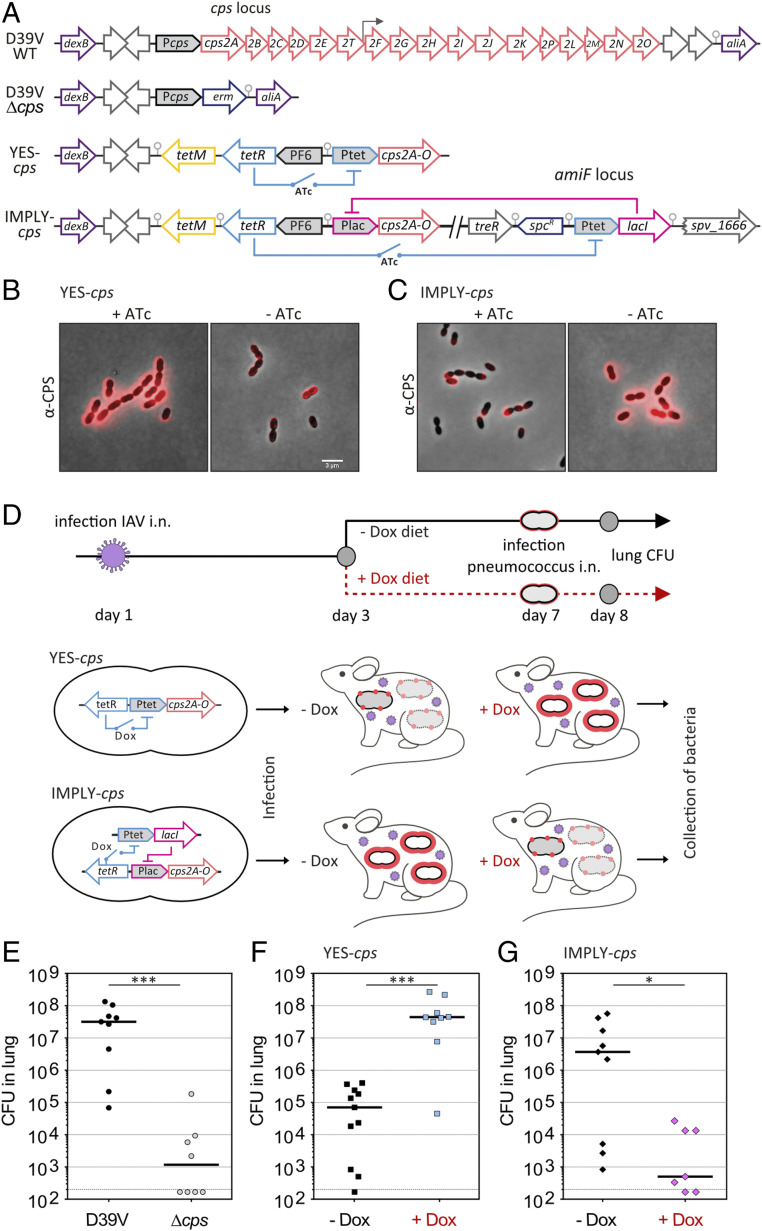
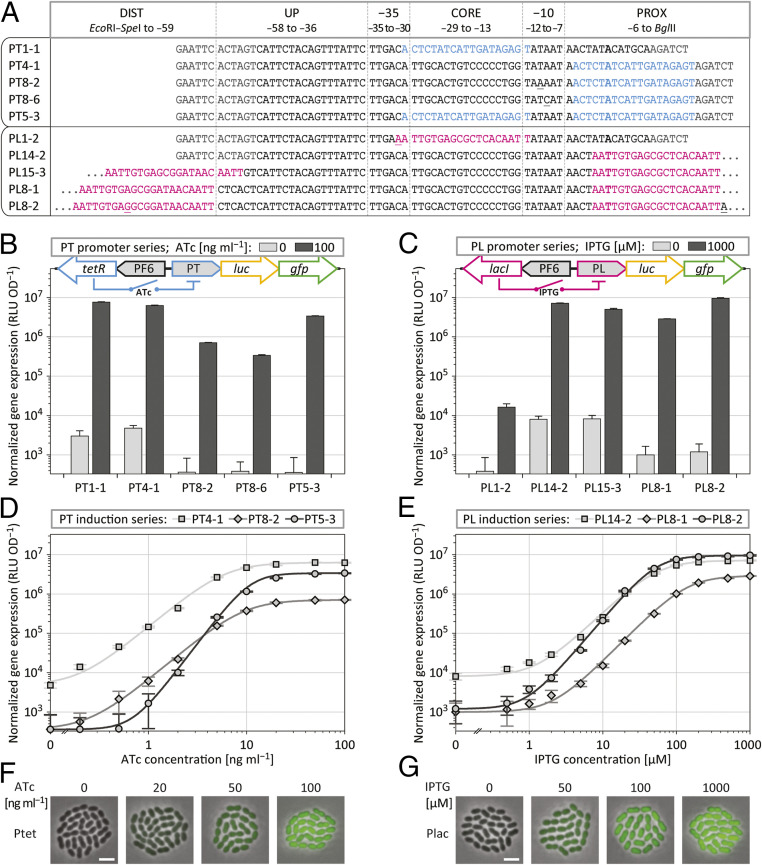
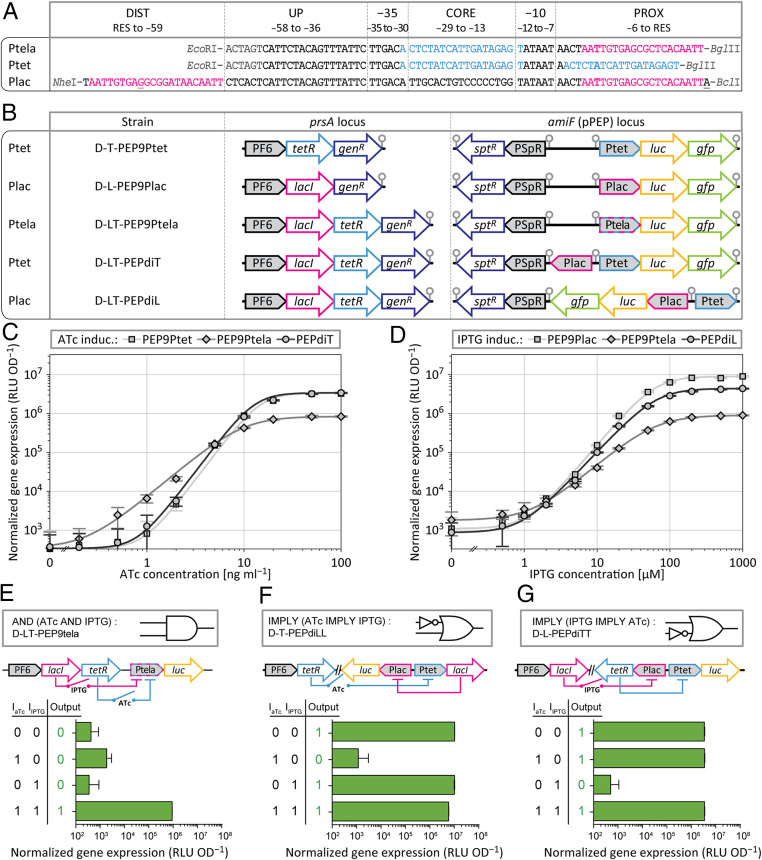
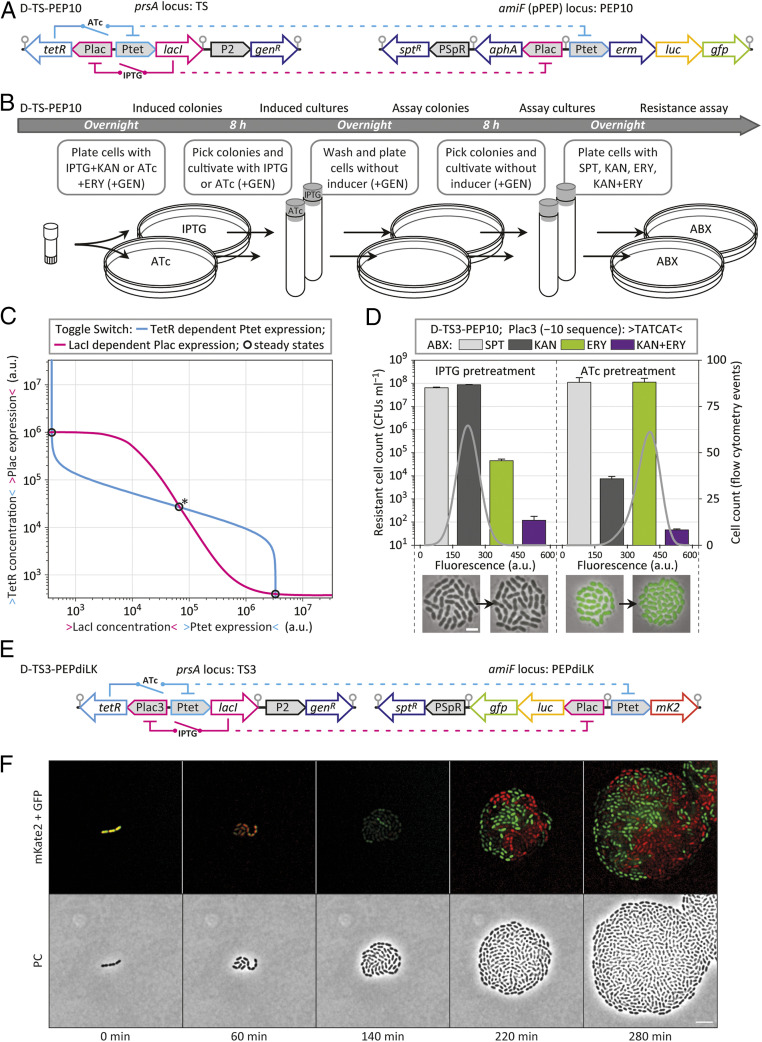
can cause disease in various human tissues and organs, including the ear, the brain, the blood, and the lung, and thus in highly diverse and dynamic environments. It is challenging to study how pneumococci control virulence factor expression, because cues of natural environments and the presence of an immune system are difficult to simulate in vitro. Here, we apply synthetic biology methods to reverse-engineer gene expression control in A selection platform is described that allows for straightforward identification of transcriptional regulatory elements out of combinatorial libraries. We present TetR- and LacI-regulated promoters that show expression ranges of four orders of magnitude. Based on these promoters, regulatory networks of higher complexity are assembled, such as logic AND gates and IMPLY gates. We demonstrate single-copy genome-integrated toggle switches that give rise to bimodal population distributions. The tools described here can be used to mimic complex expression patterns, such as the ones found for pneumococcal virulence factors. Indeed, we were able to rewire gene expression of the capsule operon, the main pneumococcal virulence factor, to be externally inducible (YES gate) or to act as an IMPLY gate (only expressed in absence of inducer). Importantly, we demonstrate that these synthetic gene-regulatory networks are functional in an influenza A virus superinfection murine model of pneumonia, paving the way for in vivo investigations of the importance of gene expression control on the pathogenicity of .
它可以引起人类各种组织和器官的疾病,包括耳朵、大脑、血液和肺部,因此存在高度多样化和动态的环境。研究肺炎球菌如何控制毒力因子的表达具有挑战性,因为自然环境的线索和免疫系统的存在很难在体外模拟。在这里,我们应用合成生物学方法来反向工程基因表达控制, 描述了一种选择平台,该平台允许从组合文库中直接鉴定转录调控元件。我们展示了 TetR 和 LacI 调节的启动子,其表达范围为四个数量级。基于这些启动子,组装了更复杂的调控网络,如逻辑与门和蕴涵门。我们展示了单拷贝基因组整合的 toggle 开关,这些开关导致双峰种群分布。这里描述的工具可用于模拟复杂的表达模式,例如肺炎球菌毒力因子的表达模式。事实上,我们能够重新布线荚膜操纵子的基因表达,荚膜是肺炎球菌的主要毒力因子,使其可被外部诱导(YES 门)或作为蕴涵门(仅在没有诱导剂时表达)。重要的是,我们证明这些合成基因调控网络在流感 A 病毒肺炎小鼠模型的超感染中是功能性的,为研究基因表达控制对致病性的重要性开辟了体内研究的道路。