Population Research Centre, Faculty of Spatial Sciences, University of Groningen, Landleven 1, 9747 Groningen, The Netherlands.
Center for Demographic Studes, Centres de Recerca de Catalunya (CERCA), Carrer de Ca n'Altayó, Edifici E2, 08193 Bellaterra, Spain.
Alcohol Alcohol. 2021 Apr 29;56(3):325-333. doi: 10.1093/alcalc/agaa107.
To forecast age- and sex-specific alcohol-attributable mortality in France for the period 2015-2050 using a novel generalizable methodology that includes different scenarios regarding period and cohort change.
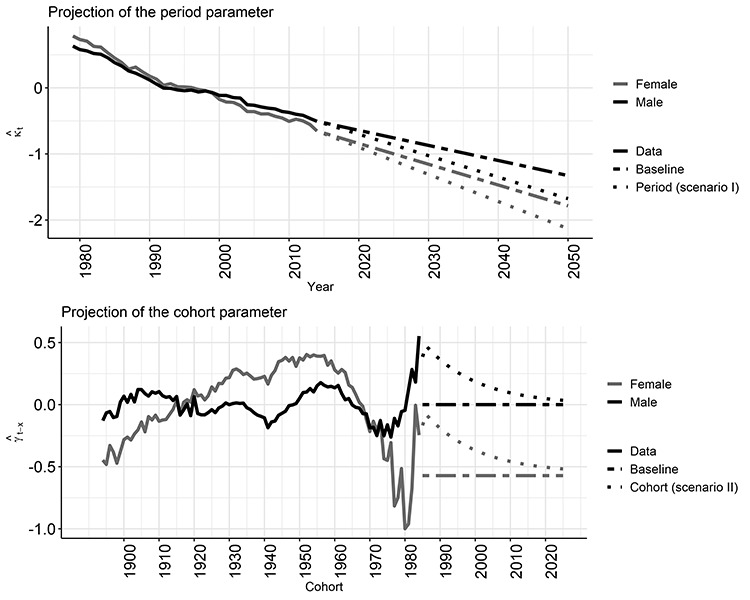
For the French national population aged 25-90 years (1979-2014), we estimated alcohol-attributable mortality by mortality from the main causes of death wholly attributable to alcohol, plus liver cirrhosis mortality. We modelled sex-specific alcohol-attributable mortality by adjusting for age, period and birth cohort. We forecasted the model parameters to obtain future age- and sex-specific alcohol-attributable mortality up until 2050 using a conventional baseline, scenario I (favourable period change) and scenario II (unfavourable cohort change).
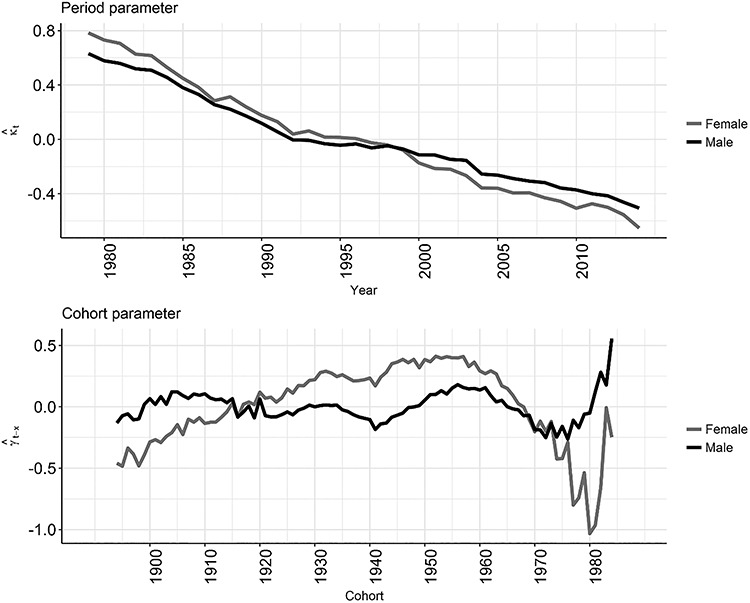
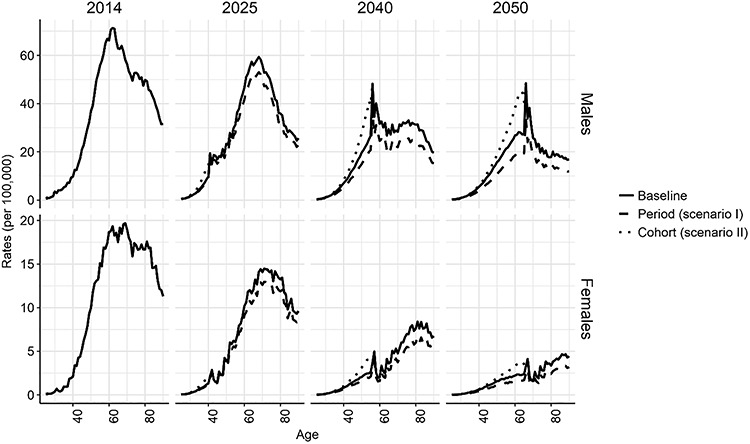
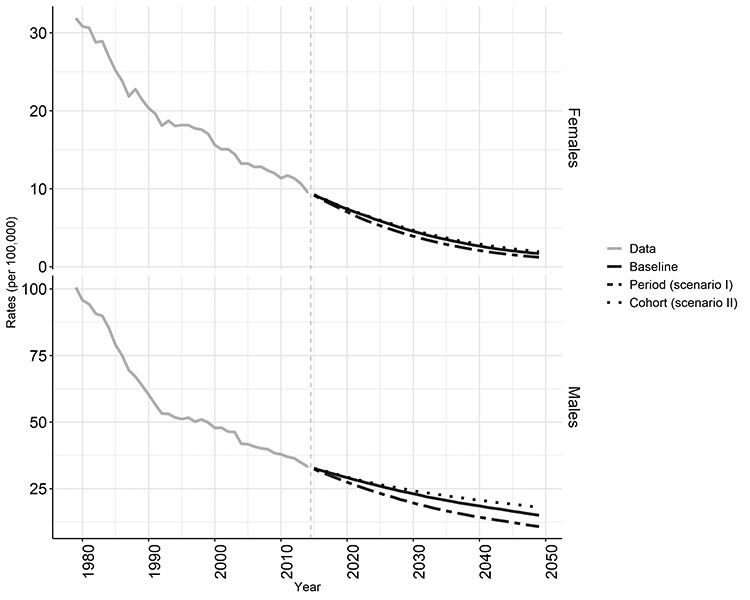
Alcohol-attributable mortality is clearly declining in France, with the decline decelerating from 1992 onwards. In 2014, the age-standardized alcohol-attributable mortality rates, in deaths per 100,000, were 34.7 among men and 9.9 among women. In 2050, the estimated rates are between 10.5 (prediction interval: 7.6-14.4; scenario I) and 17.6 (13.1-23.7; scenario II) among men, and between 1.1 (0.7-1.7; scenario I) and 1.8 (1.2-2.9; scenario II) among women; which implies declines of 58% for men and 84% for women (baseline).
Alcohol-attributable mortality in France is expected to further decline in the coming decades, accompanied by age pattern changes. However, France's levels are not expected to reach the current lower levels in Italy and Spain for 15 years or more. Our results point to the value of implementing preventive policy measures that discourage alcohol consumption among people of all ages, but especially among adolescents.
利用一种新的可推广方法,包括关于时期和队列变化的不同情景,预测 2015-2050 年法国特定年龄和性别的与酒精相关的死亡率。
对于年龄在 25-90 岁之间的法国全国人口(1979-2014 年),我们通过归因于酒精的主要死因和肝硬化死亡率的全归因死亡率来估计与酒精相关的死亡率。我们通过调整年龄、时期和出生队列来对特定性别与酒精相关的死亡率进行建模。我们预测了模型参数,以便使用常规基线、情景 I(有利时期变化)和情景 II(不利队列变化)预测到 2050 年为止的未来特定年龄和性别的与酒精相关的死亡率。
法国的与酒精相关的死亡率明显下降,自 1992 年以来下降速度减缓。2014 年,每 10 万人中标准化的与酒精相关的死亡率,男性为 34.7 人,女性为 9.9 人。到 2050 年,预计的死亡率在男性为 10.5(预测区间:7.6-14.4;情景 I)和 17.6(13.1-23.7;情景 II)之间,女性为 1.1(0.7-1.7;情景 I)和 1.8(1.2-2.9;情景 II)之间;这意味着男性下降 58%,女性下降 84%(基线)。
在未来几十年,法国的与酒精相关的死亡率预计将进一步下降,同时伴随着年龄模式的变化。然而,法国的水平预计在 15 年或更长时间内不会达到意大利和西班牙目前的较低水平。我们的研究结果表明,实施预防政策措施具有价值,这些措施可以劝阻各个年龄段的人,尤其是青少年饮酒。