Department of Cancer Biology and Therapeutics, The John Curtin School of Medical Research, The Australian National University, Canberra, ACT 2600, Australia.
Int J Mol Sci. 2020 Oct 20;21(20):7742. doi: 10.3390/ijms21207742.
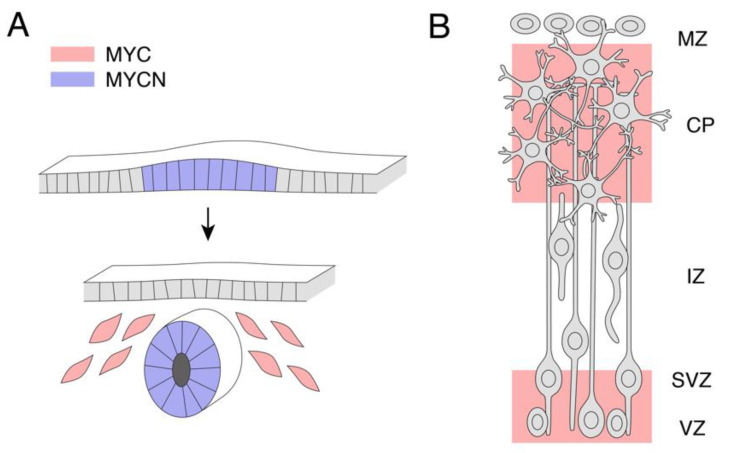
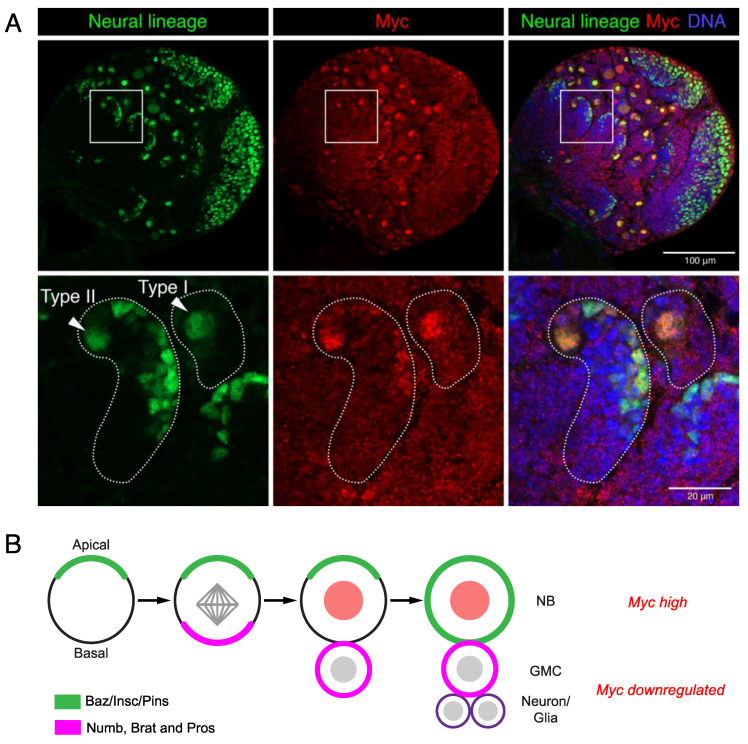
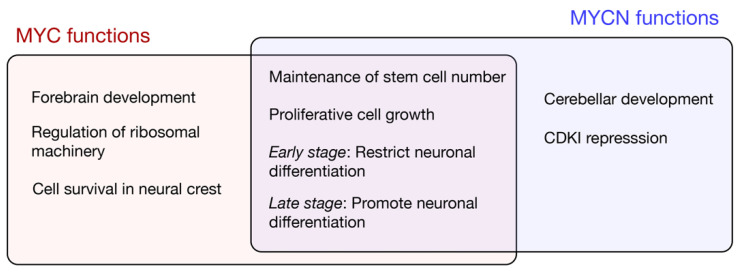
The MYC family of transcriptional regulators play significant roles in animal development, including the renewal and maintenance of stem cells. Not surprisingly, given MYC's capacity to promote programs of proliferative cell growth, MYC is frequently upregulated in cancer. Although members of the MYC family are upregulated in nervous system tumours, the mechanisms of how elevated MYC promotes stem cell-driven brain cancers is unknown. If we are to determine how increased MYC might contribute to brain cancer progression, we will require a more complete understanding of MYC's roles during normal brain development. Here, we evaluate evidence for MYC family functions in neural stem cell fate and brain development, with a view to better understand mechanisms of MYC-driven neural malignancies.
转录调节因子 MYC 家族在动物发育中发挥重要作用,包括干细胞的更新和维持。由于 MYC 能够促进增殖细胞生长的程序,因此 MYC 在癌症中经常被上调,这并不奇怪。尽管 MYC 家族成员在神经系统肿瘤中上调,但升高的 MYC 如何促进干细胞驱动的脑癌的机制尚不清楚。如果我们要确定增加的 MYC 如何促进脑癌的进展,我们将需要更全面地了解 MYC 在正常大脑发育过程中的作用。在这里,我们评估了 MYC 家族在神经干细胞命运和大脑发育中的功能的证据,以期更好地了解 MYC 驱动的神经恶性肿瘤的机制。