Bari Unit, Institute for Sustainable Plant Protection (IPSP), Department of Biology, Agricultural and Food Sciences (DISBA), 70126 CNR Bari, Italy.
Int J Mol Sci. 2020 Oct 20;21(20):7759. doi: 10.3390/ijms21207759.
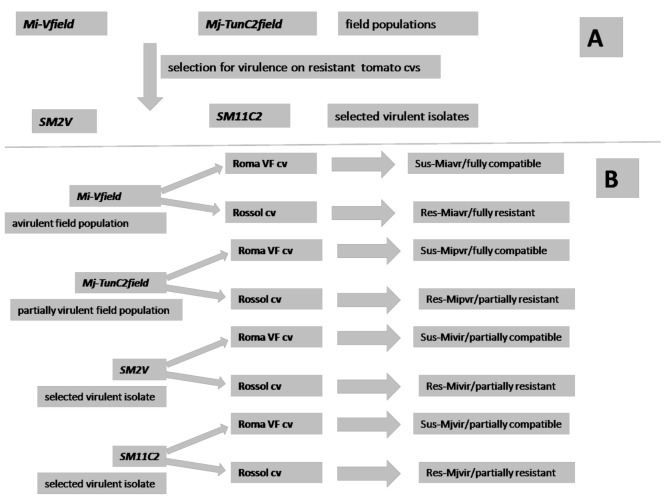
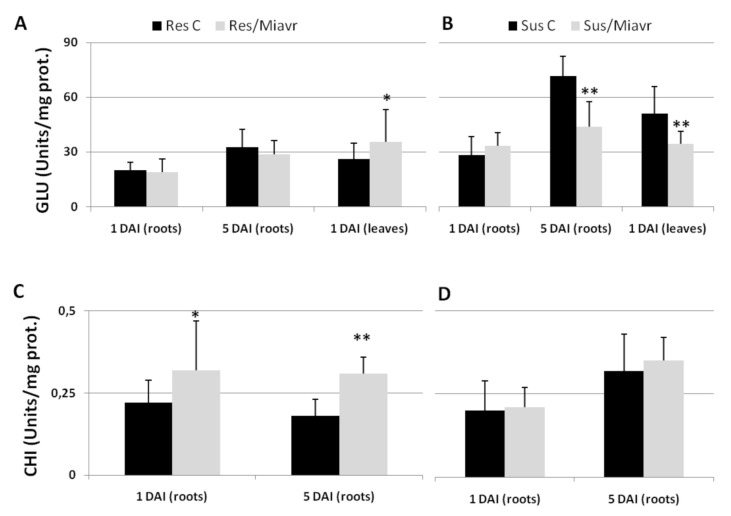
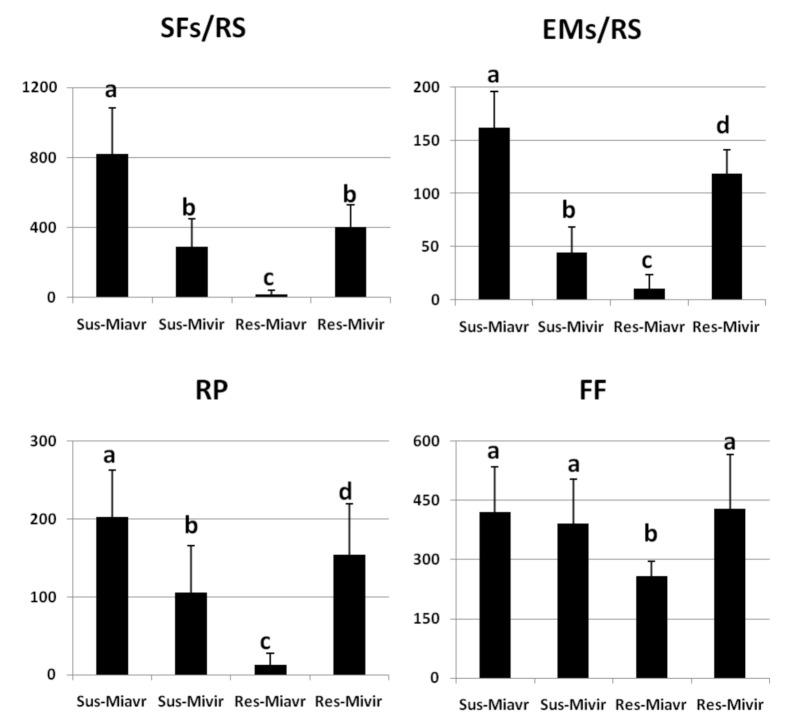
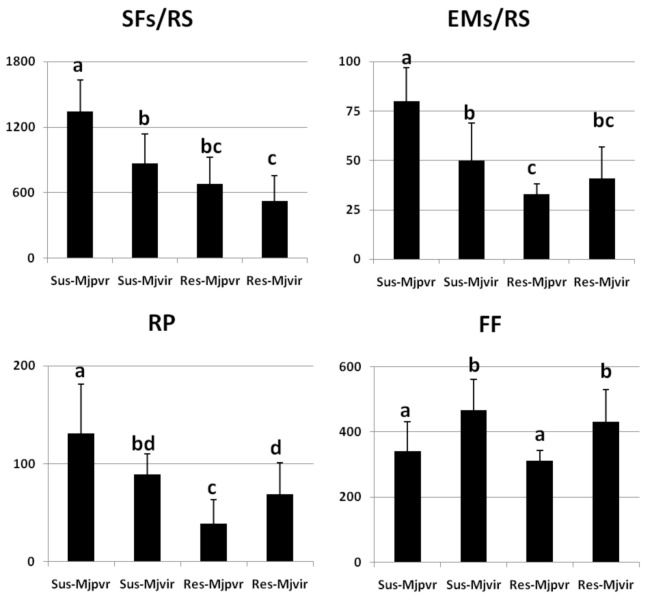
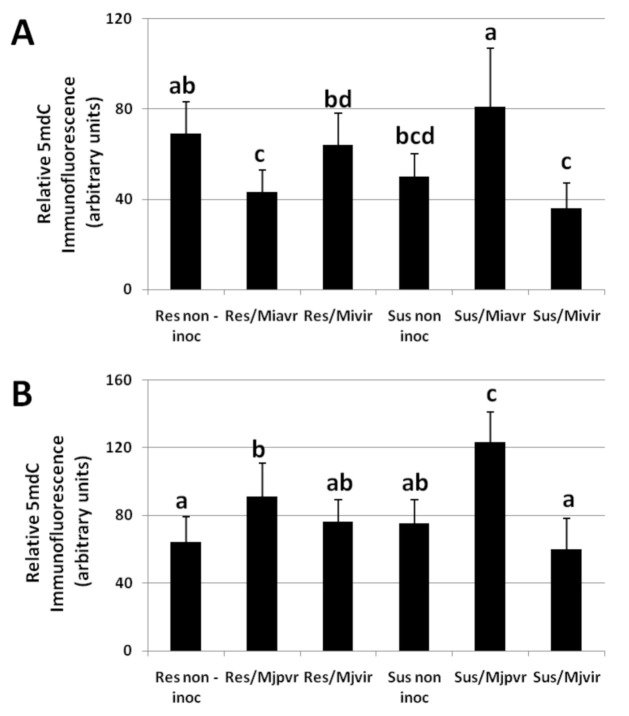
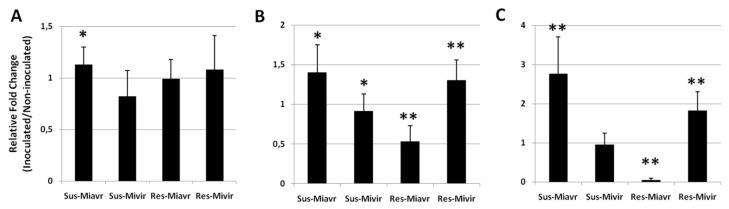
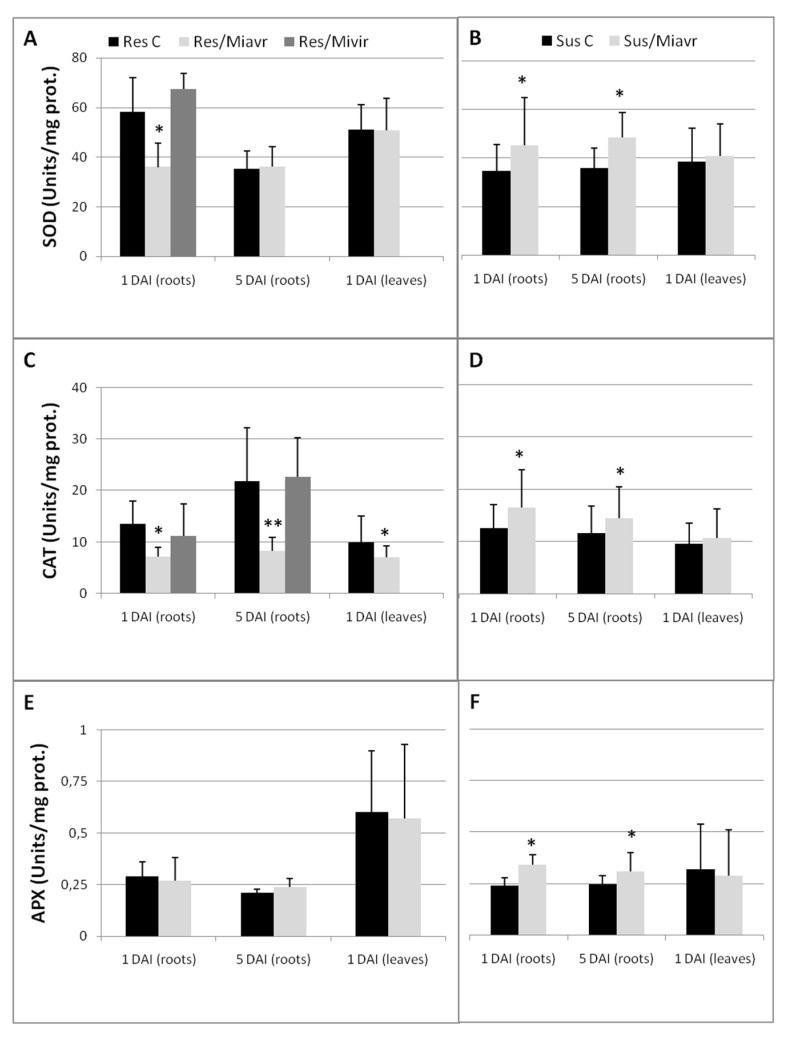
Two wild-type field populations of root-knot nematodes (), and two isolates selected for virulence in laboratory on resistant tomato cultivars (), were used to induce a resistance reaction in tomato to the soil-borne parasites. Epigenetic and metabolic mechanisms of resistance were detected and compared with those occurring in partially or fully successful infections. The activated epigenetic mechanisms in plant resistance, as opposed to those activated in infected plants, were detected by analyzing the methylated status of total DNA, by ELISA methods, and the expression level of key genes involved in the methylation pathway, by qRT-PCR. DNA hypo-methylation and down-regulation of two methyl-transferase genes (, ), characterized the only true resistant reaction obtained by inoculating the carrying resistant tomato cv Rossol with the avirulent field population On the contrary, in the roots into which nematodes were allowed to develop and reproduce, total DNA was generally found to be hyper-methylated and methyl-transferase genes up-loaded. DNA hypo-methylation was considered to be the upstream mechanism that triggers the general gene over-expression observed in plant resistance. Gene silencing induced by nematodes may be obtained through DNA hyper-methylation and methyl-transferase gene activation. Plant resistance is also characterized by an inhibition of the anti-oxidant enzyme system and activation of the defense enzyme chitinase, as opposed to the activation of such a system and inhibition of the defense enzyme glucanase in roots infested by nematodes.
使用两种野生型根结线虫田间种群()和两种在抗番茄品种上选择的毒力分离株(),在番茄中诱导对土壤寄生线虫的抗性反应。检测了抗性的表观遗传和代谢机制,并将其与部分或完全成功感染时发生的机制进行了比较。通过分析总 DNA 的甲基化状态、ELISA 方法,以及通过 qRT-PCR 分析参与甲基化途径的关键基因的表达水平,检测到植物抗性中激活的表观遗传机制,与感染植物中激活的机制相反。携带抗性番茄 cv Rossol 的非致病田间种群接种时,仅获得真正抗性反应时,检测到 DNA 低甲基化和两种甲基转移酶基因(、)下调。相反,在允许线虫发育和繁殖的根中,通常发现总 DNA 高度甲基化,甲基转移酶基因上调。DNA 低甲基化被认为是触发植物抗性中观察到的普遍基因过表达的上游机制。线虫诱导的基因沉默可能是通过 DNA 高甲基化和甲基转移酶基因激活获得的。与线虫感染的根中抗氧化酶系统的激活和防御酶几丁质酶的抑制相反,植物抗性的特征还表现为该系统的抑制和防御酶葡聚糖酶的激活。