Department of Plant Pathology, Washington State University, Pullman, Washington, 99164, USA.
Department of Horticulture, Oregon State University, Corvallis, Oregon, 97330, USA.
BMC Genomics. 2019 Nov 28;20(1):907. doi: 10.1186/s12864-019-6257-1.
Meloidogyne chitwoodi commonly known as Columbia root-knot nematode or CRKN is one of the most devastating pests of potato in the Pacific Northwest of the United States of America. In addition to the roots, it infects potato tubers causing internal as well as external defects, thereby reducing the market value of the crop. Commercial potato varieties with CRKN resistance are currently unavailable. Race specific resistance to CRKN has been introgressed from the wild, diploid potato species Solanum bulbocastanum into the tetraploid advanced selection PA99N82-4 but there is limited knowledge about the nature of its resistance mechanism. In the present study, we performed histological and differential gene expression profiling to understand the mode of action of introgressed CRKN resistance in PA99N82-4 in comparison to the CRKN susceptible variety Russet Burbank.
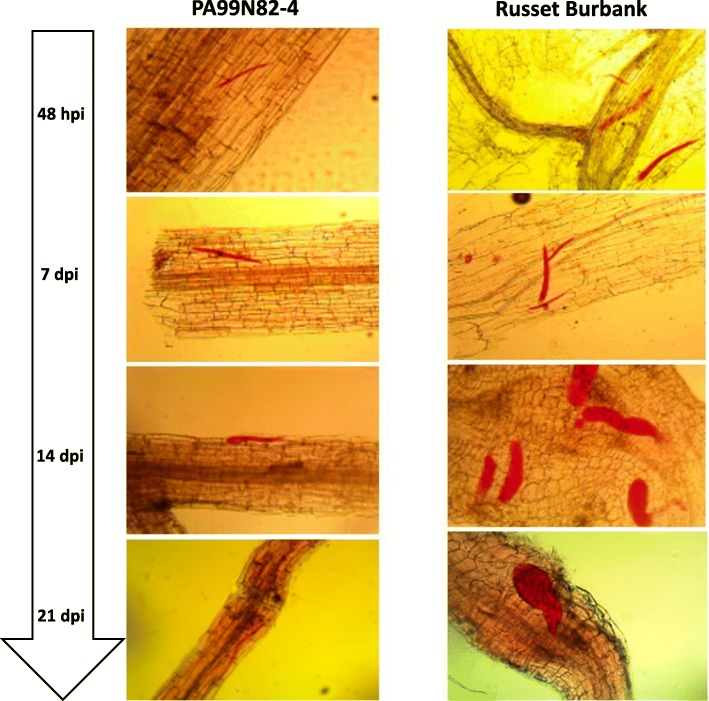
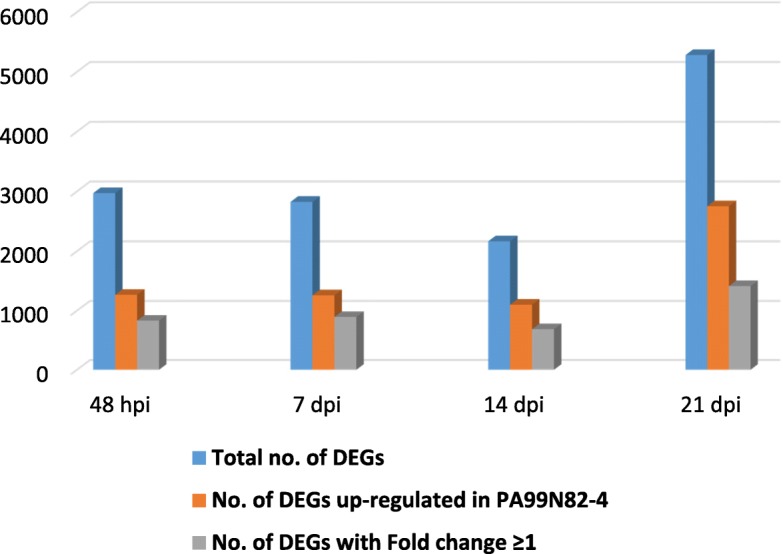
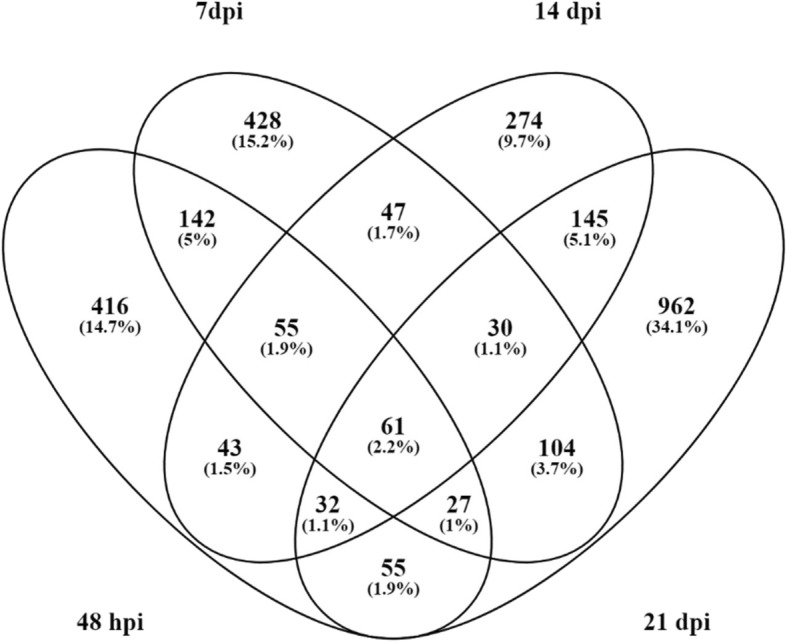
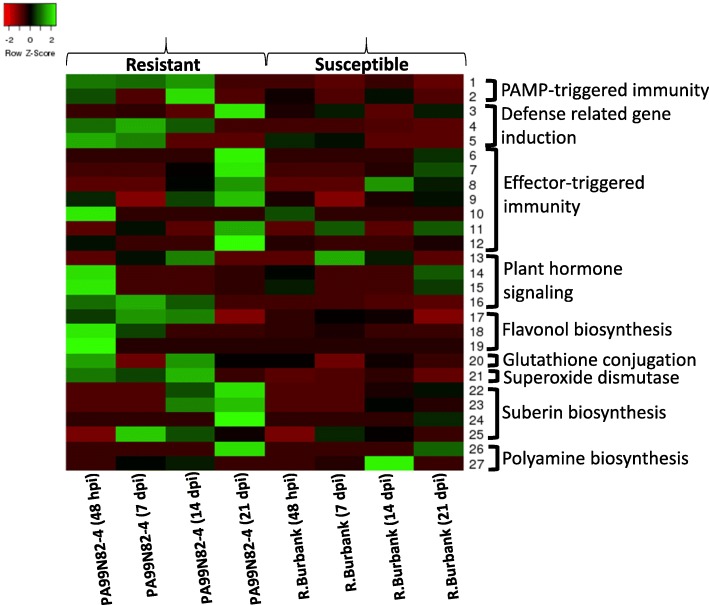
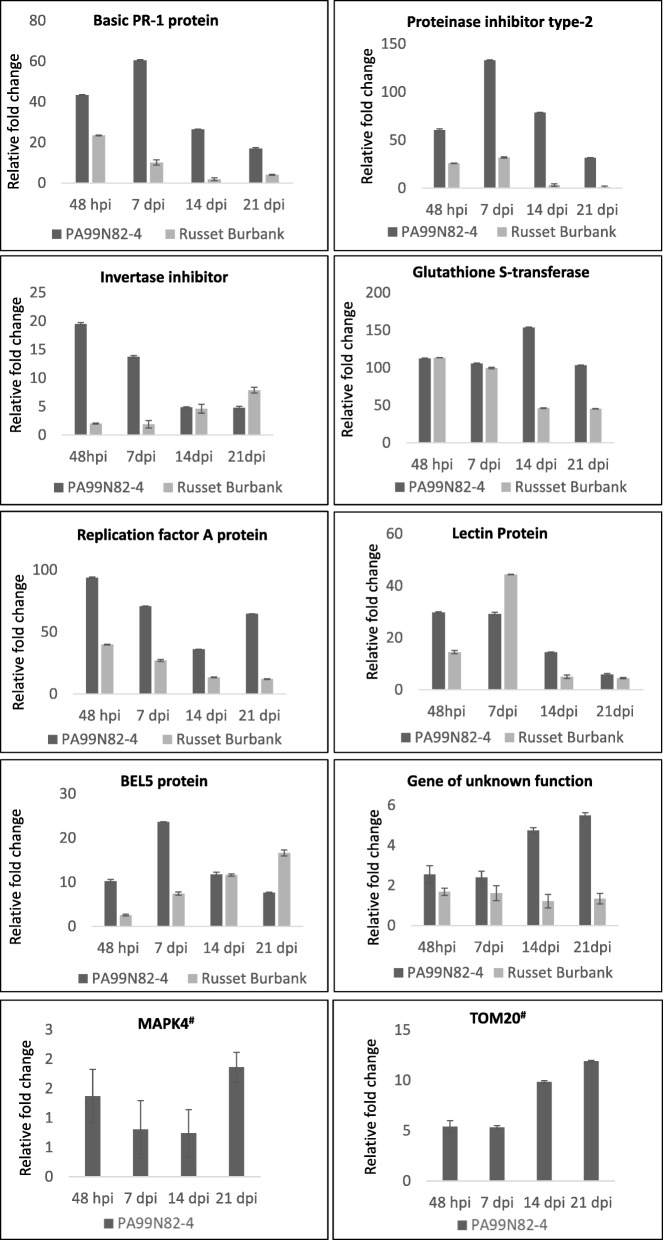
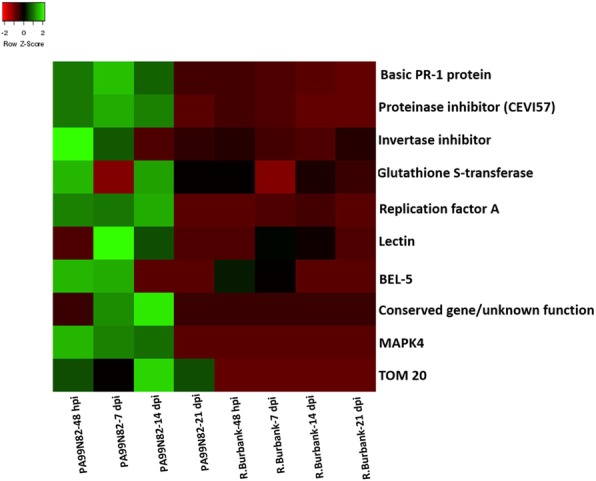
Histological studies revealed that the nematode juveniles successfully infect both resistant and susceptible root tissue by 48 h post inoculation, but the host resistance response restricts nematode feeding site formation in PA99N82-4. Differential gene expression analysis shows that 1268, 1261, 1102 and 2753 genes were up-regulated in PA99N82-4 at 48 h, 7 days, 14 days and 21 days post inoculation respectively, of which 61 genes were common across all the time points. These genes mapped to plant-pathogen interaction, plant hormonal signaling, antioxidant activity and cell wall re-enforcement pathways annotated for potato.
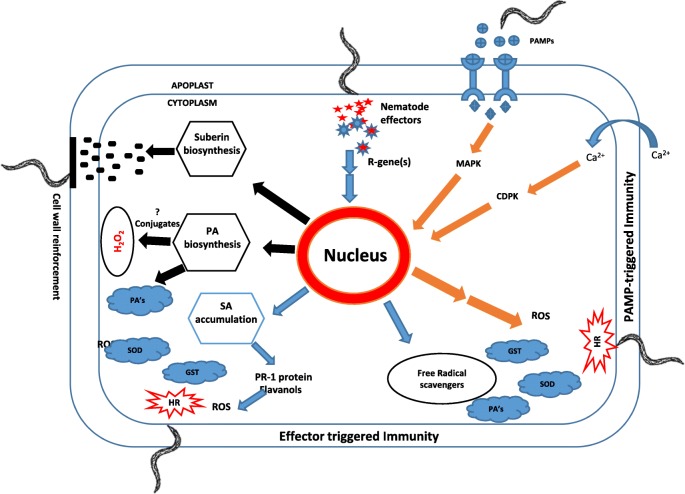
The introgressed nematode resistance in PA99N82-4 is in the form of both pattern-triggered immune response and effector-triggered immune response, which is mediated by accumulation of reactive oxygen species and hypersensitive response (HR). Salicylic acid is playing a major role in the HR. Polyamines and suberin (a component of the Casperian strip in roots) also play an important role in mediating the resistance response. The present study provides the first ever comprehensive insights into transcriptional changes among M. chitwoodi resistant and susceptible potato genotypes after nematode inoculation. The knowledge generated in the present study has implications in breeding for CRKN resistance in potato.
美澳型根结线虫,通常被称为哥伦比亚根结线虫或 CRKN,是美国太平洋西北地区马铃薯最具破坏性的害虫之一。除了根部,它还感染马铃薯块茎,导致内部和外部缺陷,从而降低作物的市场价值。目前还没有具有 CRKN 抗性的商业马铃薯品种。从野生二倍体马铃薯种 Solanum bulbocastanum 中引入了针对 CRKN 的专化抗性,但对其抗性机制的性质知之甚少。在本研究中,我们进行了组织学和差异基因表达谱分析,以了解 PA99N82-4 中引入的 CRKN 抗性的作用方式,与易感染的 Russet Burbank 品种进行比较。
组织学研究表明,线虫幼虫在接种后 48 小时成功感染了抗性和易感的根组织,但宿主的抗性反应限制了 PA99N82-4 中线虫取食部位的形成。差异基因表达分析显示,在接种后 48 小时、7 天、14 天和 21 天,PA99N82-4 中有 1268、1261、1102 和 2753 个基因分别上调,其中 61 个基因在所有时间点都存在。这些基因映射到与马铃薯相关的植物-病原体相互作用、植物激素信号转导、抗氧化活性和细胞壁强化途径。
PA99N82-4 中的引入的线虫抗性形式既有模式触发免疫反应,也有效应物触发免疫反应,这是由活性氧和过敏反应(HR)的积累介导的。水杨酸在 HR 中起主要作用。多胺和亚表皮(根中 Casperian 带的一个组成部分)也在介导抗性反应中发挥重要作用。本研究首次全面了解了线虫接种后抗线虫和易感马铃薯基因型之间的转录变化。本研究产生的知识对马铃薯中 CRKN 抗性的选育具有重要意义。