Zhang Yi, Tian Cheng, Xiao Jiling, Wei Lin, Tian Yun, Liang Zhihuai
College of Bioscience and Biotechnology, Hunan Agricultural University, Changsha, Hunan, China.
Institute of Agricultural Biotechnology Research, Hunan Academy of Agricultural Sciences, Changsha, Hunan, China.
AMB Express. 2020 Oct 23;10(1):189. doi: 10.1186/s13568-020-01126-z.
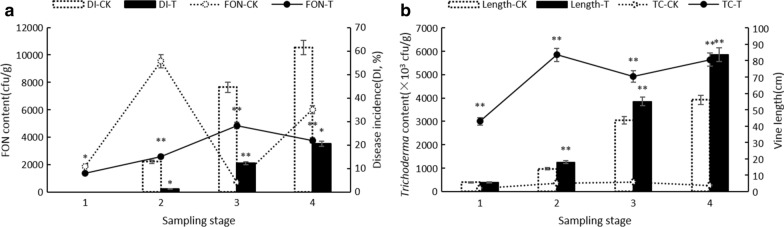
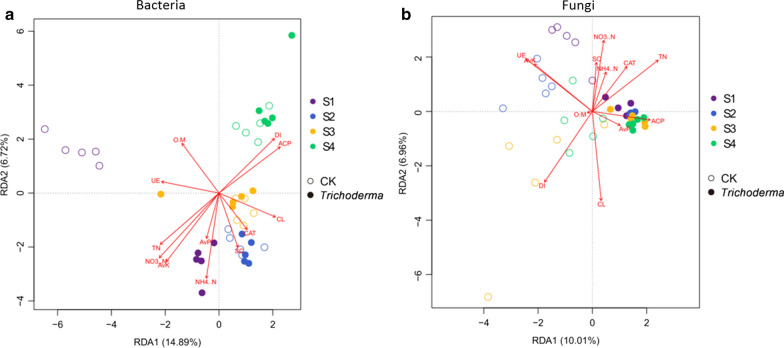
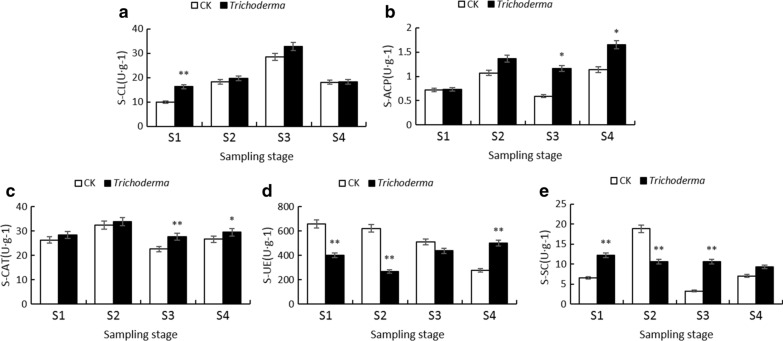
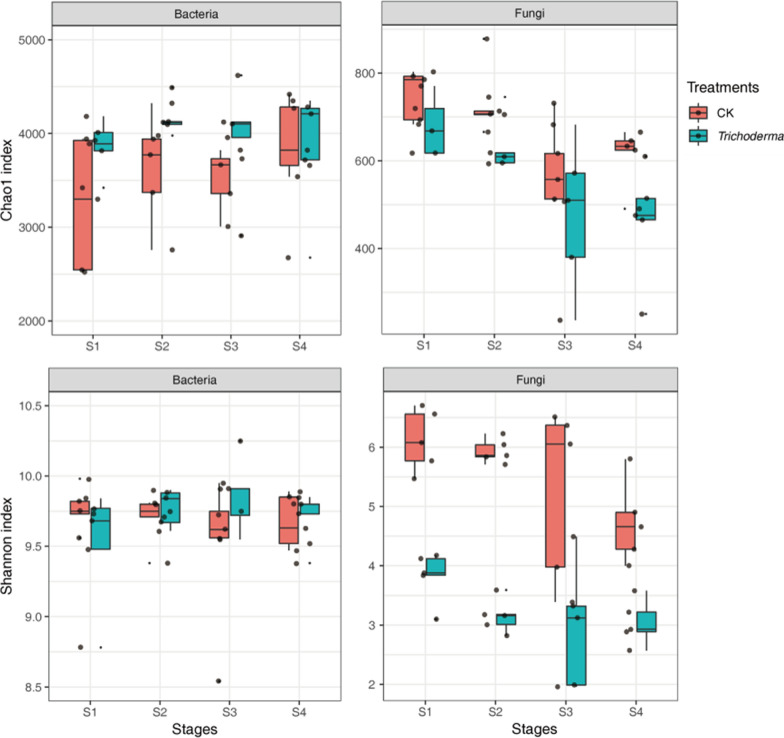
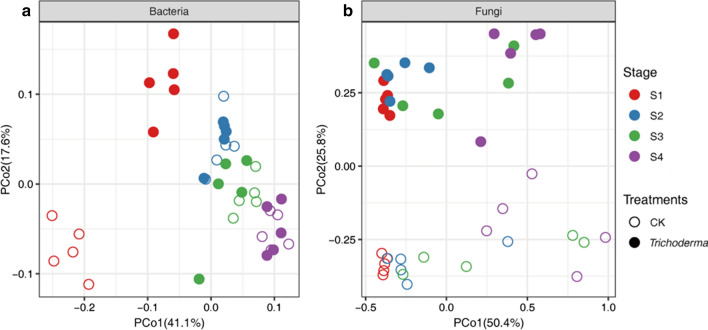
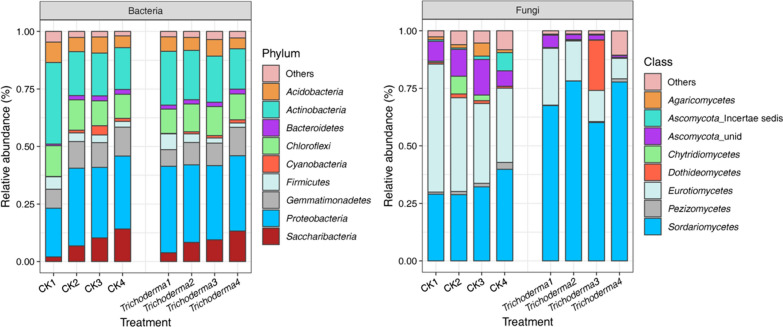
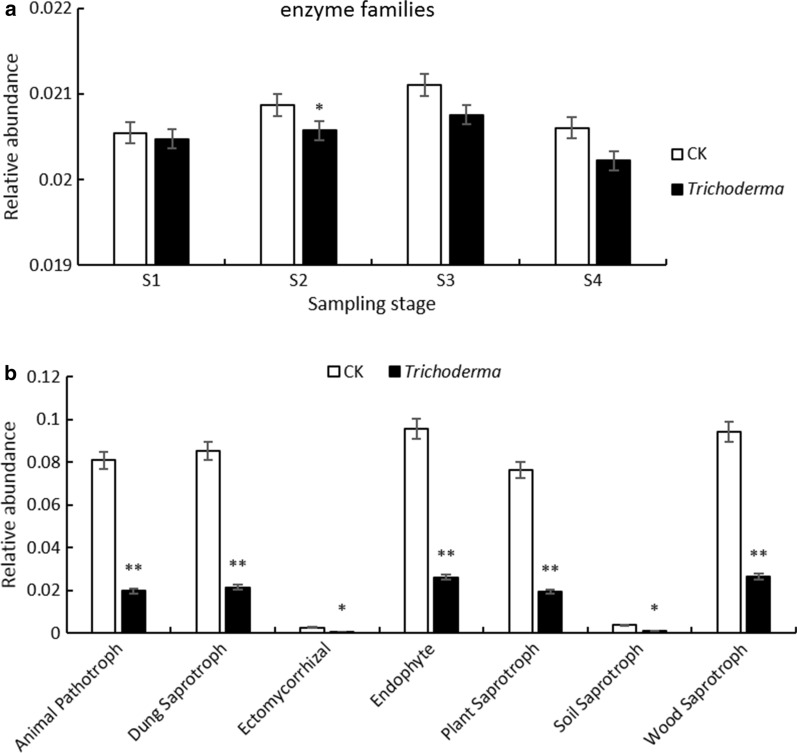
Fusarium wilt (FW) caused by Fusarium oxysporum f. sp. niveum (FON) is a soil-borne disease that seriously limits watermelon production. In the present study, Trichoderma asperellum (T. asperellum) M45a was shown to be an effective biocontrol agent against FW. In a pot experiment, the application of 10 cfu/g of T. asperellum M45a granules had an improved control effect on FW during the blooming period (up to 67.44%) in soils subjected to five years of continuous cropping with watermelon, while the average length of watermelon vines was also significantly improved (P < 0.05). Additionally, the acid phosphatase (ACP), cellulase (CL), catalase (CAT), and sucrase (SC) activities in the M45a-inoculation group were significantly higher than those in the control (CK) group, and transformation of the soil nutrients (total N, NO3-N, and available P) was significantly increased. Moreover, T. asperellum M45a inoculation reduced fungal diversity, increased bacterial diversity and especially enhanced the relative abundance of plant growth-promoting rhizobacteria (PGPR), such as Trichoderma, Sphingomonas, Pseudomonas, Actinomadura, and Rhodanobacter. Through functional prediction, the relative abundance of ectomycorrhiza, endophytes, animal pathotrophs, and saprotrophs in the fungal community was determined to be significantly lower than that observed in the M45a-treated soil. Correlation analysis revealed that Sphingomonas, Pseudomonas, and Trichoderma had the most differences in terms of microorganism abundance, and these differences were positively correlated with ACP, CL, CAT, and SC. These findings provide guidance for the use of fungicides to achieve microecological control of FW in continuously cropped watermelon plots.
由尖孢镰刀菌西瓜专化型(FON)引起的枯萎病(FW)是一种土传病害,严重限制了西瓜生产。在本研究中,棘孢木霉(T. asperellum)M45a被证明是一种防治FW的有效生物防治剂。在盆栽试验中,施用10 cfu/g的棘孢木霉M45a颗粒对连续五年种植西瓜的土壤中花期的FW具有较好的防治效果(高达67.44%),同时西瓜藤蔓的平均长度也显著提高(P < 0.05)。此外,接种M45a组的酸性磷酸酶(ACP)、纤维素酶(CL)、过氧化氢酶(CAT)和蔗糖酶(SC)活性显著高于对照组(CK),土壤养分(全氮、硝态氮和有效磷)的转化显著增加。此外,接种棘孢木霉M45a降低了真菌多样性,增加了细菌多样性,特别是提高了促进植物生长的根际细菌(PGPR)的相对丰度,如木霉属、鞘氨醇单胞菌属、假单胞菌属、马杜拉放线菌属和红杆菌属。通过功能预测,确定真菌群落中外生菌根、内生菌、动物病原菌和腐生菌的相对丰度显著低于M45a处理土壤中的观察值。相关性分析表明,鞘氨醇单胞菌属、假单胞菌属和木霉属在微生物丰度方面差异最大,这些差异与ACP、CL、CAT和SC呈正相关联。这些研究结果为利用杀菌剂实现连作西瓜地FW的微生态防治提供了指导。