Potluri Tanvi, Fink Ashley L, Sylvia Kristyn E, Dhakal Santosh, Vermillion Meghan S, Vom Steeg Landon, Deshpande Sharvari, Narasimhan Harish, Klein Sabra L
1W. Harry Feinstone Department of Molecular Microbiology and Immunology, Johns Hopkins University Bloomberg School of Public Health, Baltimore, MD 21205 USA.
4Present Address: Biology Department, College of Saint Benedict and Saint John's University, Collegeville, MN 56321 USA.
NPJ Vaccines. 2019 Jul 12;4:29. doi: 10.1038/s41541-019-0124-6. eCollection 2019.
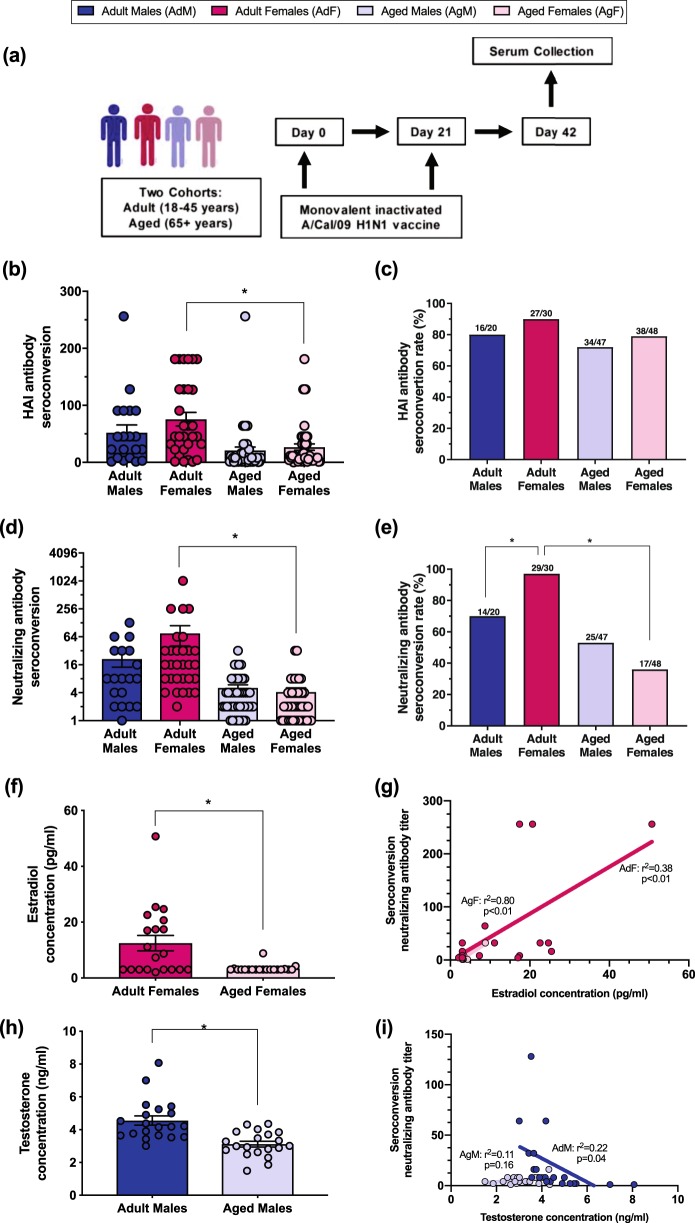
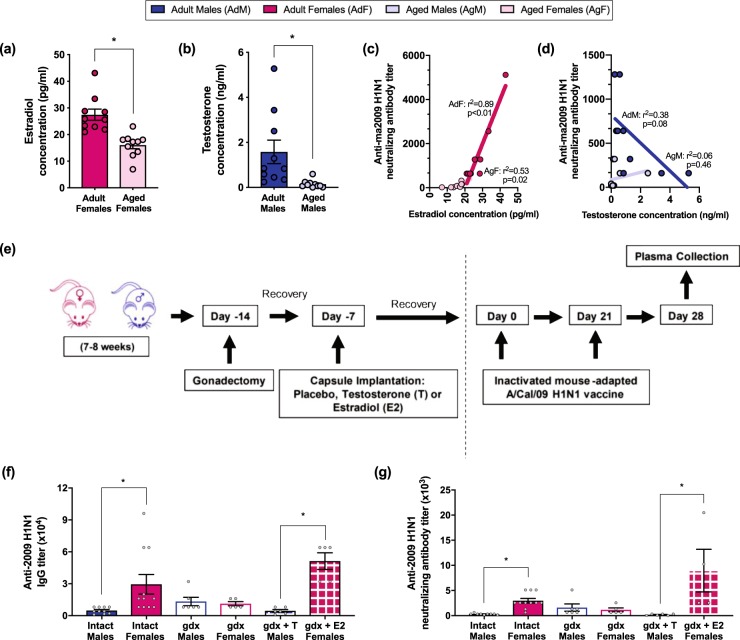
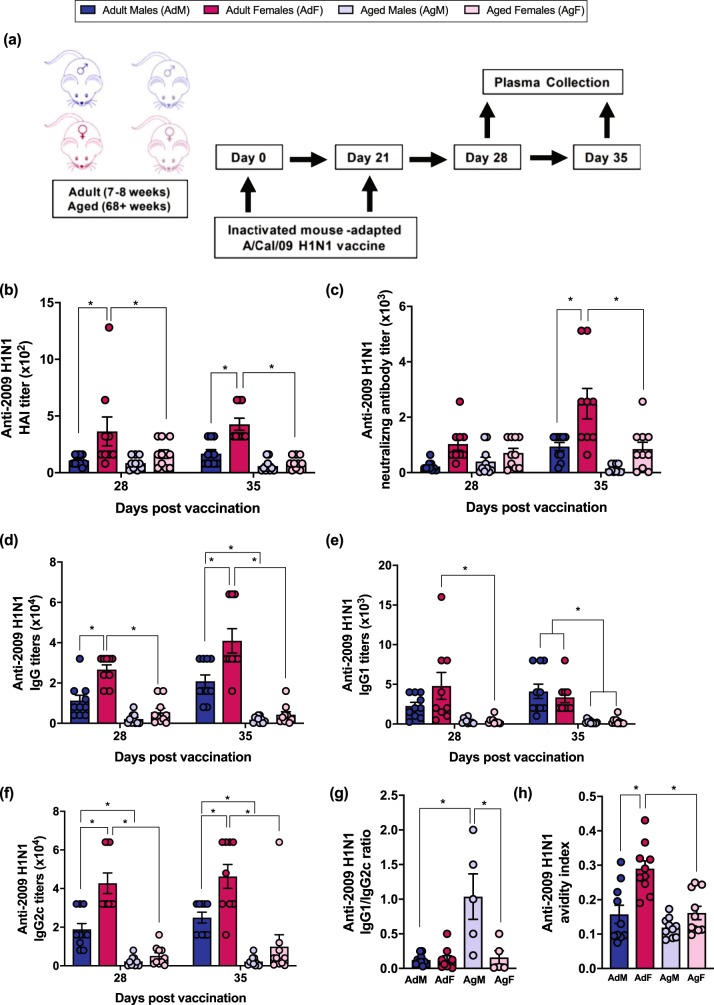
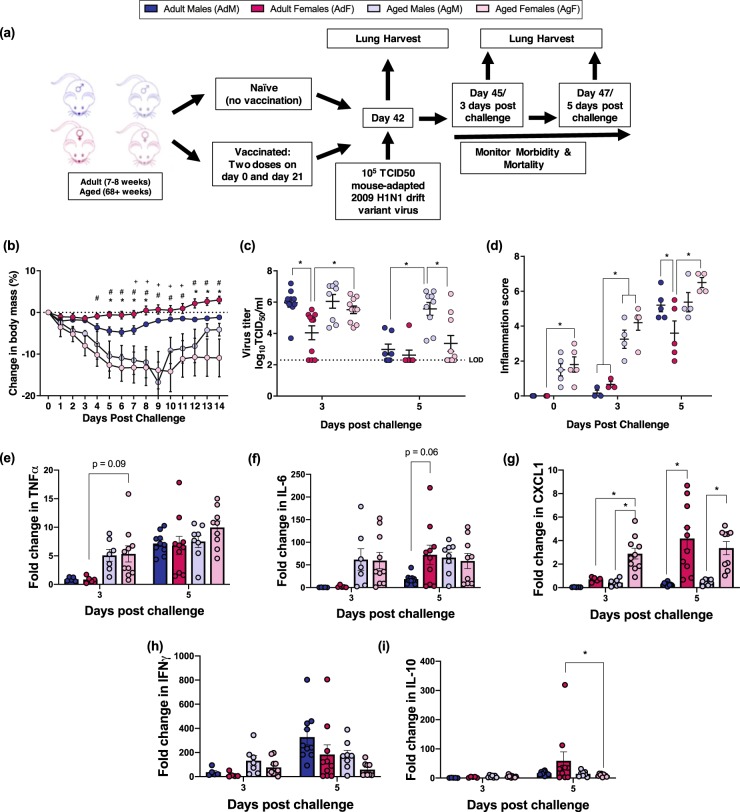
Vaccine-induced immunity declines with age, which may differ between males and females. Using human sera collected before and 21 days after receipt of the monovalent A/Cal/09 H1N1 vaccine, we evaluated cytokine and antibody responses in adult (18-45 years) and aged (65+ years) individuals. After vaccination, adult females developed greater IL-6 and antibody responses than either adult males or aged females, with female antibody responses being positively associated with concentrations of estradiol. To test whether protection against influenza virus challenge was greater in females than males, we primed and boosted adult (8-10 weeks) and aged (68-70 weeks) male and female mice with an inactivated A/Cal/09 H1N1 vaccine or no vaccine and challenged with a drift variant A/Cal/09 virus. As compared with unvaccinated mice, vaccinated adult, but not aged, mice experienced less morbidity and better pulmonary viral clearance following challenge, regardless of sex. Vaccinated adult female mice developed antibody responses that were of greater quantity and quality and more protective than vaccinated adult males. Sex differences in vaccine efficacy diminished with age in mice. To determine the role of sex steroids in vaccine-induced immune responses, adult mice were gonadectomized and hormones (estradiol in females and testosterone in males) were replaced in subsets of animals before vaccination. Vaccine-induced antibody responses were increased in females by estradiol and decreased in males by testosterone. The benefit of elevated estradiol on antibody responses and protection against influenza in females is diminished with age in both mice and humans.
疫苗诱导的免疫力会随着年龄的增长而下降,这在男性和女性中可能存在差异。我们使用在接种单价A/Cal/09 H1N1疫苗之前和之后21天收集的人体血清,评估了成年(18 - 45岁)和老年(65岁以上)个体的细胞因子和抗体反应。接种疫苗后,成年女性产生的白细胞介素-6和抗体反应比成年男性或老年女性更强,女性的抗体反应与雌二醇浓度呈正相关。为了测试女性对流感病毒攻击的保护作用是否比男性更强,我们用灭活的A/Cal/09 H1N1疫苗或不接种疫苗对成年(8 - 10周)和老年(68 - 70周)的雄性和雌性小鼠进行了初次免疫和加强免疫,然后用一种变异的A/Cal/09病毒进行攻击。与未接种疫苗的小鼠相比,接种疫苗的成年小鼠(无论性别)在受到攻击后发病率更低,肺部病毒清除情况更好,但老年小鼠并非如此。接种疫苗的成年雌性小鼠产生的抗体反应在数量、质量和保护性方面都比接种疫苗的成年雄性小鼠更强。在小鼠中,疫苗效力的性别差异会随着年龄的增长而减小。为了确定性类固醇在疫苗诱导的免疫反应中的作用,对成年小鼠进行去势手术,并在接种疫苗前对部分动物补充激素(雌性补充雌二醇,雄性补充睾酮)。雌二醇使雌性小鼠的疫苗诱导抗体反应增强,睾酮则使雄性小鼠的抗体反应减弱。在小鼠和人类中,随着年龄的增长,雌二醇水平升高对抗体反应和预防流感的益处都会减弱。