Department of Biomedical and Health Informatics, Rutgers School of Health Professions, Rutgers Biomedical and Health Sciences, USA.
Department of Biomedical and Health Informatics, Rutgers School of Health Professions, Rutgers Biomedical and Health Sciences, USA; Department of Physician Assistant Studies and Practice, USA; Department of Pathology & Laboratory Medicine, New Jersey Medical School, Newark, New Jersey 07107, USA.
EBioMedicine. 2020 Nov;61:103047. doi: 10.1016/j.ebiom.2020.103047. Epub 2020 Oct 21.
Prioritization of breast cancer patients based on the risk of resistance to tamoxifen plays a significant role in personalized therapeutic planning and improving disease course and outcomes.
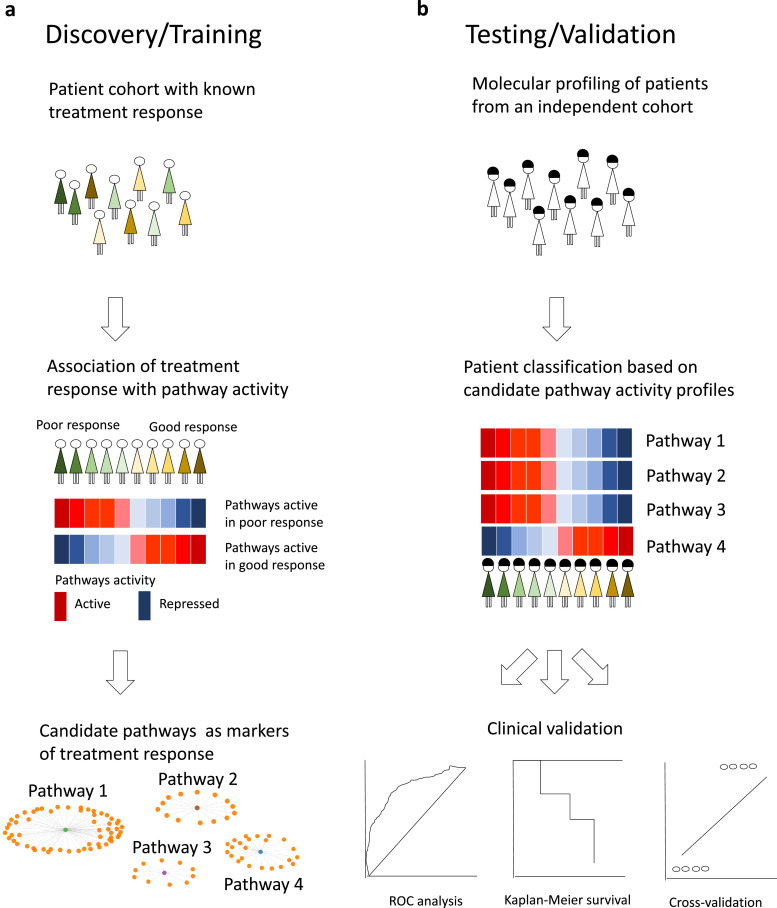
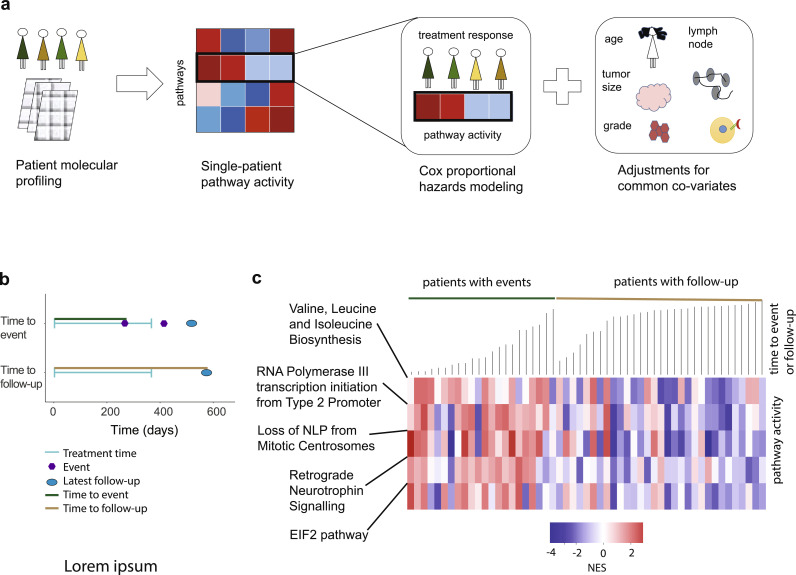
In this work, we demonstrate that a genome-wide pathway-centric computational framework elucidates molecular pathways as markers of tamoxifen resistance in ER+ breast cancer patients. In particular, we associated activity levels of molecular pathways with a wide spectrum of response to tamoxifen, which defined markers of tamoxifen resistance in patients with ER+ breast cancer.
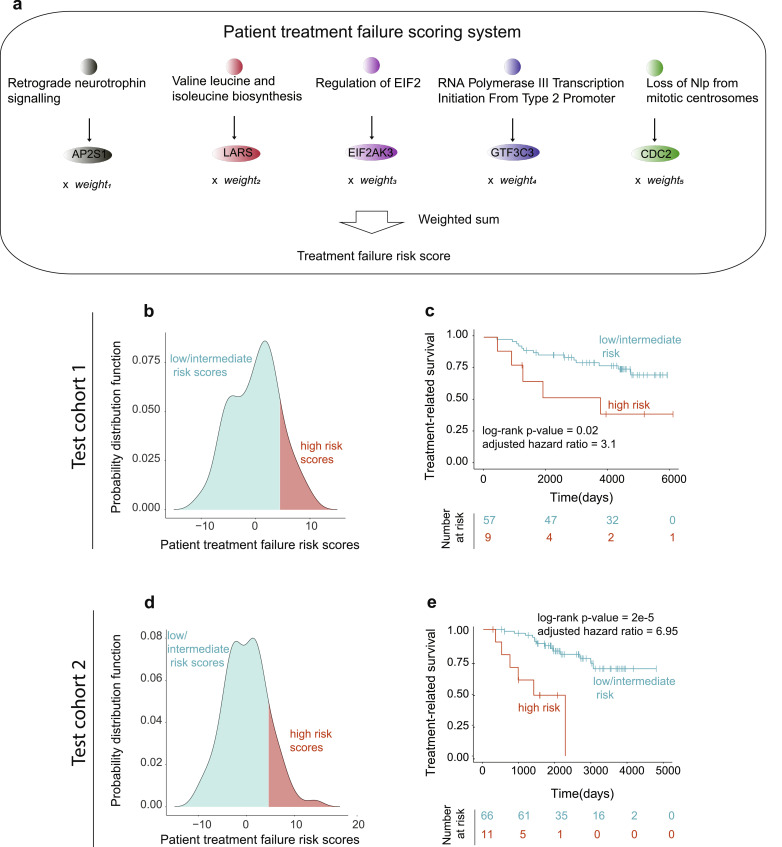
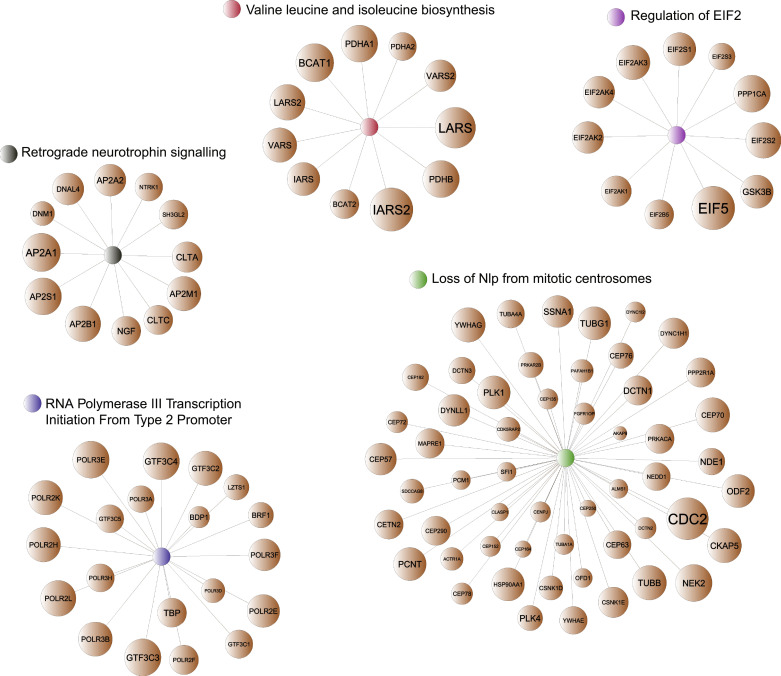
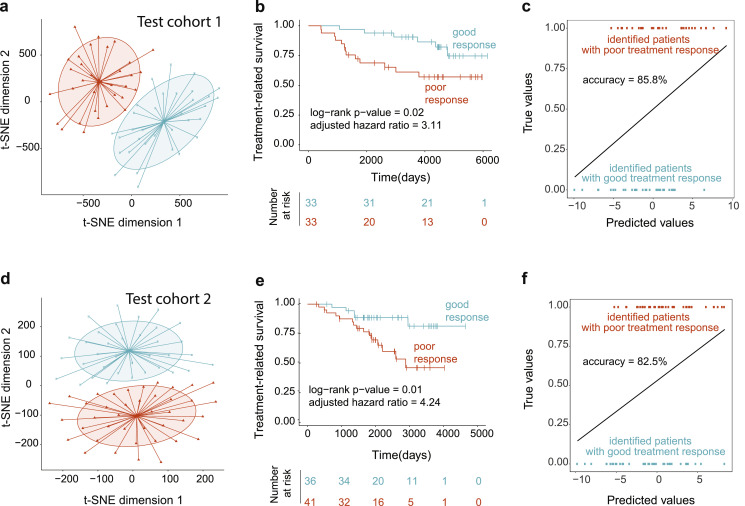
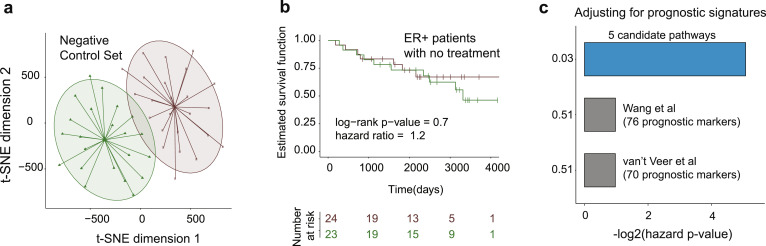
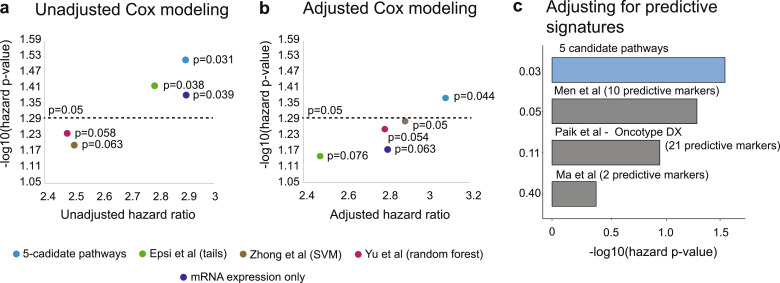
We identified five biological pathways as markers of tamoxifen failure and demonstrated their ability to predict the risk of tamoxifen resistance in two independent patient cohorts (Test cohort1: log-rank p-value = 0.02, adjusted HR = 3.11; Test cohort2: log-rank p-value = 0.01, adjusted HR = 4.24). We have shown that these pathways are not markers of aggressiveness and outperform known markers of tamoxifen response. Furthermore, for adoption into clinic, we derived a list of pathway read-out genes and their associated scoring system, which assigns a risk of tamoxifen resistance for new incoming patients.
We propose that the identified pathways and their read-out genes can be utilized to prioritize patients who would benefit from tamoxifen treatment and patients at risk of tamoxifen resistance that should be offered alternative regimens.
This work was supported by the Rutgers SHP Dean's research grant, Rutgers start-up funds, Libyan Ministry of Higher Education and Scientific Research, and Katrina Kehlet Graduate Award from The NJ Chapter of the Healthcare Information Management Systems Society.
基于对他莫昔芬耐药风险的评估对乳腺癌患者进行优先排序,在个体化治疗方案制定以及改善疾病进程和结局方面发挥着重要作用。
在本研究中,我们展示了一种基于全基因组途径的计算框架,可阐明分子途径作为 ER+乳腺癌患者对他莫昔芬耐药的标志物。具体而言,我们将分子途径的活性水平与广泛的他莫昔芬治疗反应相关联,从而确定了 ER+乳腺癌患者对他莫昔芬耐药的标志物。
我们确定了五个生物学途径作为他莫昔芬失败的标志物,并在两个独立的患者队列中证明了它们预测他莫昔芬耐药风险的能力(测试队列 1:对数秩检验 p 值=0.02,调整后的 HR=3.11;测试队列 2:对数秩检验 p 值=0.01,调整后的 HR=4.24)。我们已经证明,这些途径不是侵袭性的标志物,并且优于已知的他莫昔芬反应标志物。此外,为了将其应用于临床,我们推导了途径读出基因列表及其相关评分系统,该系统可为新入组的患者分配他莫昔芬耐药风险。
我们提出,所确定的途径及其读出基因可用于优先考虑那些将从他莫昔芬治疗中获益的患者和那些有他莫昔芬耐药风险的患者,这些患者应提供替代治疗方案。
这项工作得到了罗格斯 SHP 院长研究基金、罗格斯大学启动资金、利比亚高等教育和科研部以及新泽西州医疗信息管理系统协会的 Katrina Kehlet 研究生奖的支持。