Department of General Surgery, Ruijin Hospital, School of Medicine, Shanghai Jiao Tong University, 200025, Shanghai, China.
Shanghai Institute of Digestive Surgery, Ruijin Hospital, School of Medicine, Shanghai Jiao Tong University, 200025, Shanghai, China.
Cell Death Dis. 2020 Oct 24;11(10):916. doi: 10.1038/s41419-020-03111-7.
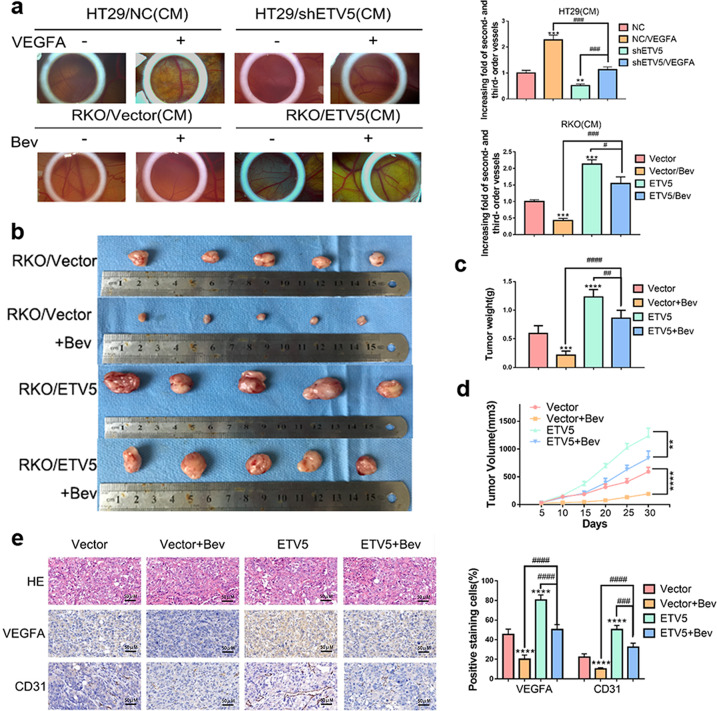
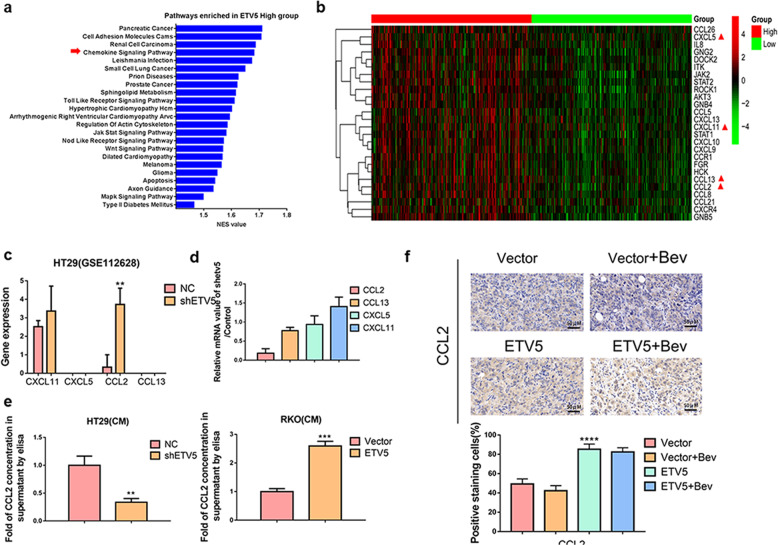
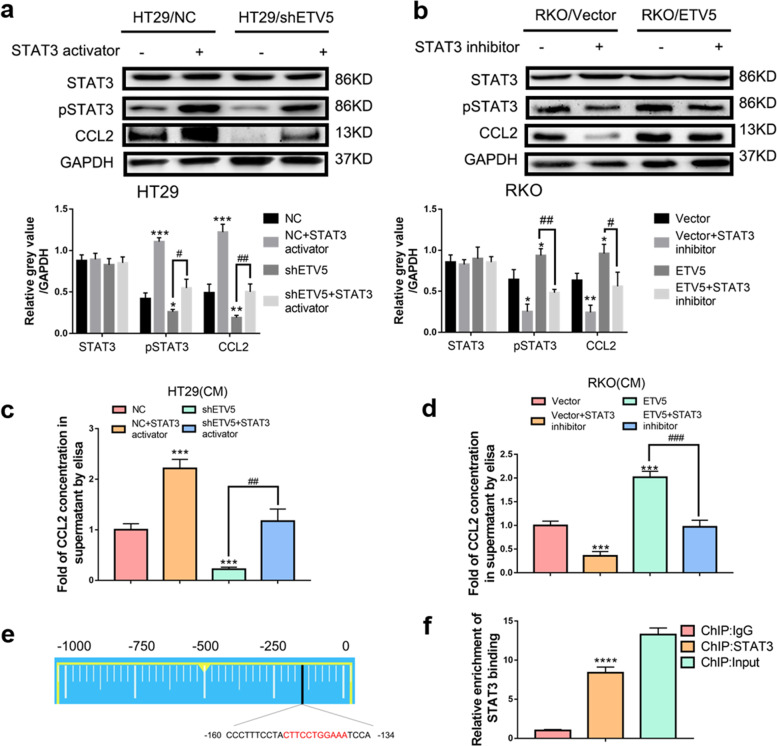
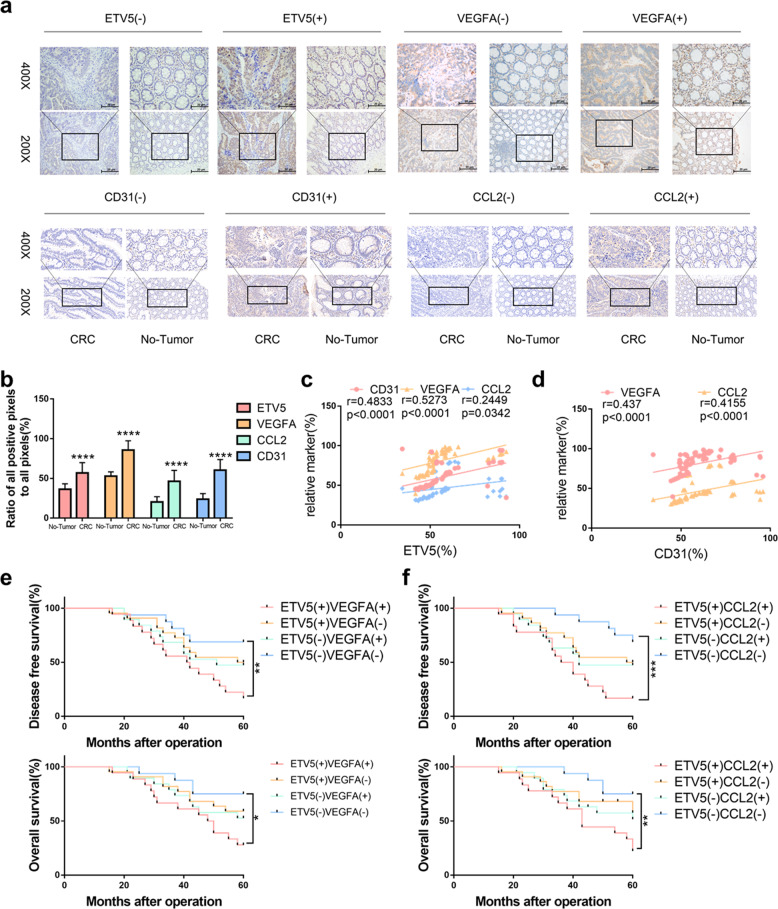
In our previous study, ETV5 mediated-angiogenesis was demonstrated to be dependent upon the PDGF-BB/PDGFR-β/Src/STAT3/VEGFA pathway in colorectal cancer (CRC). However, the ability of ETV5 to affect the efficacy of anti-angiogenic therapy in CRC requires further investigation. Gene set enrichment analysis (GSEA) and a series of experiments were performed to identify the critical candidate gene involved in Bevacizumab resistance. Furthermore, the ability of treatment targeting the candidate gene to enhance Bevacizumab sensitivity in vitro and in vivo was investigated. Our results revealed that ETV5 directly bound to the VEGFA promoter to promote translation of VEGFA. However, according to in vitro and in vivo experiments, ETV5 unexpectedly accelerated antiVEGF therapy (Bevacizumab) resistance. GSEA and additional assays confirmed that ETV5 could promote angiogenesis by inducing the secretion of another tumor angiogenesis factor (CCL2) in CRC cells to facilitate Bevacizumab resistance. Mechanistically, ETV5 upregulated CCL2 by activating STAT3 to facilitate binding with the CCL2 promoter. ETV5 induced-VEGFA translation and CCL2 secretion were mutually independent mechanisms, that induced angiogenesis by activating the PI3K/AKT and p38/MAPK signaling pathways in human umbilical vein endothelial cells (HUVECs). In CRC tissues, ETV5 protein levels were positively associated with CD31, CCL2, and VEGFA protein expression. CRC patients possessing high expression of ETV5/VEGFA or ETV5/CCL2 exhibited a poorer prognosis compared to that of other patients. Combined antiCCL2 and antiVEGFA (Bevacizumab) treatment could inhibit tumor angiogenesis and growth more effectively than single treatments in CRCs with high expression of ETV5 (ETV5 CRCs). In conclusion, our results not only revealed ETV5 as a novel biomarker for anti-angiogenic therapy, but also indicated a potential combined therapy strategy that involved in targeting of both CCL2 and VEGFA in ETV5 CRC.
在我们之前的研究中,ETV5 介导的血管生成被证明依赖于结直肠癌(CRC)中的 PDGF-BB/PDGFR-β/Src/STAT3/VEGFA 通路。然而,ETV5 影响 CRC 中抗血管生成治疗效果的能力需要进一步研究。进行了基因集富集分析(GSEA)和一系列实验,以确定参与贝伐单抗耐药的关键候选基因。此外,还研究了针对候选基因的治疗方法在体外和体内增强贝伐单抗敏感性的能力。我们的结果表明,ETV5 直接与 VEGFA 启动子结合,促进 VEGFA 的翻译。然而,根据体外和体内实验,ETV5 出人意料地加速了抗 VEGF 治疗(贝伐单抗)的耐药性。GSEA 和其他实验进一步证实,ETV5 可以通过在 CRC 细胞中诱导另一种肿瘤血管生成因子(CCL2)的分泌来促进血管生成,从而促进贝伐单抗耐药性。在机制上,ETV5 通过激活 STAT3 上调 CCL2,促进与 CCL2 启动子的结合。ETV5 诱导的-VEGFA 翻译和 CCL2 分泌是相互独立的机制,通过激活人脐静脉内皮细胞(HUVEC)中的 PI3K/AKT 和 p38/MAPK 信号通路诱导血管生成。在 CRC 组织中,ETV5 蛋白水平与 CD31、CCL2 和 VEGFA 蛋白表达呈正相关。与其他患者相比,具有高表达 ETV5/VEGFA 或 ETV5/CCL2 的 CRC 患者预后较差。在高表达 ETV5(ETV5 CRC)的 CRC 中,联合抗 CCL2 和抗 VEGFA(贝伐单抗)治疗比单一治疗更能有效地抑制肿瘤血管生成和生长。总之,我们的研究结果不仅揭示了 ETV5 作为抗血管生成治疗的新型生物标志物,还表明了一种潜在的联合治疗策略,即靶向 ETV5 CRC 中的 CCL2 和 VEGFA。