North Carolina State University, College of Veterinary Medicine , Department of Clinical Sciences, Raleigh, NC, USA.
Tissue Barriers. 2020 Oct 1;8(4):1832421. doi: 10.1080/21688370.2020.1832421. Epub 2020 Oct 26.
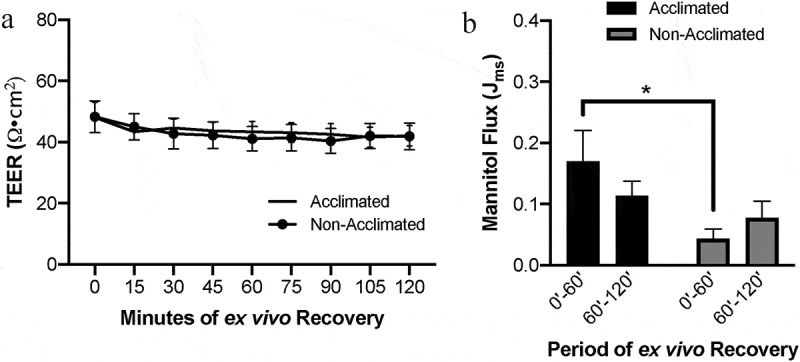
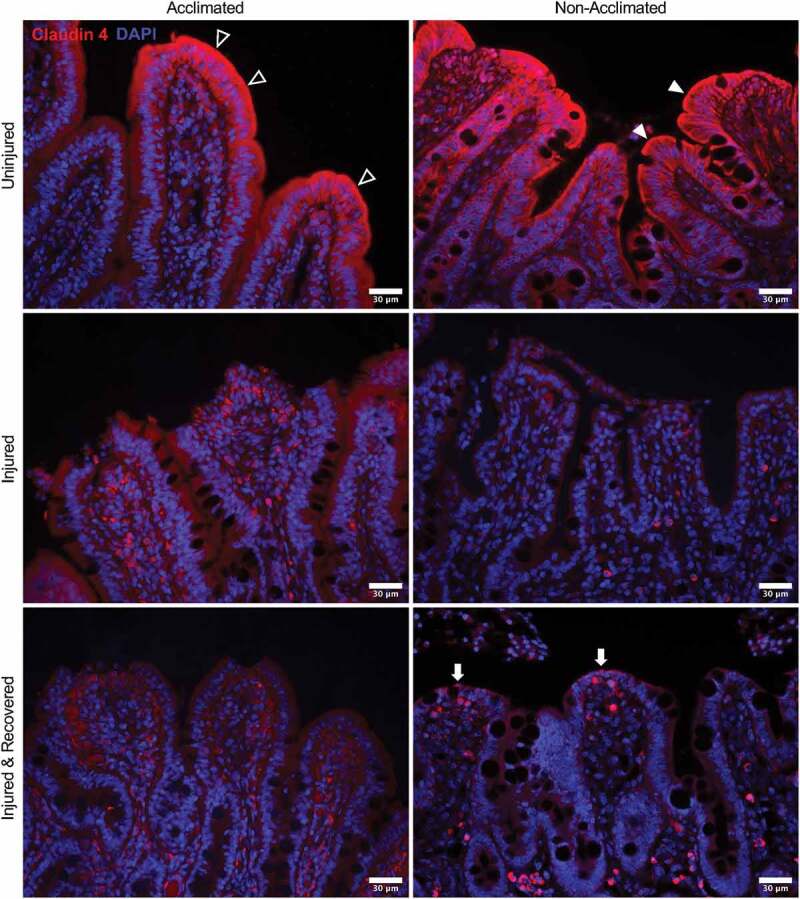
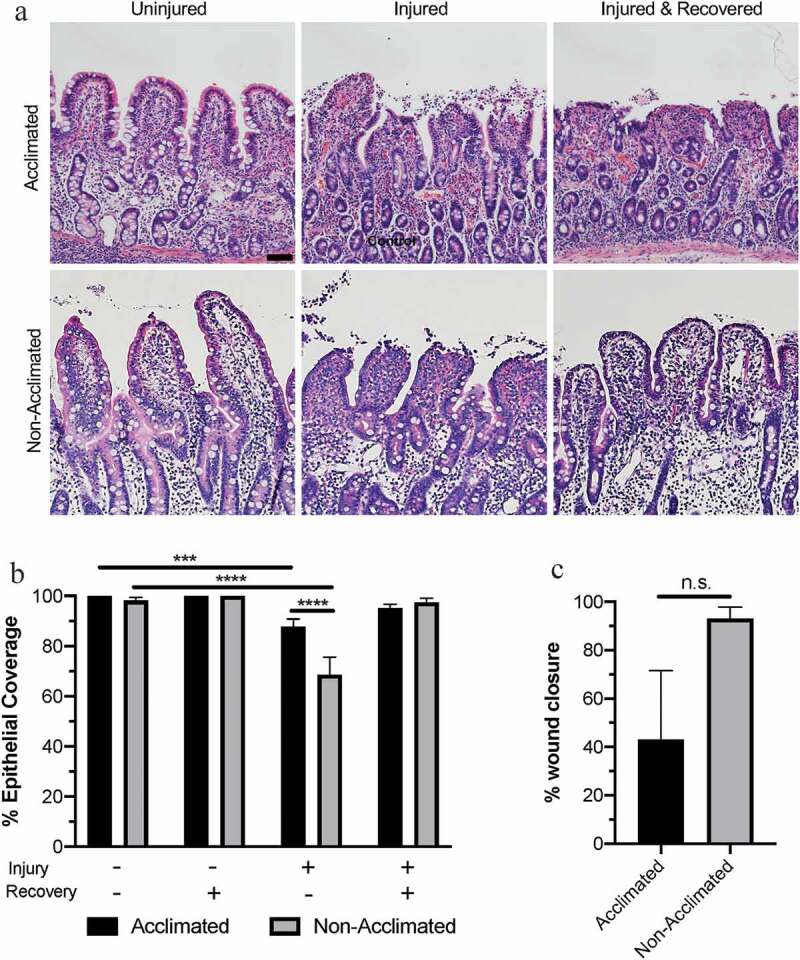
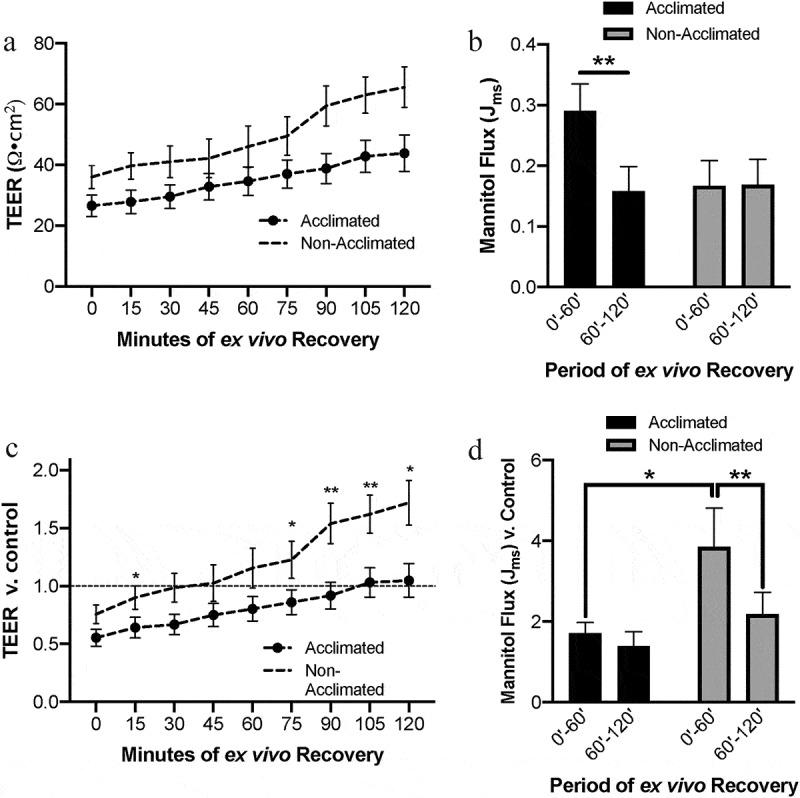
The pig is a powerful model for intestinal barrier studies, and it is important to carefully plan animal care and handling for optimal study design as psychological and physiological stressors significantly impact intestinal mucosal barrier function. Here, we report the effects of a period of environmental acclimation versus acute transport stress on mucosal barrier repair after intestinal ischemic injury. Jejunal ischemia was induced in young pigs which had been allowed to acclimate to a biomedical research housing environment or had been transported immediately prior to experimental injury (non-acclimated). Mucosa was then incubated on Ussing chambers. In uninjured mucosa, there was no difference in transepithelial electrical resistance (TEER) or epithelial integrity between groups. However, acclimated pigs had increased macromolecular flux as compared to non-acclimated pigs during the first hour of incubation. Ischemia induced greater epithelial loss in non-acclimated pigs as compared to acclimated pigs, yet this group achieved greater wound healing during recovery. Non-acclimated pigs had more robust TEER recovery following injury versus acclimated pigs. The expression pattern of the tight junction protein claudin-4 was disrupted in acclimated pigs following recovery but showed enhanced localization to the apical membrane in non-acclimated pigs following recovery. Acute transport stress increases mucosal susceptibility to epithelial loss but also primes the tissue for a more robust barrier repair response. Alternatively, environmental acclimation increases leak pathway and diminishes barrier repair responses after ischemic injury.
猪是研究肠道屏障的有力模型,为了优化研究设计,仔细规划动物护理和处理非常重要,因为心理和生理应激会显著影响肠道黏膜屏障功能。在这里,我们报告了环境适应期与急性运输应激对肠缺血损伤后黏膜屏障修复的影响。将幼年猪的空肠诱导缺血,这些猪已经适应了生物医学研究的居住环境,或者在实验性损伤之前已经被运输(未适应)。然后将黏膜在 Ussing 室中孵育。在未受伤的黏膜中,两组之间的跨上皮电阻(TEER)或上皮完整性没有差异。然而,与未适应的猪相比,适应环境的猪在孵育的第一小时内具有更高的大分子通量。与适应环境的猪相比,非适应环境的猪在缺血后表现出更大的上皮损失,但该组在恢复期间实现了更大的伤口愈合。与适应环境的猪相比,非适应环境的猪在受伤后具有更强的 TEER 恢复。在恢复后,适应环境的猪的紧密连接蛋白 Claudin-4 的表达模式被打乱,但在恢复后,非适应环境的猪的 Claudin-4 定位到顶膜,其表达模式增强。急性运输应激增加了黏膜对上皮损失的易感性,但也为组织提供了更强的屏障修复反应。相反,环境适应增加了渗漏途径,并在缺血损伤后降低了屏障修复反应。