Mittal Rajat, Meneveau Charles, Wu Wen
Mechanical Engineering, Johns Hopkins University, 3400 N. Charles St., Baltimore, Maryland 21218, USA.
Mechanical Engineering, University of Mississippi, 209C Carrier Hall, Oxford, Mississippi 38677, USA.
Phys Fluids (1994). 2020 Oct 1;32(10):101903. doi: 10.1063/5.0025476.
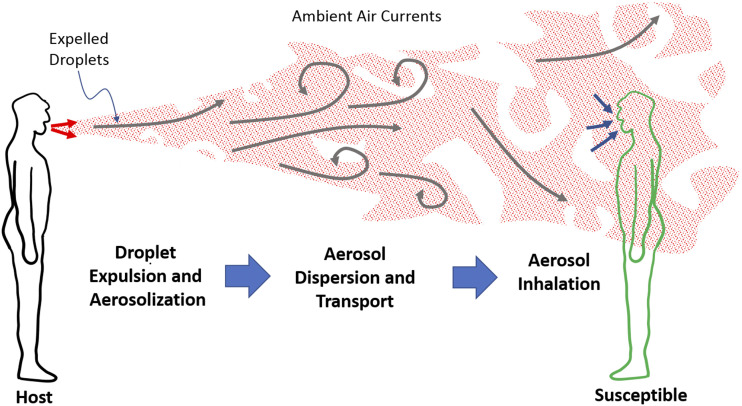
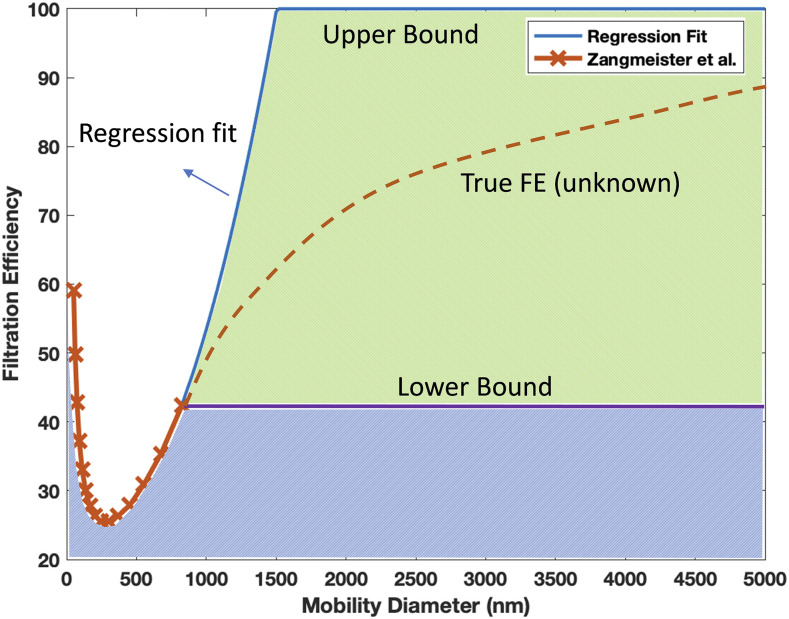
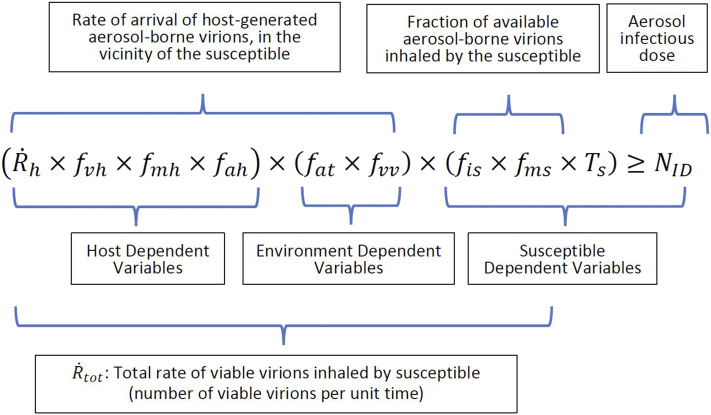
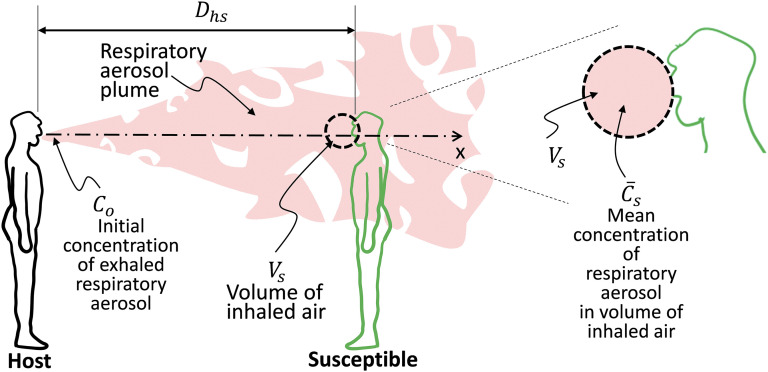
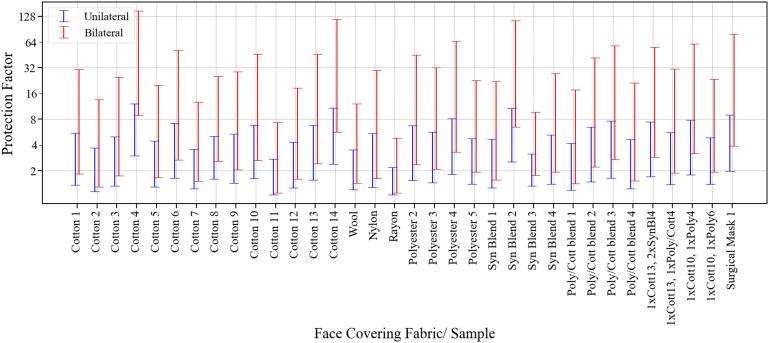
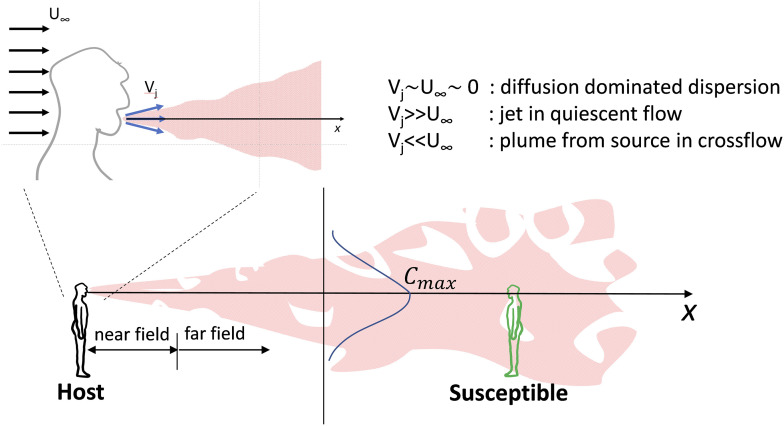
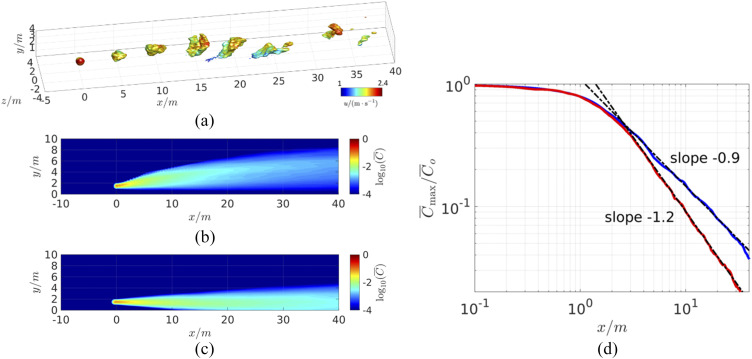
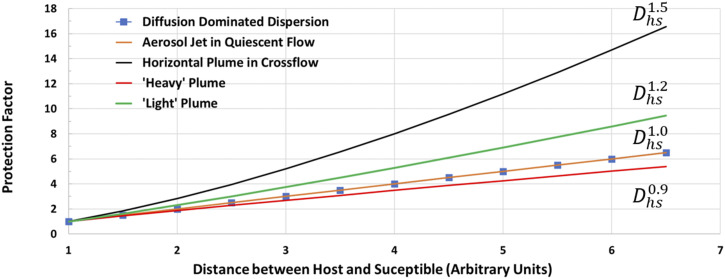
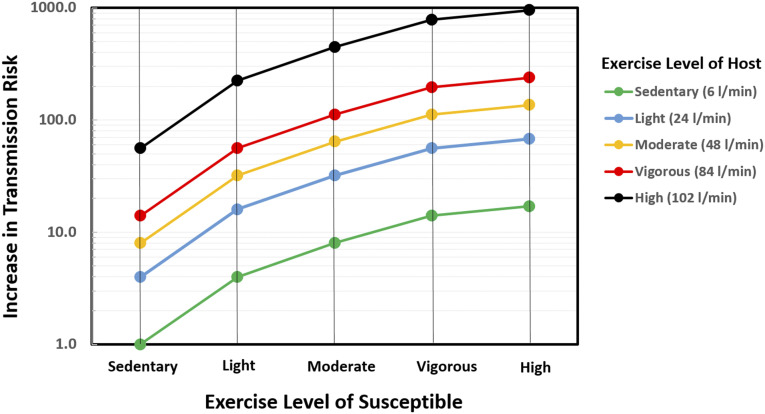
A mathematical model for estimating the risk of airborne transmission of a respiratory infection such as COVID-19 is presented. The model employs basic concepts from fluid dynamics and incorporates the known scope of factors involved in the airborne transmission of such diseases. Simplicity in the mathematical form of the model is by design so that it can serve not only as a common basis for scientific inquiry across disciplinary boundaries but it can also be understandable by a broad audience outside science and academia. The caveats and limitations of the model are discussed in detail. The model is used to assess the protection from transmission afforded by face coverings made from a variety of fabrics. The reduction in the transmission risk associated with increased physical distance between the host and susceptible is also quantified by coupling the model with available and new large eddy simulation data on scalar dispersion in canonical flows. Finally, the effect of the level of physical activity (or exercise intensity) of the host and the susceptible in enhancing the transmission risk is also assessed.
本文提出了一种用于估计诸如新冠肺炎等呼吸道感染空气传播风险的数学模型。该模型采用了流体动力学的基本概念,并纳入了此类疾病空气传播所涉及的已知因素范围。模型的数学形式设计得很简单,以便它不仅可以作为跨学科科学探究的共同基础,而且也能被科学界和学术界之外的广大受众理解。详细讨论了该模型的注意事项和局限性。该模型用于评估由各种织物制成的面罩对传播的防护作用。通过将该模型与关于典型流中标量扩散的现有和新的大涡模拟数据相结合,还对宿主与易感者之间物理距离增加所带来的传播风险降低进行了量化。最后,还评估了宿主和易感者的身体活动水平(或运动强度)对增加传播风险的影响。