Verma Surjeet, Twilley Danielle, Esmear Tenille, Oosthuizen Carel B, Reid Anna-Mari, Nel Marizé, Lall Namrita
Department of Plant and Soil Sciences, Faculty of Natural and Agricultural Sciences, University of Pretoria, Pretoria, South Africa.
School of Natural Resources, College of Agriculture, Food and Natural Resources, University of Missouri, Columbia, MO, United States.
Front Pharmacol. 2020 Sep 25;11:561334. doi: 10.3389/fphar.2020.561334. eCollection 2020.
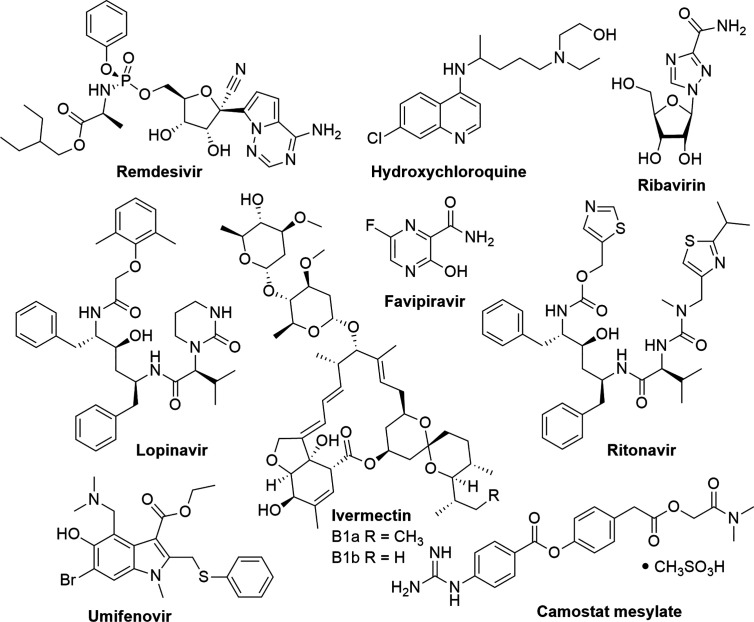
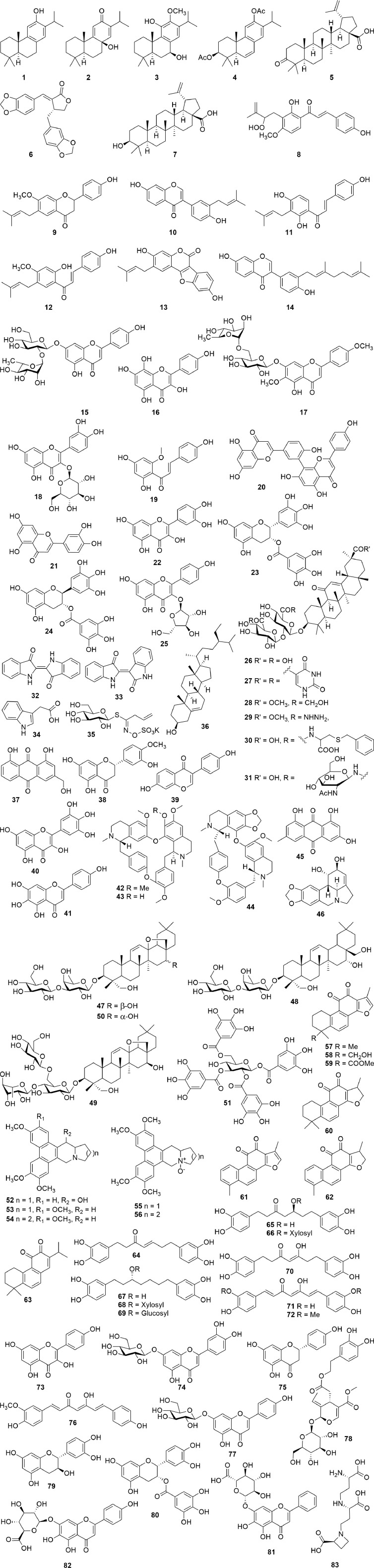
The severe acute respiratory syndrome coronavirus-2 (SARS-CoV-2), known to cause the disease COVID-19, was declared a pandemic in early 2020. The objective of this review was to collate information regarding the potential of plants and natural products to inhibit coronavirus and targets associated with infection in humans and to highlight known drugs, which may have potential activity against SARS-CoV-2. Due to the similarity in the RNA genome, main proteases, and primary host receptor between SARS-CoV and SARS-CoV-2, a review was conducted on plants and secondary metabolites, which have shown activity against SARS-CoV. Numerous scientific reports on the potential of plants and secondary metabolites against SARS-CoV infection were found, providing important information on their possible activity against SARS-CoV-2. Based on current literature, 83 compounds have been identified with the potential to inhibit COVID-19. The most prominent selectivity was found for the alkaloid, lycorine, the lignan, savinin, and the abietane terpenoid, 8-beta-hydroxyabieta-9(11),13-dien-12-one with selectivity index values greater than 945, 667, and 510, respectively. Plants and their secondary metabolites, with activity against targets associated with the SARS-CoV infection, could provide valuable leads for the development into drugs for the novel SARS-CoV-2. The prospects of using computational methods to screen secondary metabolites against SARS-CoV targets are briefly discussed, and the drawbacks have been highlighted. Finally, we discuss plants traditionally used in Southern Africa for symptoms associated with respiratory viral infections and influenza, such as coughs, fever, and colds. However, only a few of these plants have been screened against SARS-CoV. Natural products hold a prominent role in discovering novel therapeutics to mitigate the current COVID-19 pandemic; however, further investigations regarding , , pre-clinical, and clinical phases are still required.
严重急性呼吸综合征冠状病毒2(SARS-CoV-2)可引发新冠肺炎疫情,于2020年初被宣布为全球大流行疾病。本综述的目的是整理有关植物和天然产物抑制冠状病毒的潜力以及与人类感染相关靶点的信息,并突出显示可能对SARS-CoV-2具有潜在活性的已知药物。由于SARS-CoV和SARS-CoV-2在RNA基因组、主要蛋白酶和主要宿主受体方面具有相似性,因此对已显示出抗SARS-CoV活性的植物和次生代谢产物进行了综述。发现了许多关于植物和次生代谢产物抗SARS-CoV感染潜力的科学报告,为它们对SARS-CoV-2的可能活性提供了重要信息。根据当前文献,已鉴定出83种具有抑制新冠肺炎潜力的化合物。其中,生物碱石蒜碱、木脂素萨维宁和枞酸型二萜8-β-羟基枞-9(11),13-二烯-12-酮的选择性最为突出,其选择性指数值分别大于945、667和510。对与SARS-CoV感染相关靶点具有活性的植物及其次生代谢产物,可为开发新型SARS-CoV-2药物提供有价值的线索。简要讨论了使用计算方法筛选针对SARS-CoV靶点的次生代谢产物的前景,并强调了其缺点。最后,我们讨论了在南部非洲传统上用于治疗与呼吸道病毒感染和流感相关症状(如咳嗽、发烧和感冒)的植物。然而,这些植物中只有少数经过了抗SARS-CoV的筛选。天然产物在发现减轻当前新冠肺炎疫情的新型疗法方面具有重要作用;然而,仍需要在 、临床前和临床阶段进行进一步研究。