Adimi Naghan Parisa, Hassani Somayeh, Sadr Makan, Malekmohammad Majid, Khoundabi Batoul, Setareh Javad, Seyedmehdi Seyed Mohammad, Seifi Sharareh
Clinical Tuberculosis and Epidemiologic Research Center, National Research Institute of Tuberculosis and Lung Diseases (NRITLD), Shahid Beheshti University of Medical Sciences, Tehran, Iran.
Virology Research Center, NRITLD, Shahid Beheshti University of Medical Sciences, Tehran, Iran.
Tanaffos. 2020 Jan;19(1):31-37.
Sleep complaints are common problems in the general population and insomnia and sleep disorders place significant economic and social burdens on the community. Postmenopausal women are 2.6 to 3.5 times more likely to develop obstructive sleep apnea (OSA) compared to non-menopausal women. In this study, we evaluated sleep disorders and mental health in postmenopausal women.
This study was a descriptive cross-sectional study and the samples were selected from postmenopausal women above 50 years who had participated in a survey entitled, "Evaluation of Sleep Disorders among Adults in Tehran" in 2017. Cluster sampling method was applied with proportional allocation. A total of 4021 samples were collected, 2075 of which belonged to women. In addition, 174 out of 2075 samples were related to postmenopausal women over the age of 50. The data were analyzed using the statistical package IBM SPSS version 22.0. P-values less than 0.05 were considered significant.
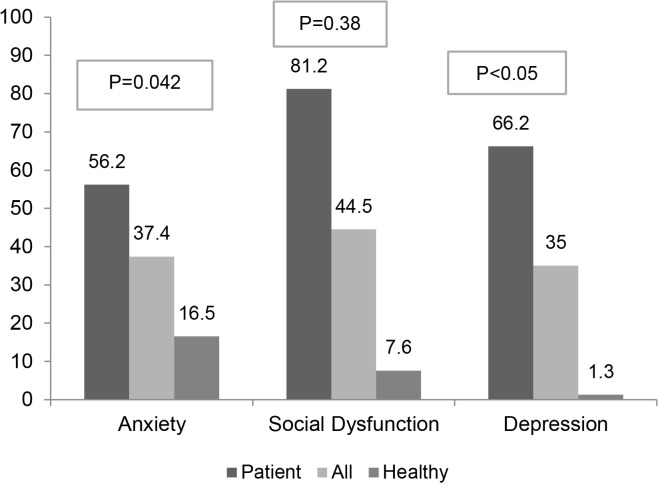
In this study, 118 (67.8%) women had insomnia for less than three months, and 23 (13.2%) women had insomnia for more than three months. The prevalence of STOPBANG parameters in this group of postmenopausal women was 37% and significantly related to Body mass index (BMI) and neck circumference at P < 0.001 and 0.006, respectively. There was no significant relationship between social dysfunction and insomnia. However, anxiety in General Health Questionnaire (GHQ) was significantly associated with insomnia, sleepiness, sadness, and irritability.
Our results indicate that the impact of insomnia symptoms, OSA comorbidity and mental disorders could extend far beyond. The use of urgent health care and quality of life issues is essential for long-term mental and physical well-being; if there is no treatment in the menopause population, there will be serious mental and physical complications.
睡眠问题在普通人群中很常见,失眠和睡眠障碍给社会带来了巨大的经济和社会负担。与未绝经女性相比,绝经后女性患阻塞性睡眠呼吸暂停(OSA)的可能性要高2.6至3.5倍。在本研究中,我们评估了绝经后女性的睡眠障碍和心理健康状况。
本研究为描述性横断面研究,样本选自2017年参与名为“德黑兰成年人睡眠障碍评估”调查的50岁以上绝经后女性。采用按比例分配的整群抽样方法。共收集了4021个样本,其中2075个属于女性。此外,2075个样本中有174个与50岁以上的绝经后女性有关。数据使用统计软件IBM SPSS 22.0进行分析。P值小于0.05被认为具有统计学意义。
在本研究中,118名(67.8%)女性失眠时间少于三个月,23名(13.2%)女性失眠时间超过三个月。这组绝经后女性中STOPBANG参数的患病率为37%,分别与体重指数(BMI)和颈围显著相关,P值分别<0.001和0.006。社会功能障碍与失眠之间无显著关系。然而,一般健康问卷(GHQ)中的焦虑与失眠、嗜睡、悲伤和易怒显著相关。
我们的结果表明,失眠症状、OSA合并症和精神障碍的影响可能远远超出。使用紧急医疗保健和关注生活质量问题对于长期的身心健康至关重要;如果绝经人群得不到治疗,将会出现严重的身心并发症。