Gündüç Semra, Eryiğit Recep
Ankara University Computer Engineering Department, Ankara, Turkey.
Physica A. 2021 Feb 1;563:125483. doi: 10.1016/j.physa.2020.125483. Epub 2020 Oct 21.
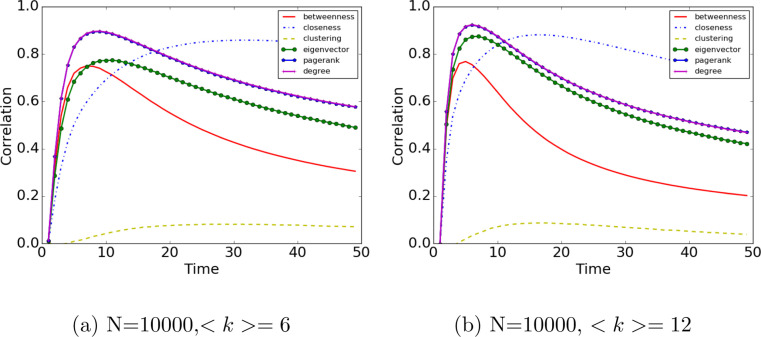
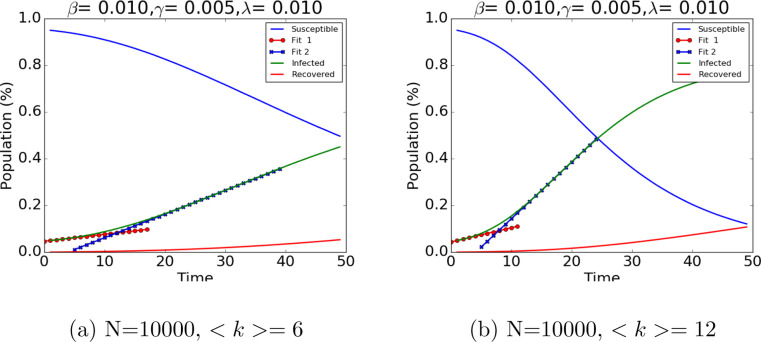
Pandemics are a growing world-wide threat for all societies. Throughout history, various infectious diseases presented widely spread damage to human life, economic viability and general well-being. The scale of destruction of the most recent pandemic, COVID-19, has yet to be seen. This work aims to introduce intervention methodology for the prevention of global scale spread of infectious diseases. The proposed method combines time-dependent infection spreading data with the social connectivity structure of the society. SIR model simulations provided the dynamic of contamination spread in different sets of network data. Seven centrality measures parameterized the local and global importance of each node in the underlying network. At each time step the calculated values of the correlations between node infection probability and node centrality values are analyzed. Calculations show that correlations increase at the beginning of infection spread and reaches its highest value when spreading starts to become an epidemic. The peak is at the very early stages of the spreading; and with this analysis, it is possible to predict the node infection probability from time-dependent correlations data.
大流行对所有社会来说都是日益严重的全球威胁。纵观历史,各种传染病对人类生命、经济活力和总体福祉造成了广泛破坏。最近的大流行疾病——新冠病毒病(COVID-19)的破坏规模尚有待观察。这项工作旨在介绍预防传染病全球范围传播的干预方法。所提出的方法将随时间变化的感染传播数据与社会的社会连通性结构相结合。SIR模型模拟给出了在不同网络数据集里污染传播的动态情况。七种中心性度量参数化了基础网络中每个节点的局部和全局重要性。在每个时间步,分析节点感染概率与节点中心性值之间相关性的计算值。计算表明,相关性在感染传播开始时增加,并在传播开始成为流行病时达到最高值。峰值出现在传播的非常早期阶段;通过这种分析,可以从随时间变化的相关性数据预测节点感染概率。