Department of Toxicogenomics, School of Oncology and Developmental Biology (GROW), Maastricht University, Maastricht, The Netherlands.
Leibniz Research Centre for Working Environment and Human Factors, Technical University of Dortmund (IfADo), Dortmund, Germany.
Arch Toxicol. 2021 Feb;95(2):573-589. doi: 10.1007/s00204-020-02937-6. Epub 2020 Oct 27.
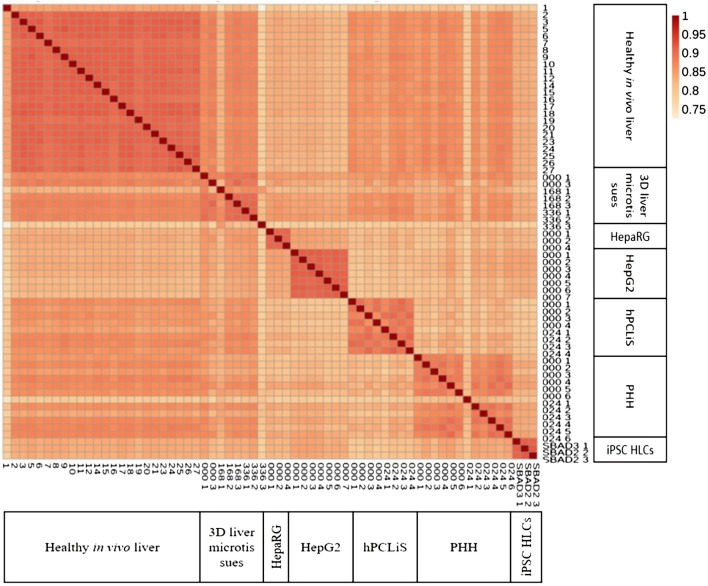
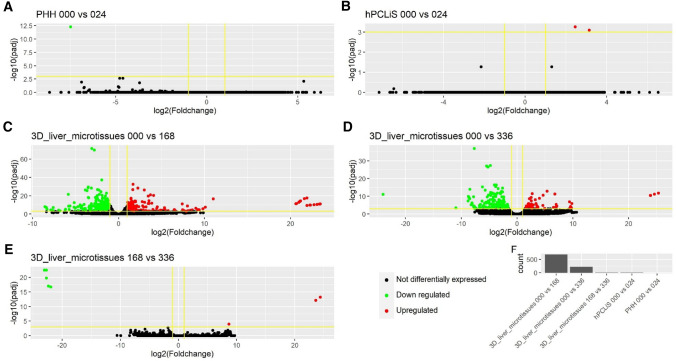
The liver plays an important role in xenobiotic metabolism and represents a primary target for toxic substances. Many different in vitro cell models have been developed in the past decades. In this study, we used RNA-sequencing (RNA-Seq) to analyze the following human in vitro liver cell models in comparison to human liver tissue: cancer-derived cell lines (HepG2, HepaRG 3D), induced pluripotent stem cell-derived hepatocyte-like cells (iPSC-HLCs), cancerous human liver-derived assays (hPCLiS, human precision cut liver slices), non-cancerous human liver-derived assays (PHH, primary human hepatocytes) and 3D liver microtissues. First, using CellNet, we analyzed whether these liver in vitro cell models were indeed classified as liver, based on their baseline expression profile and gene regulatory networks (GRN). More comprehensive analyses using non-differentially expressed genes (non-DEGs) and differential transcript usage (DTU) were applied to assess the coverage for important liver pathways. Through different analyses, we noticed that 3D liver microtissues exhibited a high similarity with in vivo liver, in terms of CellNet (C/T score: 0.98), non-DEGs (10,363) and pathway coverage (highest for 19 out of 20 liver specific pathways shown) at the beginning of the incubation period (0 h) followed by a decrease during long-term incubation for 168 and 336 h. PHH also showed a high degree of similarity with human liver tissue and allowed stable conditions for a short-term cultivation period of 24 h. Using the same metrics, HepG2 cells illustrated the lowest similarity (C/T: 0.51, non-DEGs: 5623, and pathways coverage: least for 7 out of 20) with human liver tissue. The HepG2 are widely used in hepatotoxicity studies, however, due to their lower similarity, they should be used with caution. HepaRG models, iPSC-HLCs, and hPCLiS ranged clearly behind microtissues and PHH but showed higher similarity to human liver tissue than HepG2 cells. In conclusion, this study offers a resource of RNA-Seq data of several biological replicates of human liver cell models in vitro compared to human liver tissue.
肝脏在异生物质代谢中起着重要作用,是毒物质的主要靶标。过去几十年已经开发了许多不同的体外细胞模型。在这项研究中,我们使用 RNA 测序 (RNA-Seq) 对以下人类体外肝细胞模型与人类肝组织进行了比较:癌症衍生的细胞系 (HepG2、HepaRG 3D)、诱导多能干细胞衍生的肝细胞样细胞 (iPSC-HLCs)、癌变的人肝衍生测定法 (hPCLiS、人精密切割肝切片)、非癌变的人肝衍生测定法 (PHH、原代人肝细胞) 和 3D 肝微组织。首先,我们使用 CellNet 分析了这些体外肝细胞模型是否基于其基线表达谱和基因调控网络 (GRN) 被正确分类为肝脏。然后应用非差异表达基因 (non-DEGs) 和差异转录使用 (DTU) 的更全面分析来评估重要肝脏途径的覆盖范围。通过不同的分析,我们注意到 3D 肝微组织在 CellNet (C/T 评分:0.98)、非差异表达基因 (10,363) 和途径覆盖范围 (20 个肝脏特异性途径中最高 19 个) 方面与体内肝脏具有高度相似性在孵育期 (0 h) 开始时,随后在 168 和 336 h 的长期孵育过程中下降。PHH 也与人肝组织具有高度相似性,并允许在 24 h 的短期培养期间保持稳定的条件。使用相同的指标,HepG2 细胞与人肝组织的相似性最低 (C/T:0.51、非差异表达基因:5623 和途径覆盖范围:20 个中至少 7 个)。HepG2 细胞广泛用于肝毒性研究,但由于其相似性较低,应谨慎使用。HepaRG 模型、iPSC-HLCs 和 hPCLiS 明显落后于微组织和 PHH,但与 HepG2 细胞相比,与人肝组织的相似性更高。总之,本研究提供了体外人肝细胞模型与人类肝组织相比的几个生物学重复的 RNA-Seq 数据资源。