Institute for Medical Microbiology and Hygiene, Saarland University , Homburg, Germany.
Experimental Physics, Saarland University , Saarbrücken, Germany.
Virulence. 2020 Dec;11(1):1453-1465. doi: 10.1080/21505594.2020.1836902.
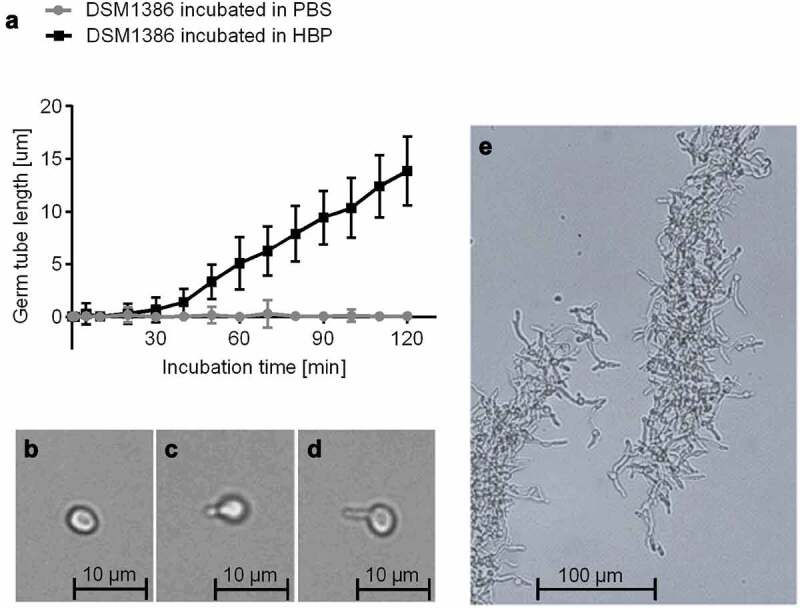
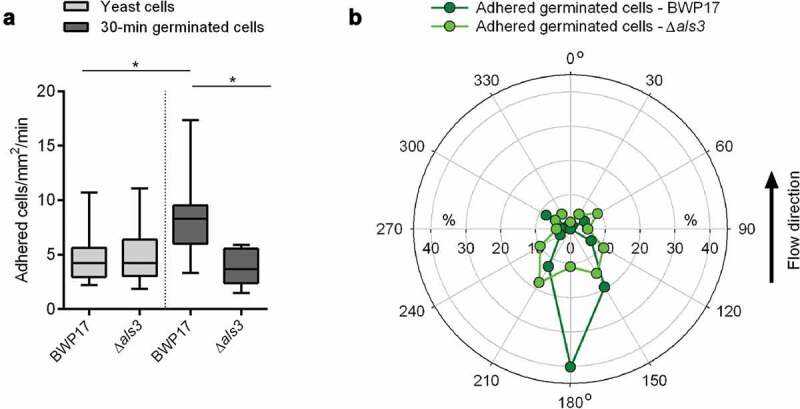
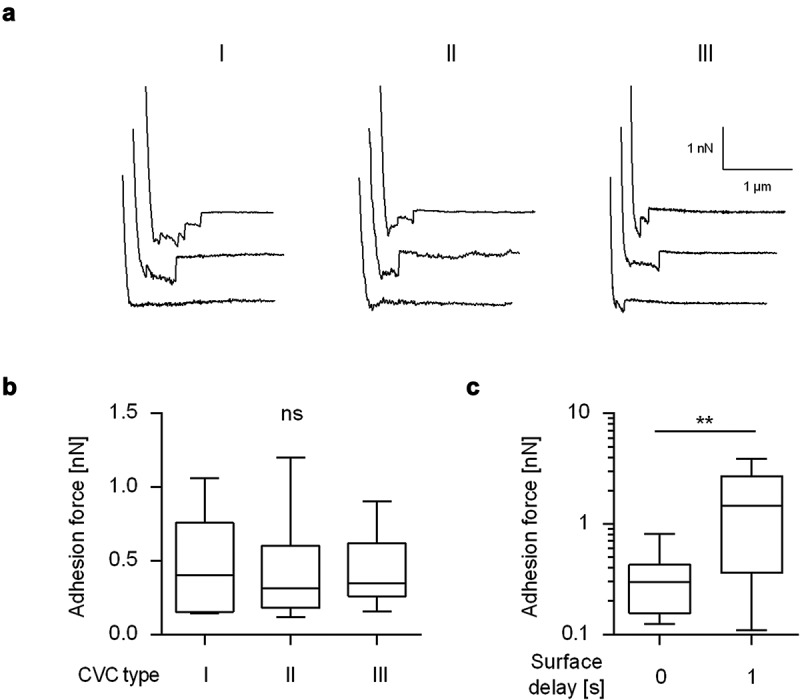
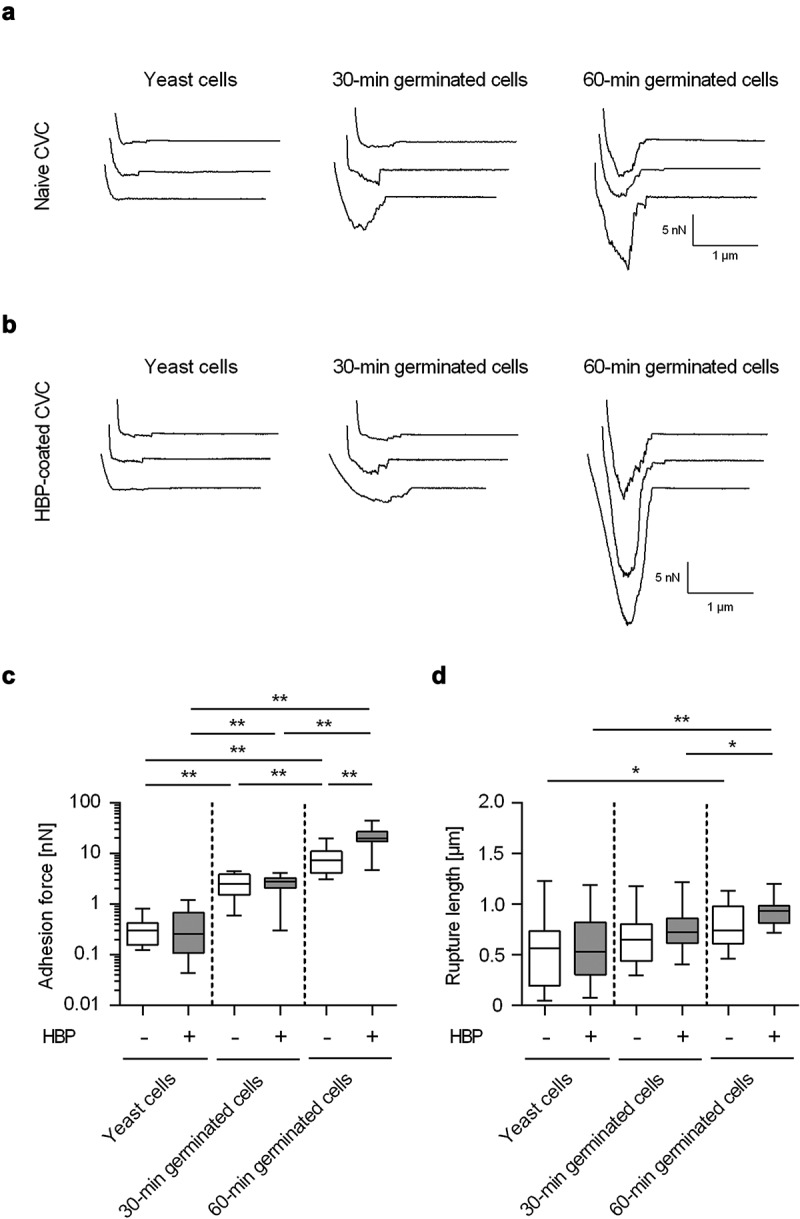
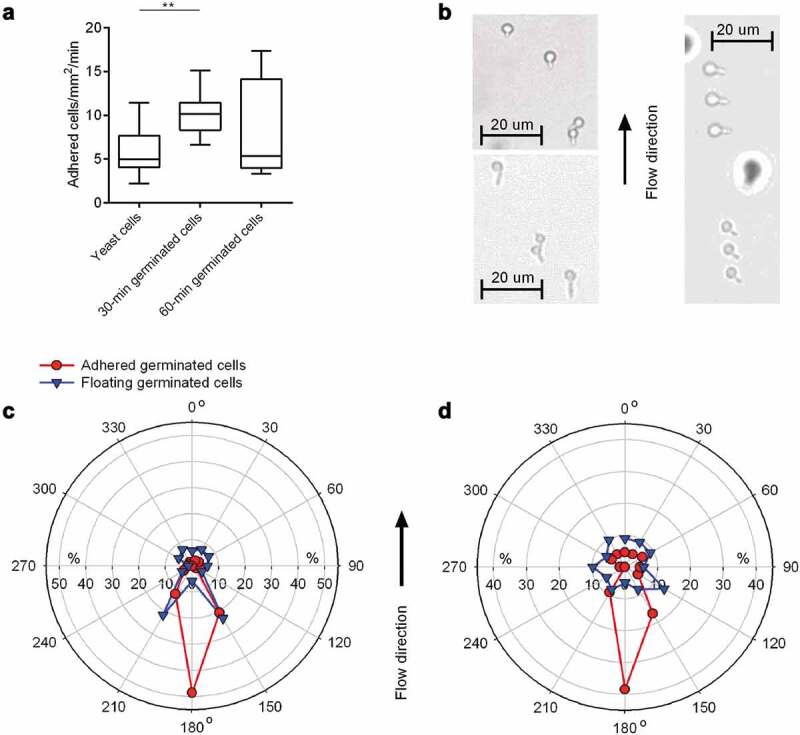
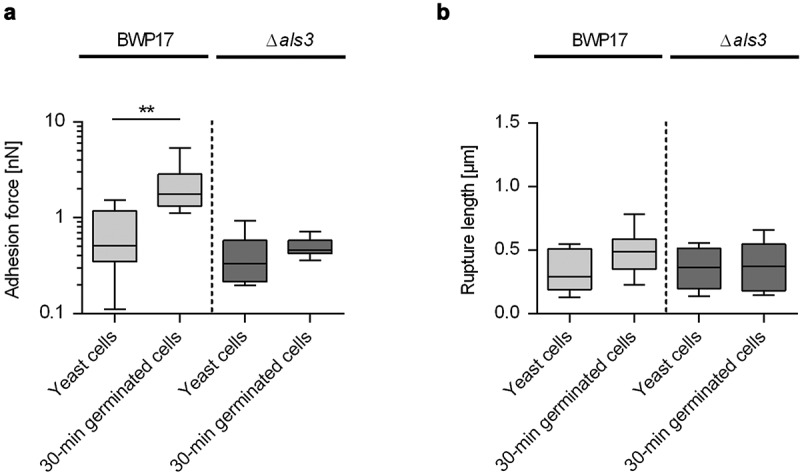
-related bloodstream infections are often associated with infected central venous catheters (CVC) triggered by microbial adhesion and biofilm formation. We utilized single-cell force spectroscopy (SCFS) and flow chamber models to investigate the adhesion behavior of yeast cells and germinated cells to naïve and human blood plasma (HBP)-coated CVC tubing. Germinated cells demonstrated up to 56.8-fold increased adhesion forces to CVC surfaces when compared to yeast cells. Coating of CVCs with HBP significantly increased the adhesion of 60-min germinated cells but not of yeast cells and 30-min germinated cells. Under flow conditions comparable to those in major human veins, germinated cells displayed a flow directional-orientated adhesion pattern to HBP-coated CVC material, suggesting the germ tip to serve as the major adhesive region. None of the above-reported phenotypes were observed with germinated cells of an Δ deletion mutant, which displayed similar adhesion forces to CVC surfaces as the isogenic yeast cells. Germinated cells of the Δ mutant also lacked a clear flow directional-orientated adhesion pattern on HBP-coated CVC material, indicating a central role for Als3 in the adhesion of germinated cells to blood exposed CVC surfaces. In the common model of , biofilm formation is thought to be mediated primarily by yeast cells, followed by surface-triggered the formation of hyphae. We suggest an extension of this model in which germ tubes promote the initial adhesion to blood-exposed implanted medical devices via the germ tube-associated adhesion protein Als3.
与相关的血流感染通常与受微生物粘附和生物膜形成触发的感染中心静脉导管 (CVC) 有关。我们利用单细胞力谱 (SCFS) 和流动室模型来研究酵母细胞和发芽细胞对未处理和人血桨 (HBP) 涂层 CVC 管的粘附行为。与酵母细胞相比,发芽细胞对 CVC 表面的粘附力增加了高达 56.8 倍。CVC 用 HBP 涂层显著增加了 60 分钟发芽细胞的粘附,但不增加酵母细胞和 30 分钟发芽细胞的粘附。在与人体主要静脉相似的流动条件下,发芽细胞对 HBP 涂层 CVC 材料表现出流向定向粘附模式,表明发芽尖端是主要的粘附区域。在Δ缺失突变体的发芽细胞中没有观察到上述报告的表型,其对 CVC 表面的粘附力与同基因酵母细胞相似。Δ突变体的发芽细胞在 HBP 涂层 CVC 材料上也没有明显的流向定向粘附模式,表明 Als3 在发芽细胞与暴露于血液的 CVC 表面的粘附中起着核心作用。在常见的模型中,生物膜的形成被认为主要是由酵母细胞介导的,随后是表面触发的菌丝形成。我们建议扩展这个模型,其中发芽管通过与发芽管相关的粘附蛋白 Als3 促进初始粘附到暴露于血液的植入医疗器械。