Department of Health Sciences, William & Mary, Williamsburg, VA, 23185, USA.
Division of Agriculture, Food, and Environment, Friedman School of Nutrition Science and Policy, Tufts University, Boston, MA, 02111, USA.
Nutr J. 2020 Oct 27;19(1):117. doi: 10.1186/s12937-020-00629-6.
There is an urgent need to assess the linkages between diet patterns and environmental sustainability in order to meet global targets for reducing premature mortality and improving sustainable management of natural resources. This study fills an important research gap by evaluating the relationship between incremental differences in diet quality and multiple environmental burdens, while also accounting for the separate contributions of retail losses, inedible portions, and consumer waste.
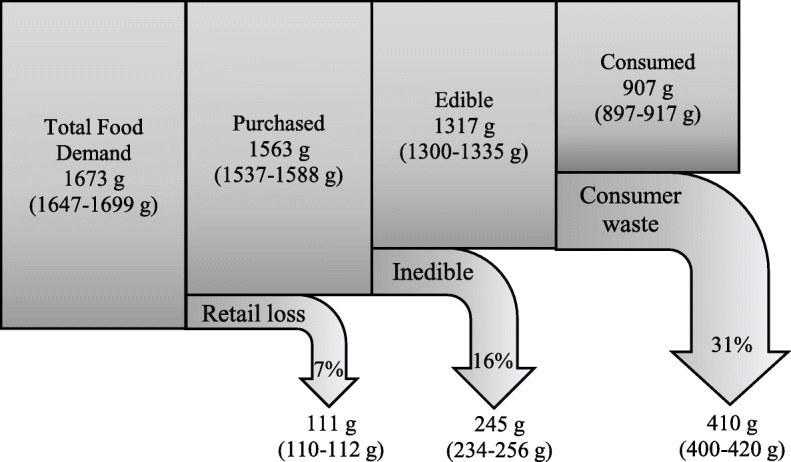
Cross sectional, nationally-representative data on food intake in the United States were acquired from the National Health and Nutrition Examination Survey (2005-2016), and were linked with nationally-representative data on food loss and waste from published literature. Survey-weighted procedures estimated daily per capita food retail loss, food waste, inedible portions, and consumed food, and were summed to represent Total Food Demand. Diet quality was measured using the Healthy Eating Index-2015 and the Alternative Healthy Eating Index-2010. Data on food intake, loss, and waste were inputted into the US Foodprint Model to estimate the amount of agricultural land, fertilizer nutrients, pesticides, and irrigation water used to produce food.
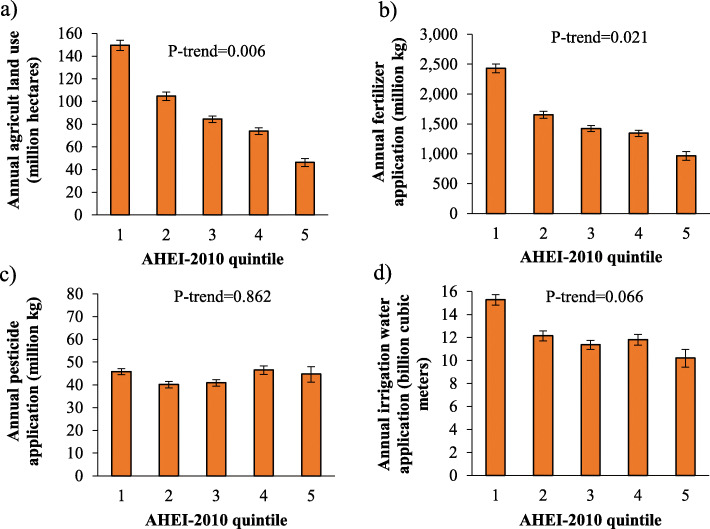
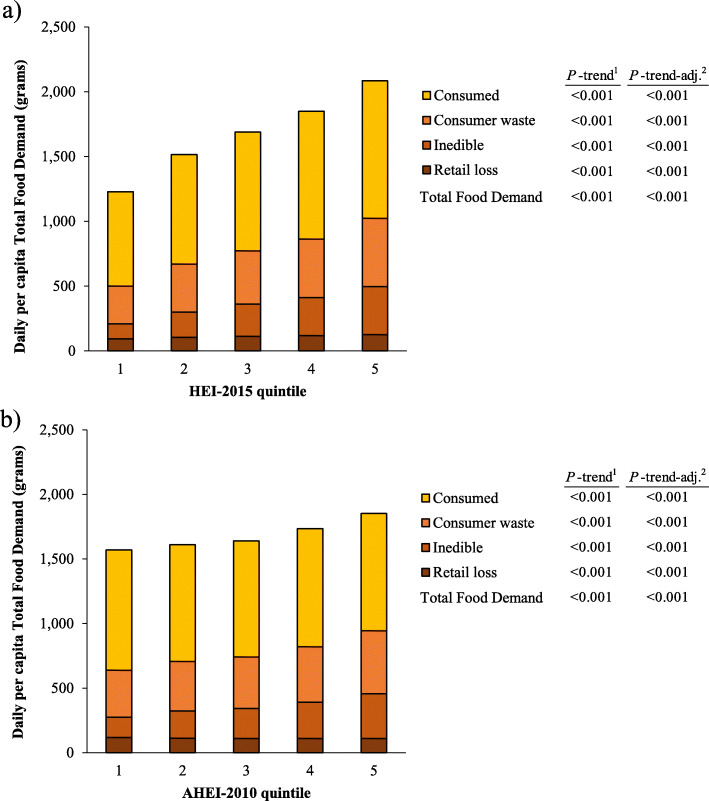
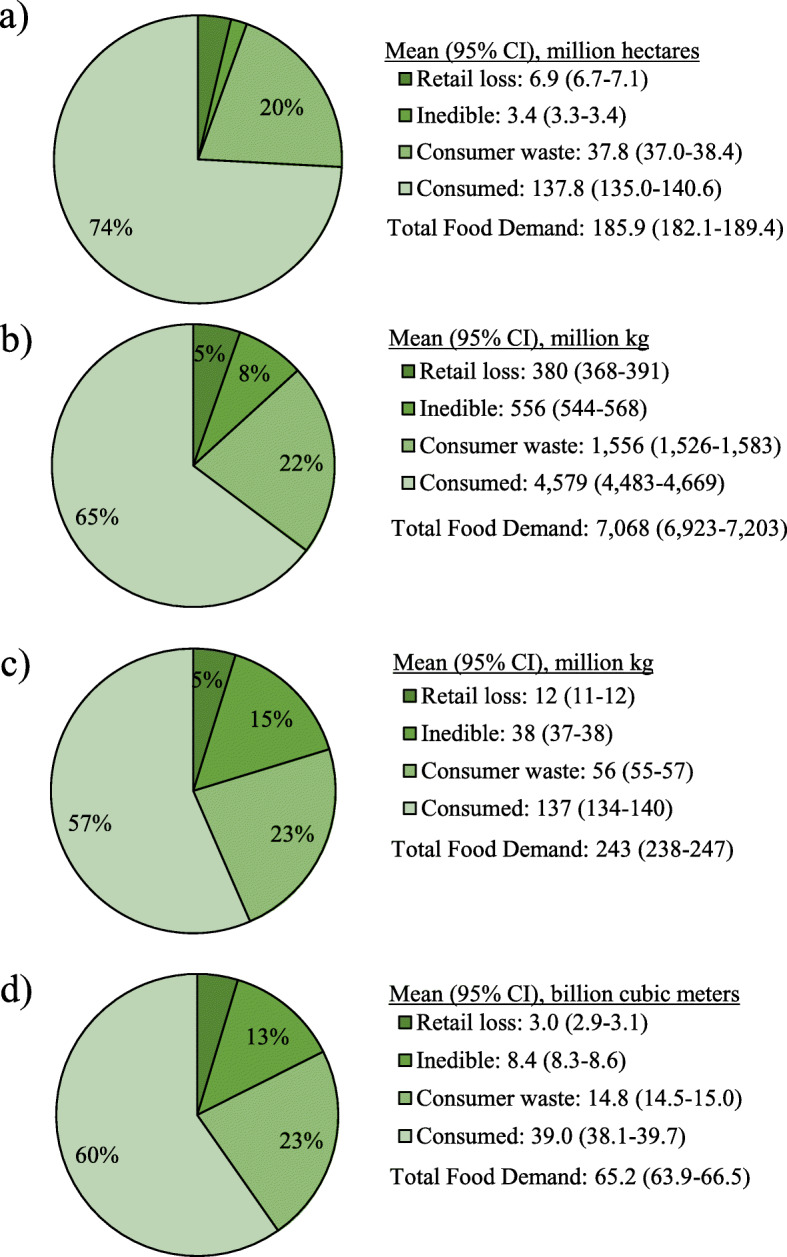
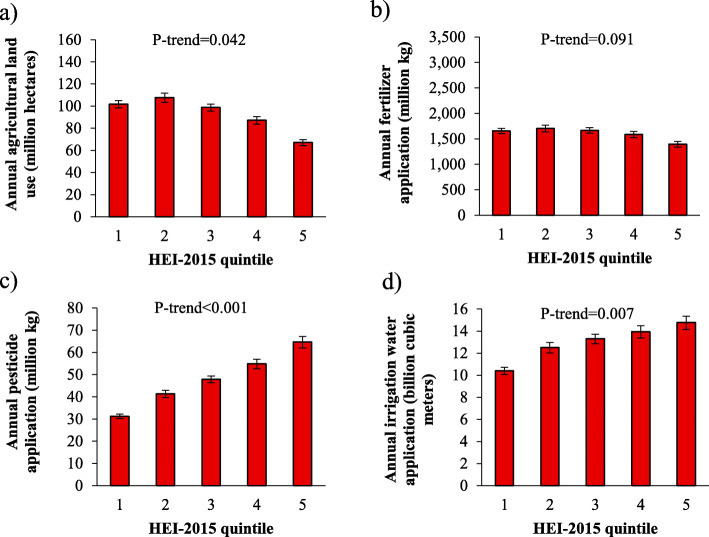
This study included dietary data from 50,014 individuals aged ≥2 y. Higher diet quality (HEI-2015 and AHEI-2010) was associated with greater per capita Total Food Demand, as well as greater retail loss, inedible portions, consumer waste, and consumed food (P < 0.001 for all comparisons). Consumed food accounted for 56-74% of agricultural resource use (land, fertilizer nutrients, pesticides, and irrigation water), retail loss accounted for 4-6%, inedible portions accounted for 2-15%, and consumer waste accounted for 20-23%. Higher diet quality was associated with lower use of agricultural land, but the relationship to other agricultural resources was dependent on the tool used to measure diet quality (HEI-2015 vs. AHEI-2010).
Over one-quarter of the agricultural inputs used to produce Total Food Demand were attributable to edible food that was not consumed. Importantly, this study also demonstrates that the relationship between diet quality and environmental sustainability depends on how diet quality is measured. These findings have implications for the development of sustainable dietary guidelines, which requires balancing population-level nutritional needs with the environmental impacts of food choices.
为了实现降低过早死亡率和改善自然资源可持续管理的全球目标,迫切需要评估饮食模式与环境可持续性之间的联系。本研究通过评估饮食质量的增量差异与多种环境负担之间的关系,同时考虑零售损失、不可食用部分和消费者浪费的单独贡献,填补了一项重要的研究空白。
本研究从美国国家健康和营养调查(2005-2016 年)中获取了全国代表性的食物摄入横断面数据,并与来自已发表文献的全国代表性食物损失和浪费数据进行了关联。调查加权程序估计了每人每天的零售损失、食物浪费、不可食用部分和消费食物,并将其加总以代表总食物需求。饮食质量使用健康饮食指数-2015 版(HEI-2015)和替代健康饮食指数-2010 版(AHEI-2010)进行测量。将食物摄入、损失和浪费数据输入美国食物足迹模型,以估计生产食物所使用的农业土地、肥料养分、农药和灌溉用水的数量。
本研究纳入了 50014 名≥2 岁个体的饮食数据。较高的饮食质量(HEI-2015 和 AHEI-2010)与人均总食物需求的增加以及零售损失、不可食用部分、消费者浪费和消费食物的增加相关(所有比较均 P<0.001)。消费食物占农业资源使用(土地、肥料养分、农药和灌溉用水)的 56-74%,零售损失占 4-6%,不可食用部分占 2-15%,消费者浪费占 20-23%。较高的饮食质量与农业土地使用减少有关,但与其他农业资源的关系取决于衡量饮食质量的工具(HEI-2015 与 AHEI-2010)。
生产总食物需求所使用的农业投入中,超过四分之一归因于未被消费的可食用食物。重要的是,本研究还表明,饮食质量与环境可持续性之间的关系取决于如何衡量饮食质量。这些发现对可持续饮食指南的制定具有启示意义,这需要在平衡人口营养需求与食物选择的环境影响之间做出权衡。