Grand Forks Human Nutrition Research Center, US Department of Agriculture, Agricultural Research Service, Grand Forks, North Dakota, United States of America.
Department of Nutrition and Food Sciences, Food Systems Program, University of Vermont, Burlington, Vermont, United States of America.
PLoS One. 2018 Apr 18;13(4):e0195405. doi: 10.1371/journal.pone.0195405. eCollection 2018.
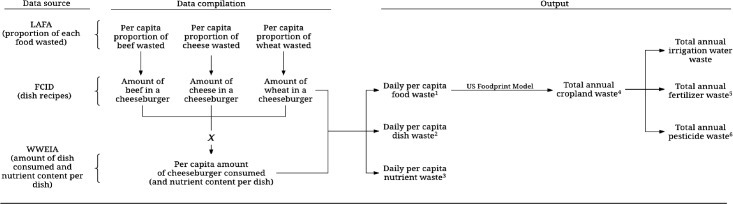
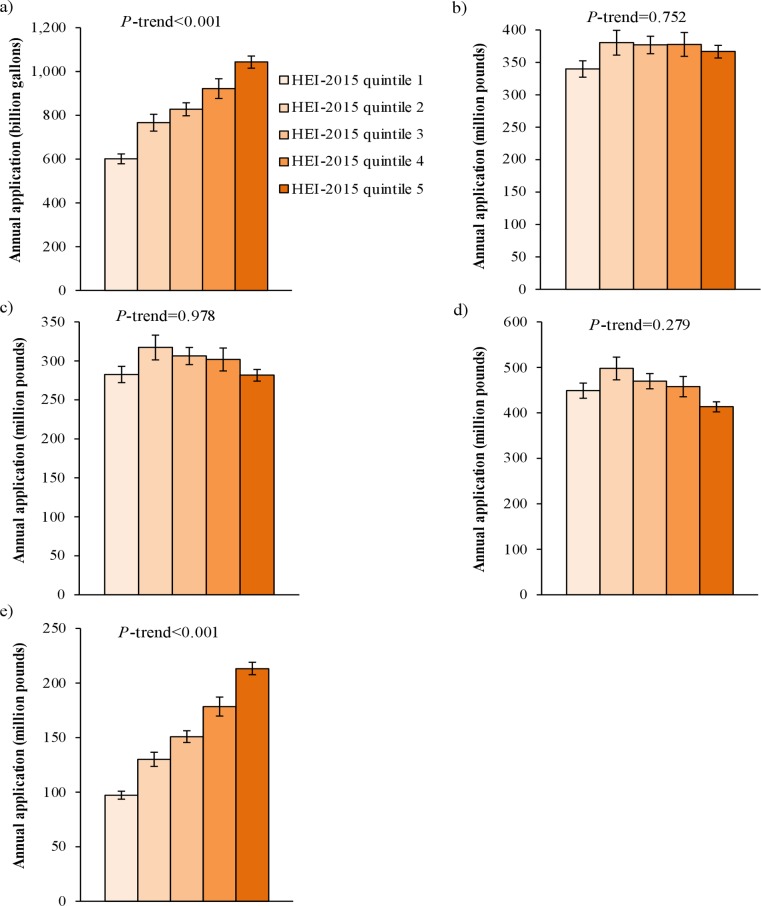
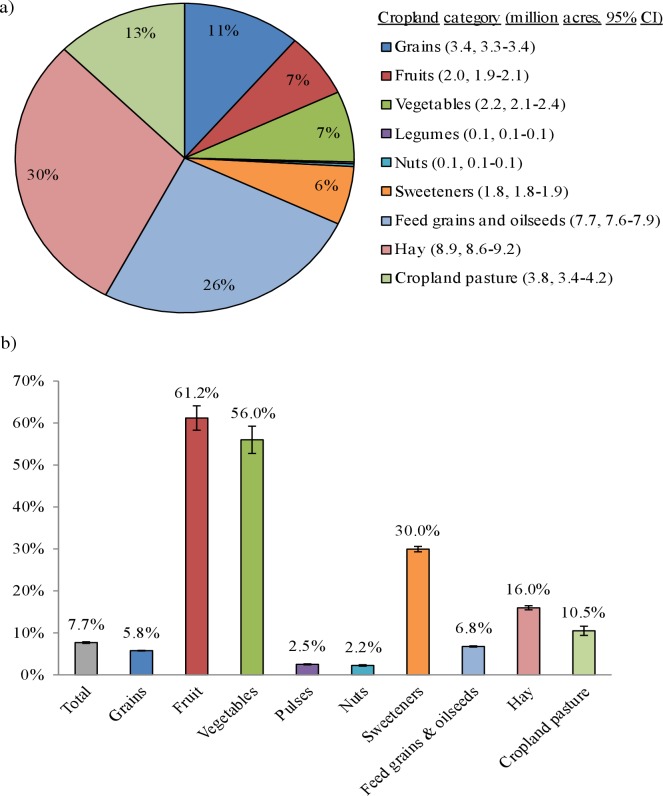
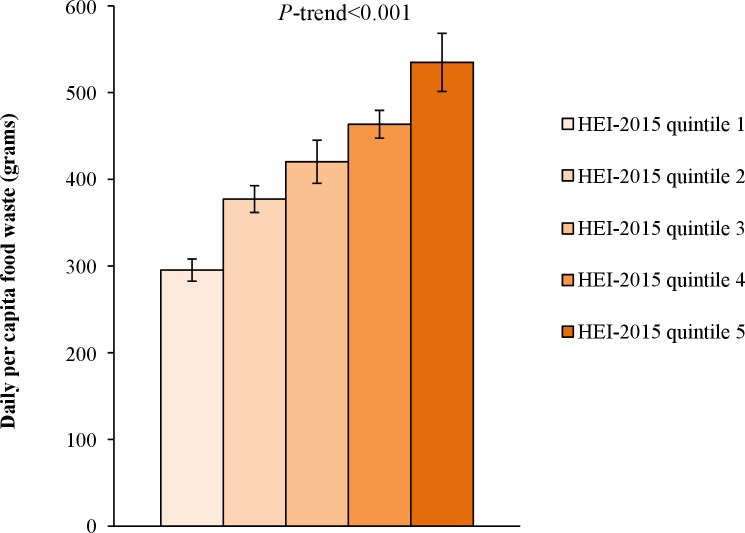
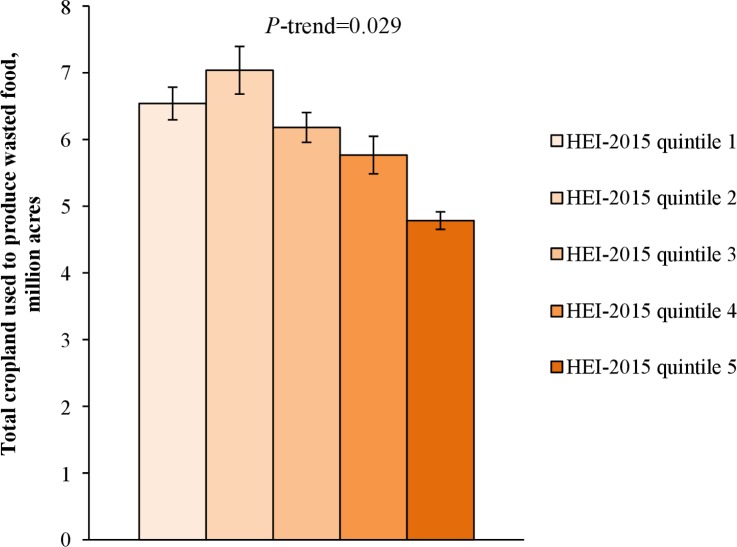
Improving diet quality while simultaneously reducing environmental impact is a critical focus globally. Metrics linking diet quality and sustainability have typically focused on a limited suite of indicators, and have not included food waste. To address this important research gap, we examine the relationship between food waste, diet quality, nutrient waste, and multiple measures of sustainability: use of cropland, irrigation water, pesticides, and fertilizers. Data on food intake, food waste, and application rates of agricultural amendments were collected from diverse US government sources. Diet quality was assessed using the Healthy Eating Index-2015. A biophysical simulation model was used to estimate the amount of cropland associated with wasted food. This analysis finds that US consumers wasted 422g of food per person daily, with 30 million acres of cropland used to produce this food every year. This accounts for 30% of daily calories available for consumption, one-quarter of daily food (by weight) available for consumption, and 7% of annual cropland acreage. Higher quality diets were associated with greater amounts of food waste and greater amounts of wasted irrigation water and pesticides, but less cropland waste. This is largely due to fruits and vegetables, which are health-promoting and require small amounts of cropland, but require substantial amounts of agricultural inputs. These results suggest that simultaneous efforts to improve diet quality and reduce food waste are necessary. Increasing consumers' knowledge about how to prepare and store fruits and vegetables will be one of the practical solutions to reducing food waste.
提高饮食质量,同时减少环境影响,是全球关注的焦点。将饮食质量与可持续性联系起来的指标通常集中在有限的指标上,并且没有包括食物浪费。为了解决这一重要的研究空白,我们研究了食物浪费、饮食质量、营养浪费与多种可持续性衡量指标之间的关系:耕地使用、灌溉用水、农药和化肥的使用。我们从美国政府的多个来源收集了有关食物摄入量、食物浪费和农业改良剂施用量的数据。饮食质量使用 2015 年健康饮食指数进行评估。采用生物物理模拟模型来估算与浪费食物相关的耕地面积。这项分析发现,美国消费者每人每天浪费 422 克食物,每年有 3000 万英亩的耕地用于生产这些食物。这占可食用日卡路里的 30%,可食用日食物(按重量计)的四分之一,以及年度耕地面积的 7%。饮食质量较高的人会产生更多的食物浪费,以及更多的灌溉水和农药浪费,但耕地浪费较少。这主要是由于水果和蔬菜,它们对健康有益,所需耕地面积小,但需要大量农业投入。这些结果表明,同时努力提高饮食质量和减少食物浪费是必要的。提高消费者关于如何准备和储存水果和蔬菜的知识将是减少食物浪费的实用解决方案之一。