Ling Xiao Chun, Kang Eugene Yu-Chuan, Lin Jui-Yen, Chen Hung-Chi, Lai Chi-Chun, Ma David Hui-Kang, Wu Wei-Chi
Department of Ophthalmology, Chang Gung Memorial Hospital, Linkou, Taiwan.
Department of Medicine, College of Medicine, Chang Gung University, Taoyuan, Taiwan.
Taiwan J Ophthalmol. 2020 Sep 16;10(3):153-166. doi: 10.4103/tjo.tjo_53_20. eCollection 2020 Jul-Sep.
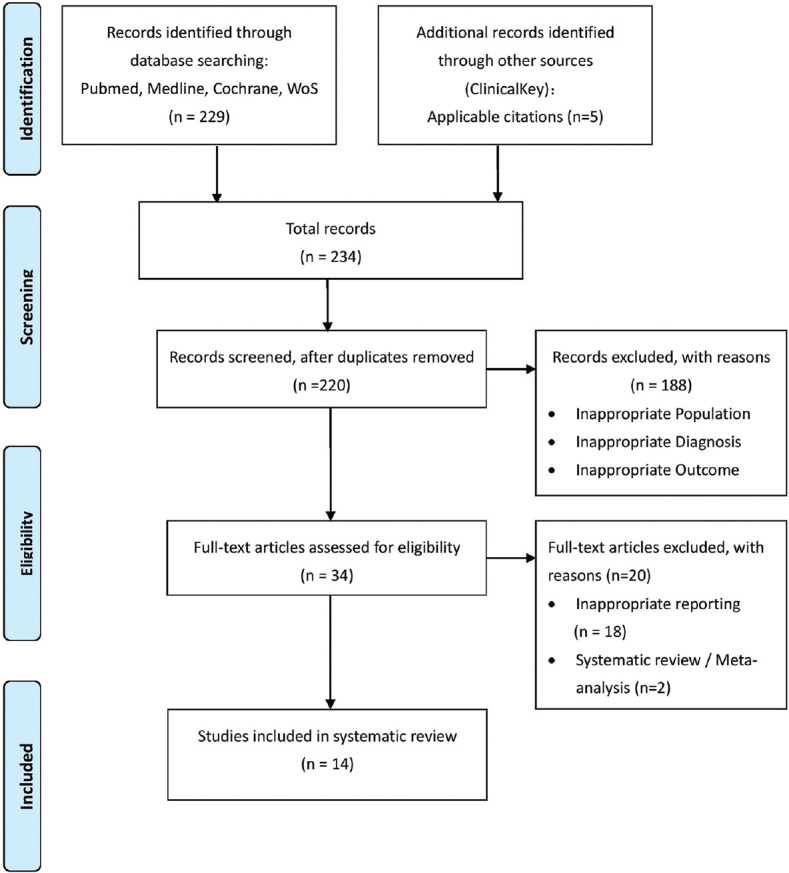
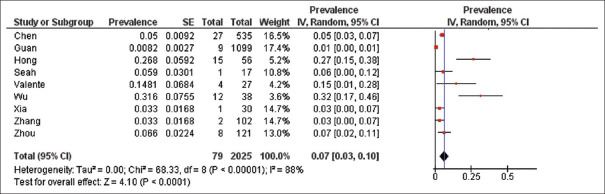
The coronavirus disease 2019 (COVID 19) pandemic has presented major challenges to ophthalmologists. Reports have shown that ocular manifestations can be the first presenting symptoms of COVID 19 infection and conjunctiva may be a portal of entry for the severe acute respiratory syndrome (SARS) associated coronavirus 2 (SARS CoV 2). The purpose of this article is to provide general guidance for ophthalmologists to understand the prevalence of ocular presentation in COVID 19 patients and to reduce the risk of transmission during practice. Relevant studies published in the period of November 1, 2019, and July 15, 2020, regarding ocular manifestations of COVID 19 and detection of SARS CoV 2 in the eye were included in this systematic review and meta analysis. The pooled prevalence of the ocular manifestations has been estimated at 7% (95% confidence interval [CI]: 0.03-0.10) among COVID 19 patients. The pooled detection rate of SARS CoV 2 from conjunctiva was low (1%, 95% CI: 0.00-0.03). Conjunctival symptoms were the most common ocular manifestations in COVID 19, but the positive detection rate of the SARS CoV 2 virus by reverse transcription-polymerase chain reaction of conjunctival tears or secretions remained low. No study has shown a definite transmission of COVID 19 through ocular mucosa or secretions. In summary, ocular manifestations in COVID 19 patients commonly comprise ocular surface symptoms. Although a low prevalence of ocular symptoms was encountered among patients infected by SARS CoV 2, it is imperative for all ophthalmologists to understand the full spectrum of COVID 19 symptoms or signs including those of the eyes as well as to adopt appropriate protective measures during clinical practice.
2019冠状病毒病(COVID - 19)大流行给眼科医生带来了重大挑战。报告显示,眼部表现可能是COVID - 19感染的首发症状,结膜可能是严重急性呼吸综合征(SARS)相关冠状病毒2(SARS - CoV - 2)的一个进入门户。本文旨在为眼科医生提供一般性指导,以了解COVID - 19患者眼部表现的患病率,并在临床实践中降低传播风险。本系统评价和荟萃分析纳入了2019年11月1日至2020年7月15日期间发表的关于COVID - 19眼部表现及眼部SARS - CoV - 2检测的相关研究。COVID - 19患者中眼部表现的合并患病率估计为7%(95%置信区间[CI]:0.03 - 0.10)。从结膜中检测出SARS - CoV - 2的合并率较低(1%,95%CI:0.00 - 0.03)。结膜症状是COVID - 19最常见的眼部表现,但通过结膜泪液或分泌物的逆转录 - 聚合酶链反应检测SARS - CoV - 2病毒的阳性率仍然较低。没有研究表明COVID - 19通过眼黏膜或分泌物有明确传播。总之,COVID - 19患者的眼部表现通常包括眼表症状。虽然SARS - CoV - 2感染患者中眼部症状的患病率较低,但所有眼科医生都必须了解COVID - 19的全部症状或体征,包括眼部症状,并在临床实践中采取适当的防护措施。