Sng Benny Jian Rong, Singh Gajendra Pratap, Van Vu Kien, Chua Nam-Hai, Ram Rajeev J, Jang In-Cheol
Temasek Life Sciences Laboratory, 1 Research Link, National University of Singapore, Singapore, 117604 Singapore.
Department of Biological Sciences, National University of Singapore, Singapore, 117543 Singapore.
Plant Methods. 2020 Oct 27;16:144. doi: 10.1186/s13007-020-00688-0. eCollection 2020.
Shade avoidance syndrome (SAS) commonly occurs in plants experiencing vegetative shade, causing morphological and physiological changes that are detrimental to plant health and consequently crop yield. As the effects of SAS on plants are irreversible, early detection of SAS in plants is critical for sustainable agriculture. However, conventional methods to assess SAS are restricted to observing for morphological changes and checking the expression of shade-induced genes after homogenization of plant tissues, which makes it difficult to detect SAS early.
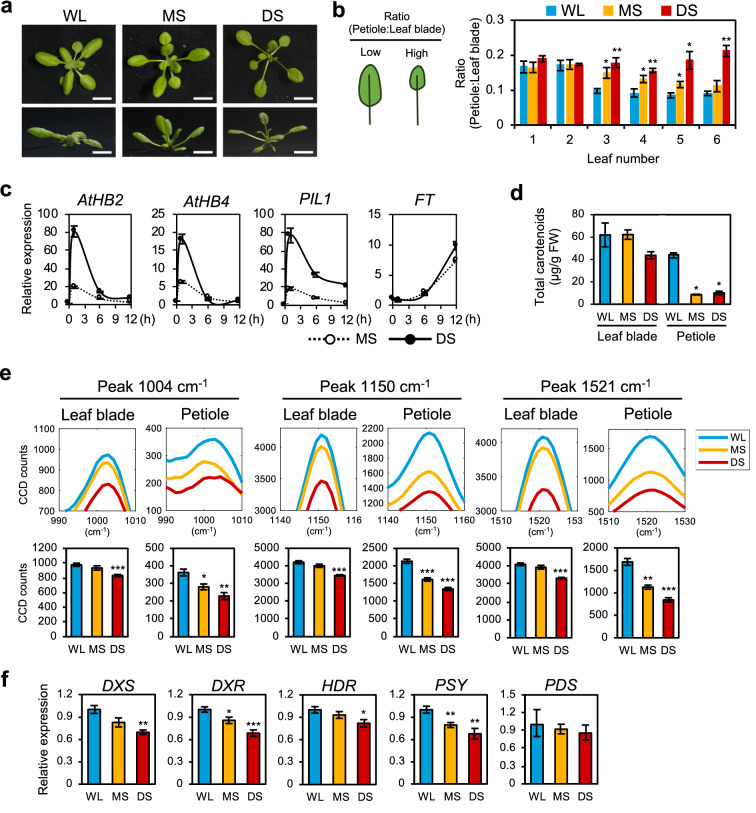
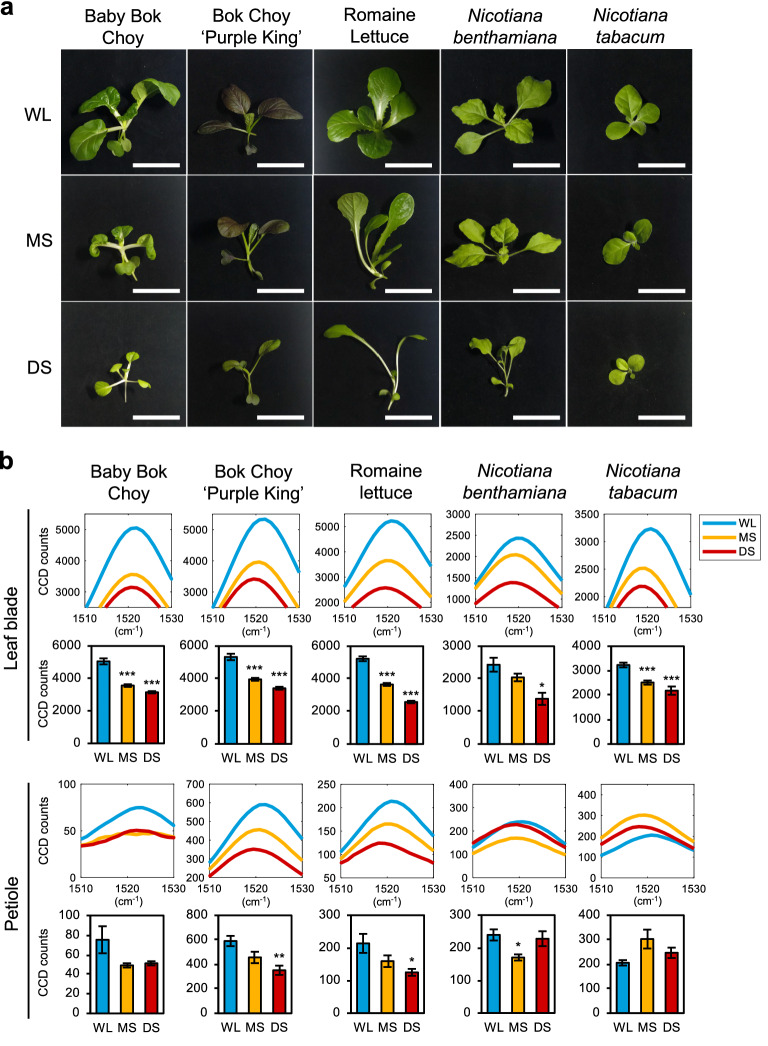
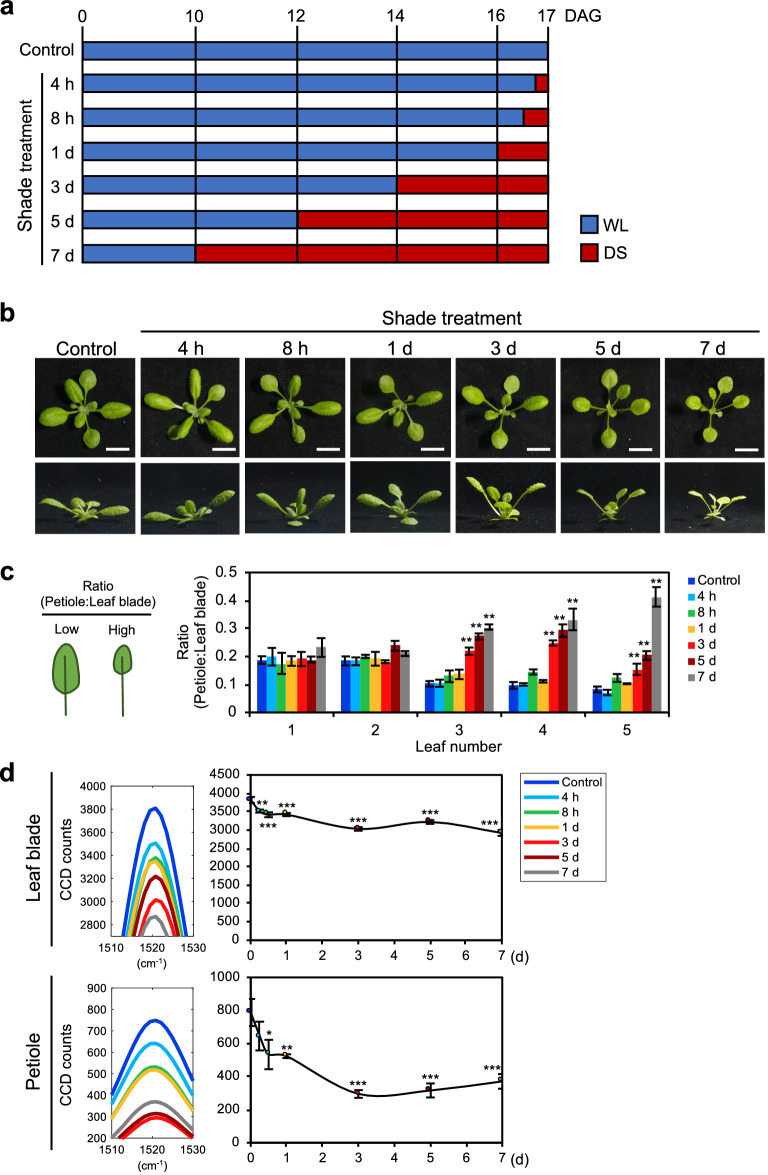
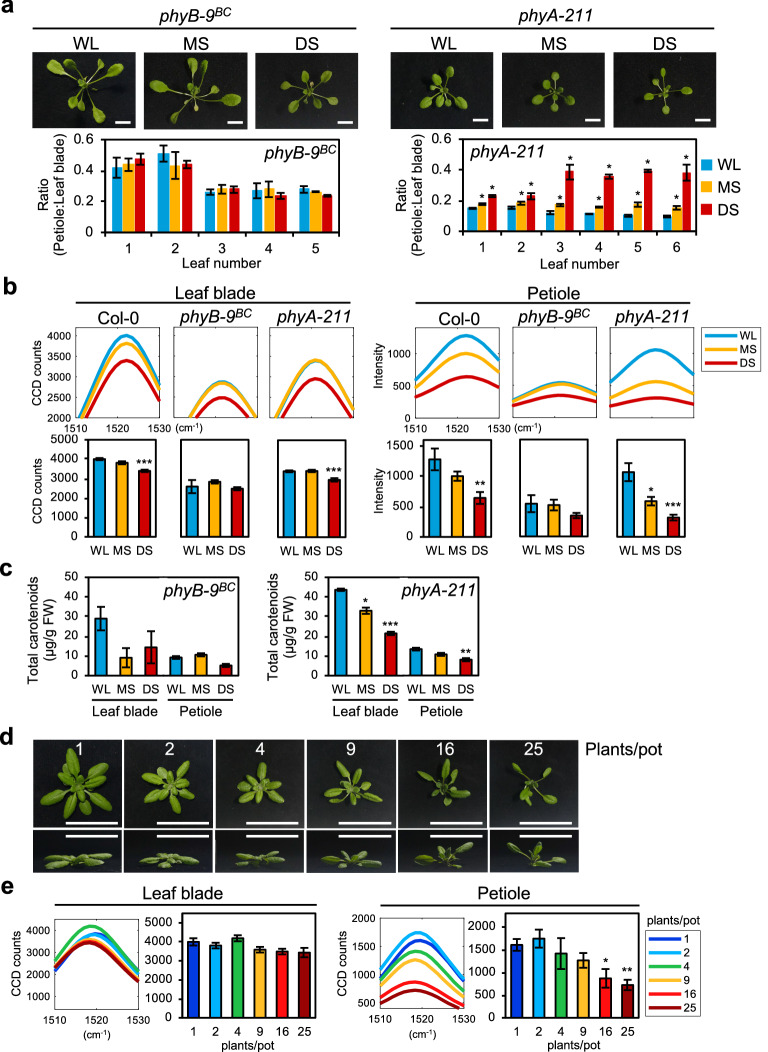
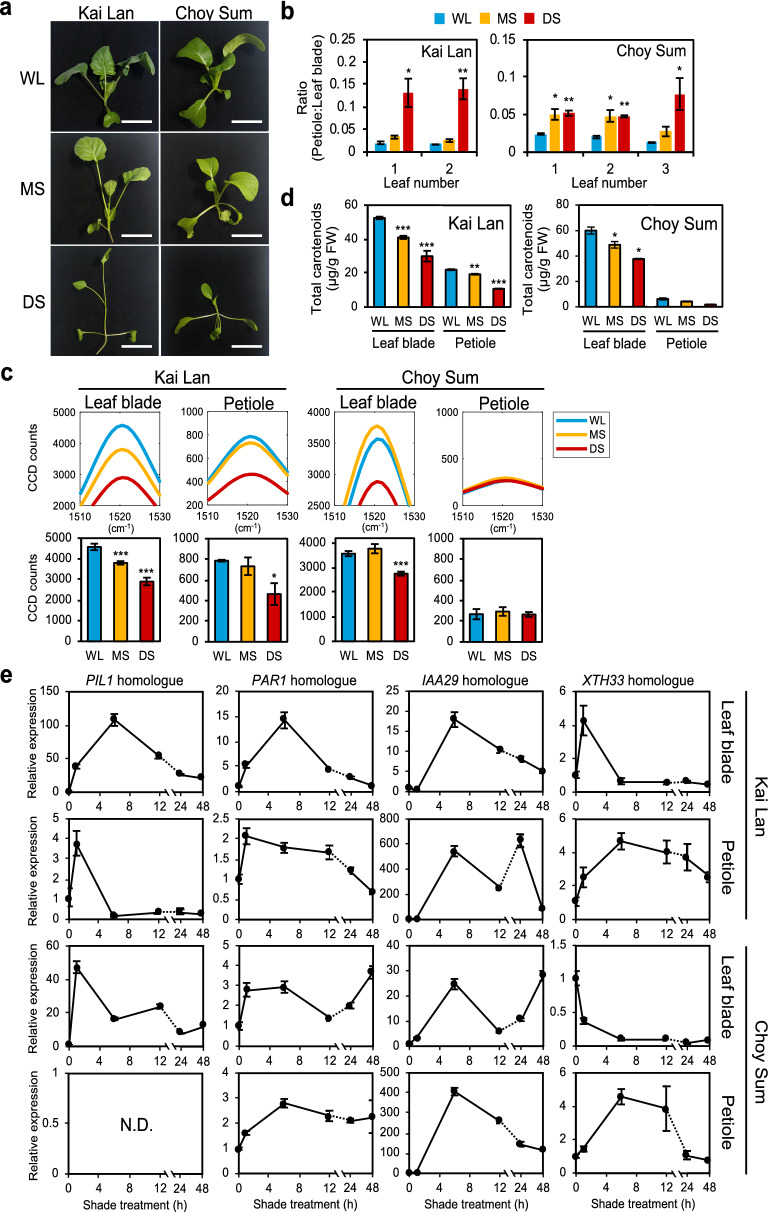
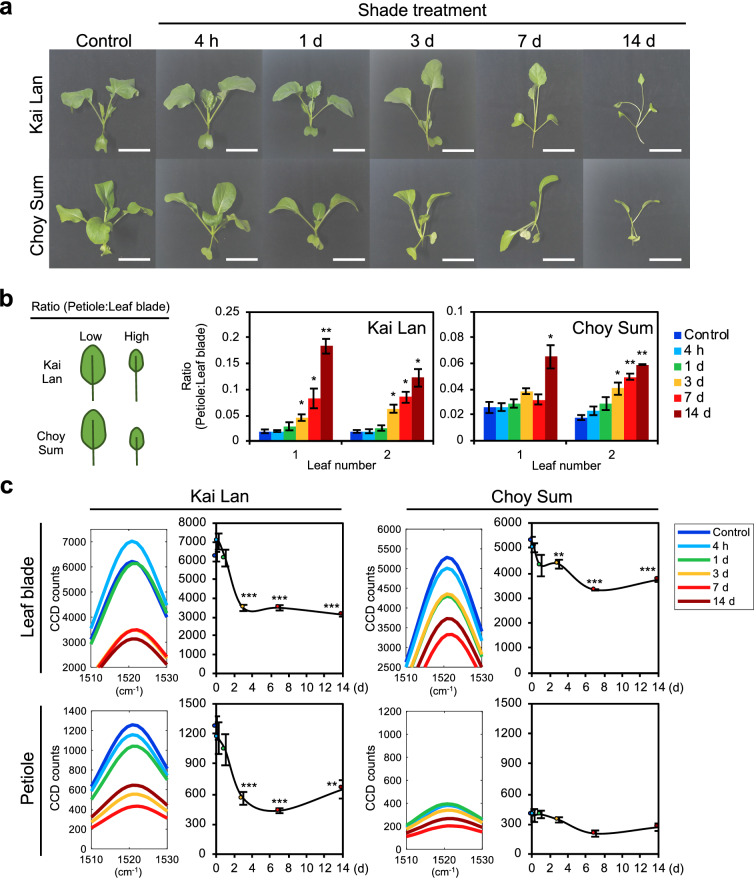
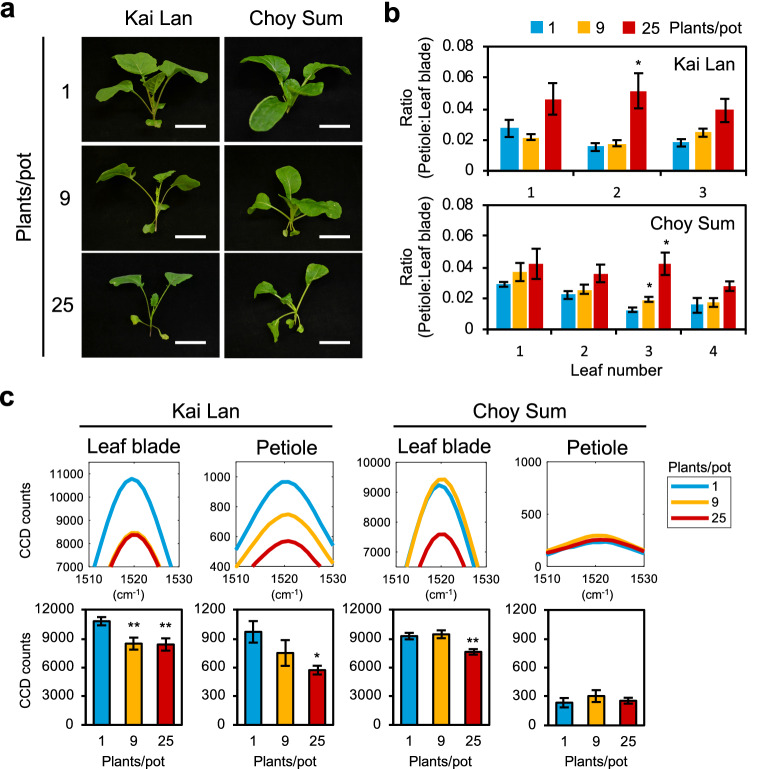
Using the model plant , we introduced the use of Raman spectroscopy to measure shade-induced changes of metabolites in vivo. Raman spectroscopy detected a decrease in carotenoid contents in leaf blades and petioles of plants with SAS, which were induced by low Red:Far-red light ratio or high density conditions. Moreover, by measuring the carotenoid Raman peaks, we were able to show that the reduction in carotenoid content under shade was mediated by phytochrome signaling. Carotenoid Raman peaks showed more remarkable response to SAS in petioles than leaf blades of plants, which greatly corresponded to their morphological response under shade or high plant density. Most importantly, carotenoid content decreased shortly after shade induction but before the occurrence of visible morphological changes. We demonstrated this finding to be similar in other plant species. Comprehensive testing of vegetables showed that carotenoid content decreased during SAS, in both shade and high density conditions. Likewise, carotenoid content responded quickly to shade, in a manner similar to plants.
In various plant species tested in this study, quantification of carotenoid Raman peaks correlate to the severity of SAS. Moreover, short-term exposure to shade can induce the carotenoid Raman peaks to decrease. These findings highlight the carotenoid Raman peaks as a biomarker for early diagnosis of SAS in plants.
避荫综合征(SAS)常见于遭受营养荫蔽的植物中,会引起形态和生理变化,对植物健康乃至作物产量产生不利影响。由于SAS对植物的影响是不可逆的,因此早期检测植物中的SAS对可持续农业至关重要。然而,评估SAS的传统方法仅限于观察形态变化以及在植物组织匀浆后检测荫蔽诱导基因的表达,这使得早期检测SAS变得困难。
我们使用模式植物,引入拉曼光谱法来测量体内荫蔽诱导的代谢物变化。拉曼光谱法检测到患有SAS的植物叶片和叶柄中类胡萝卜素含量降低,这是由低红光:远红光比例或高密度条件诱导的。此外,通过测量类胡萝卜素的拉曼峰,我们能够表明荫蔽条件下类胡萝卜素含量的降低是由光敏色素信号传导介导的。类胡萝卜素拉曼峰在植物叶柄中对SAS的响应比叶片更为显著,这与它们在荫蔽或高种植密度下的形态响应高度一致。最重要的是,类胡萝卜素含量在荫蔽诱导后不久但在可见形态变化出现之前就开始下降。我们证明这一发现与其他植物物种相似。对多种蔬菜的综合测试表明,在SAS期间,无论是在荫蔽还是高密度条件下,类胡萝卜素含量都会降低。同样,类胡萝卜素含量对荫蔽的反应迅速,方式与模式植物相似。
在本研究中测试的各种植物物种中,类胡萝卜素拉曼峰的定量与SAS的严重程度相关。此外,短期暴露于荫蔽会导致类胡萝卜素拉曼峰下降。这些发现突出了类胡萝卜素拉曼峰作为植物中SAS早期诊断生物标志物的作用。