Institute of Psychology, Friedrich Schiller University of Jena, Jena, Germany.
Institute of Psychology, University of Trier, Trier, Germany.
PLoS One. 2020 Oct 29;15(10):e0240832. doi: 10.1371/journal.pone.0240832. eCollection 2020.
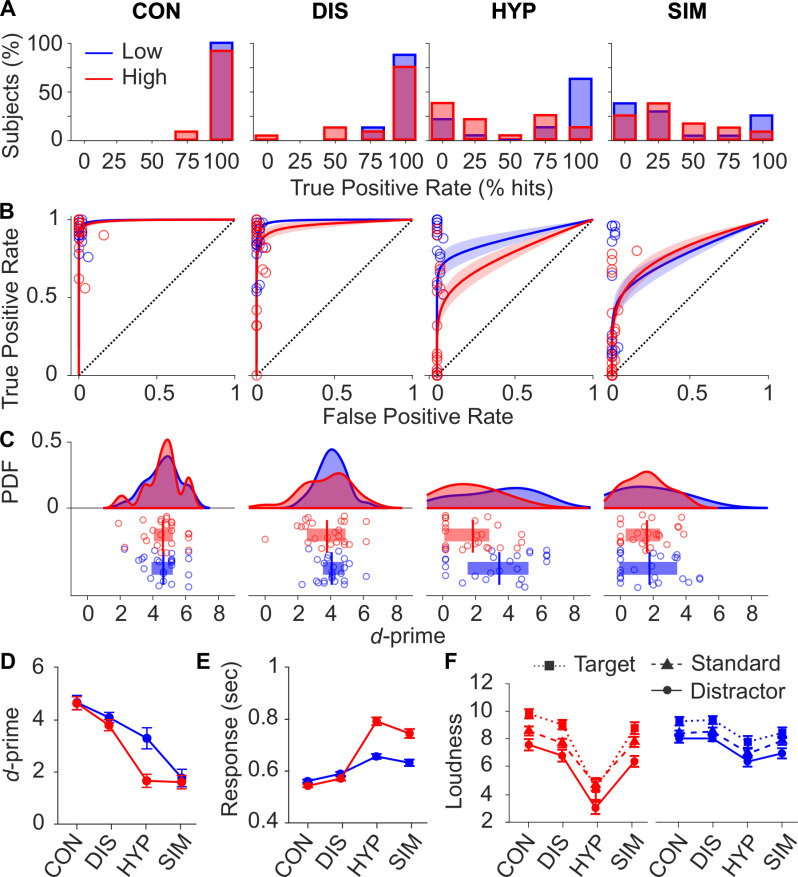
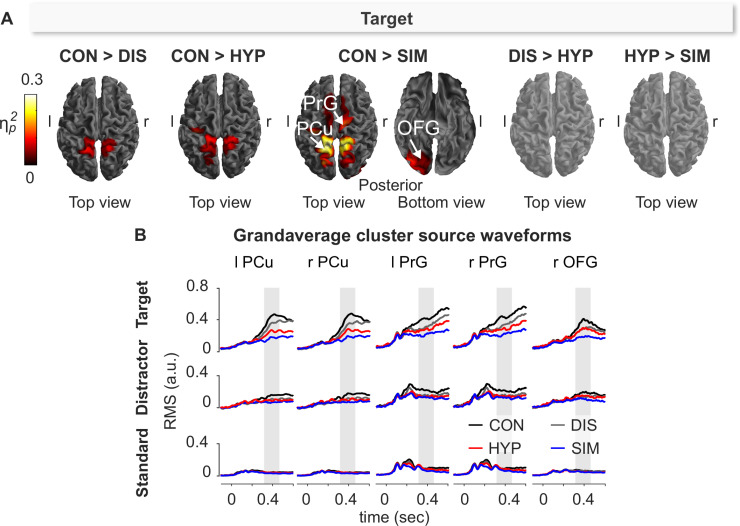
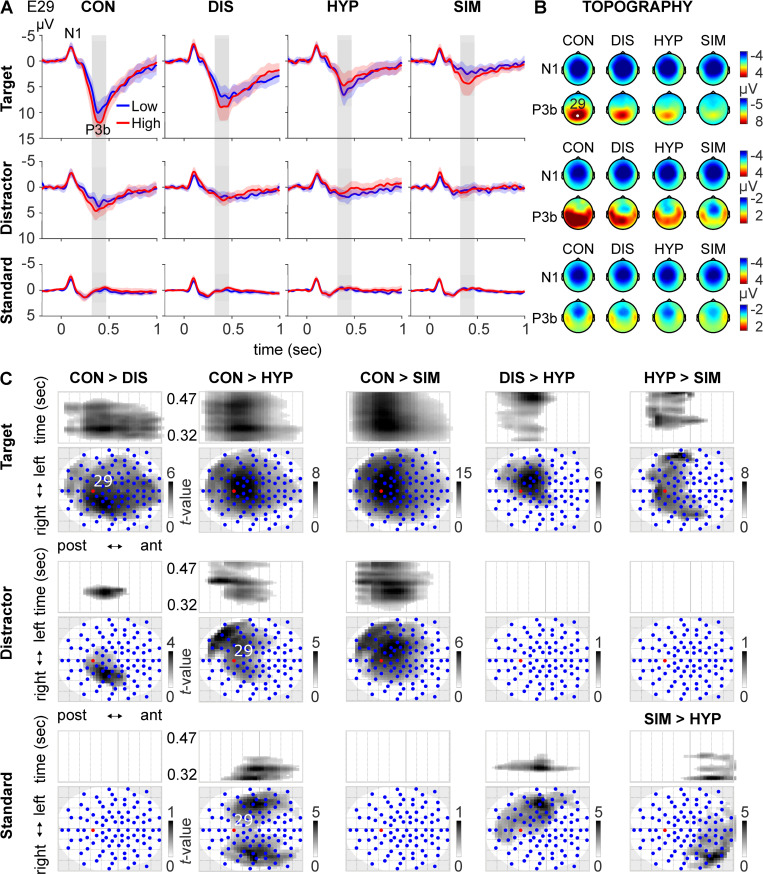
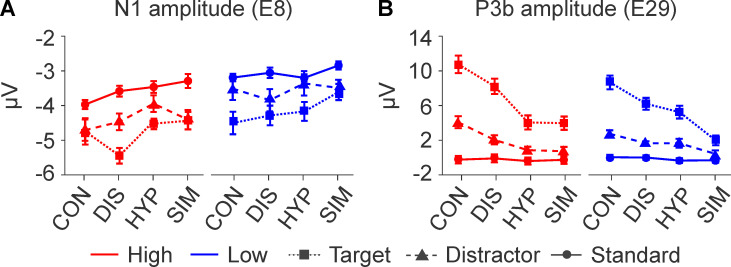
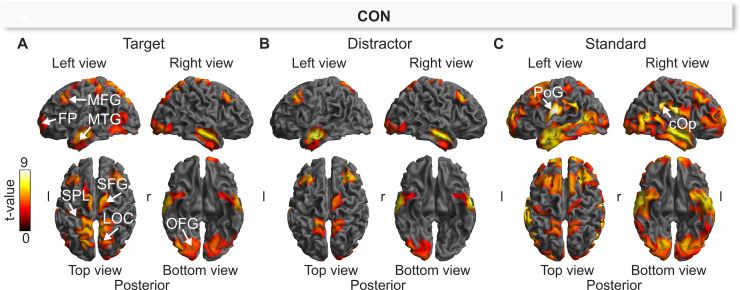
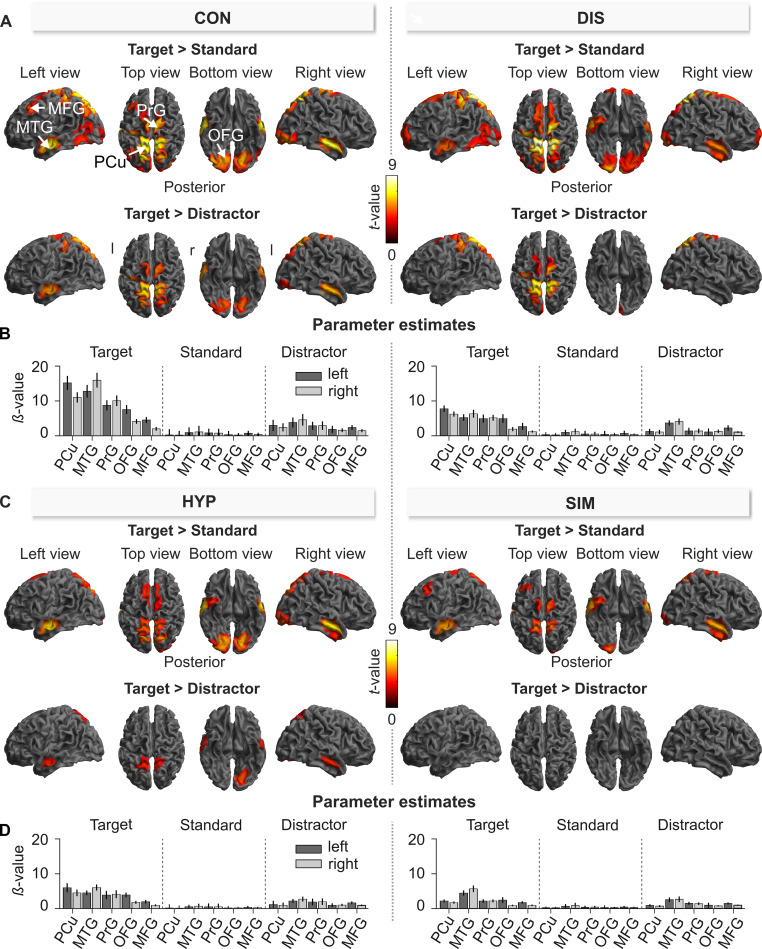
Hypnosis is a powerful tool to affect the processing and perception of stimuli. Here, we investigated the effects of hypnosis on the processing of auditory stimuli, the time course of event-related-potentials (ERP; N1 and P3b amplitudes) and the activity of cortical sources of the P3b component. Forty-eight participants completed an auditory oddball paradigm composed of standard, distractor, and target stimuli during a hypnosis (HYP), a simulation of hypnosis (SIM), a distraction (DIS), and a control (CON) condition. During HYP, participants were suggested that an earplug would obstruct the perception of tones and during SIM they should pretend being hypnotized and obstructed to hear the tones. During DIS, participants' attention was withdrawn from the tones by focusing participants' attention onto a film. In each condition, subjects were asked to press a key whenever a target stimulus was presented. Behavioral data show that target hit rates and response time became significantly reduced during HYP and SIM and loudness ratings of tones were only reduced during HYP. Distraction from stimuli by the film was less effective in reducing target hit rate and tone loudness. Although, the N1 amplitude was not affected by the experimental conditions, the P3b amplitude was significantly reduced in HYP and SIM compared to CON and DIS. In addition, source localization results indicate that only a small number of neural sources organize the differences of tone processing between the control condition and the distraction, hypnosis, and simulation of hypnosis conditions. These sources belong to brain areas that control the focus of attention, the discrimination of auditory stimuli, and the organization of behavioral responses to targets. Our data confirm that deafness suggestions significantly change auditory processing and perception but complete deafness is hard to achieve during HYP. Therefore, the term 'deafness' may be misleading and should better be replaced by 'hypoacusis'.
催眠是一种影响刺激加工和感知的有力工具。在这里,我们研究了催眠对听觉刺激加工的影响,事件相关电位(ERP;N1 和 P3b 幅度)的时间进程以及 P3b 成分皮质源的活动。48 名参与者在催眠(HYP)、催眠模拟(SIM)、分心(DIS)和对照(CON)条件下完成了一个由标准、干扰和目标刺激组成的听觉Oddball 范式。在 HYP 期间,参与者被暗示耳塞会阻碍对音调的感知,而在 SIM 期间,他们应该假装被催眠并被阻止听到音调。在 DIS 期间,通过将参与者的注意力集中在电影上,从音调上撤回参与者的注意力。在每种情况下,当出现目标刺激时,受试者都被要求按一个键。行为数据表明,在 HYP 和 SIM 期间,目标击中率和反应时间显著降低,而在 HYP 期间仅降低了音调的响度等级。电影对刺激的分心在降低目标击中率和音调响度方面效果较差。尽管 N1 幅度不受实验条件的影响,但与 CON 和 DIS 相比,HYP 和 SIM 中的 P3b 幅度明显降低。此外,源定位结果表明,只有少数神经源组织了控制条件与分心、催眠和催眠模拟条件之间的音调处理差异。这些源属于控制注意力焦点、区分听觉刺激和组织对目标的行为反应的脑区。我们的数据证实,聋人暗示会显著改变听觉处理和感知,但在 HYP 期间很难完全达到聋人状态。因此,术语“聋”可能具有误导性,应该更好地用“听力减退”来代替。