Oral Microbiome Research Laboratory, Department of Oral Health Sciences, Maurice H. Kornberg School of Dentistry, Temple University, Philadelphia, PA, United States.
Department of Microbiology and Immunology, Lewis Katz School of Medicine, Temple University, Philadelphia, PA, United States.
Front Cell Infect Microbiol. 2020 Oct 6;10:575656. doi: 10.3389/fcimb.2020.575656. eCollection 2020.
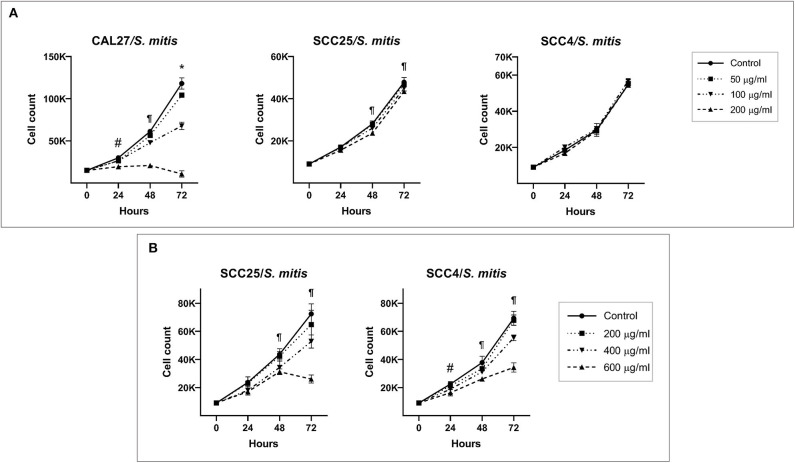
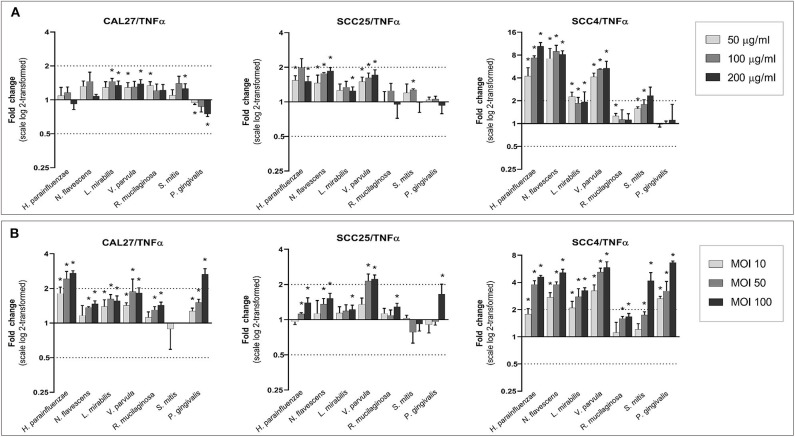
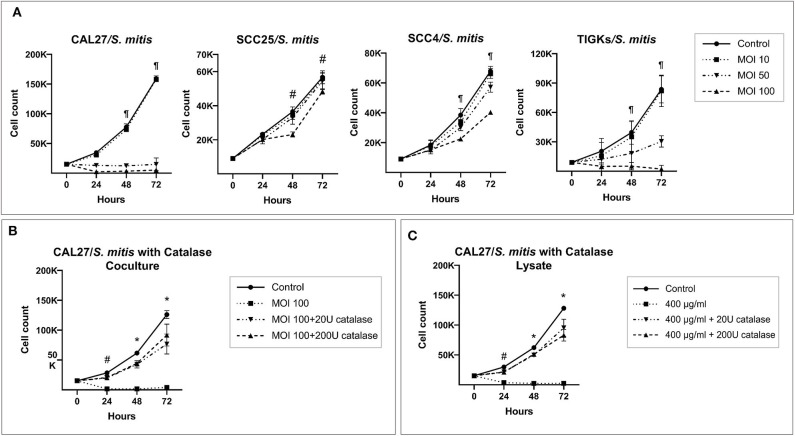
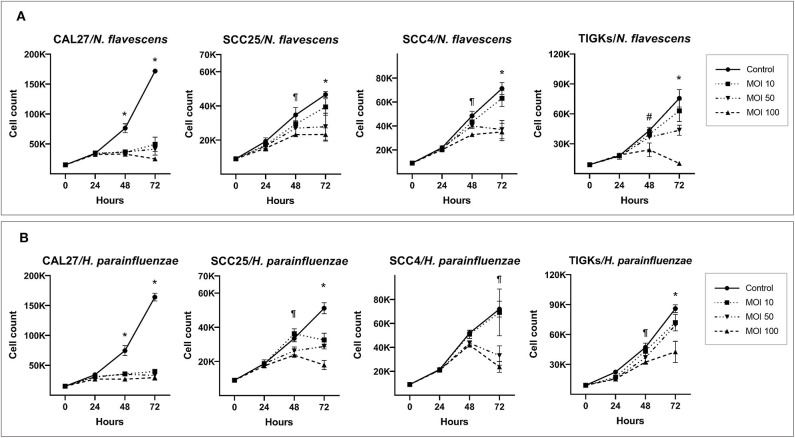
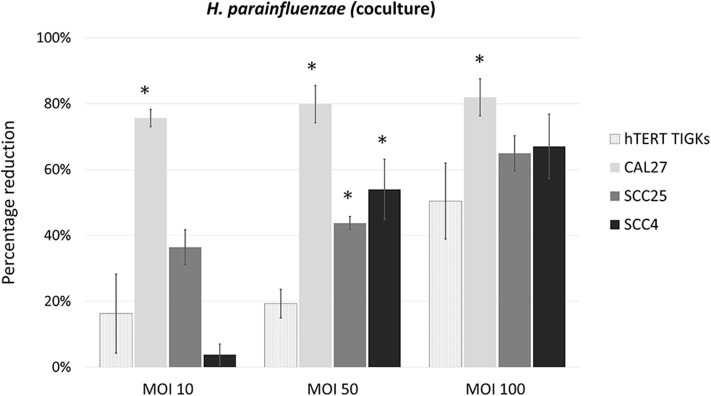
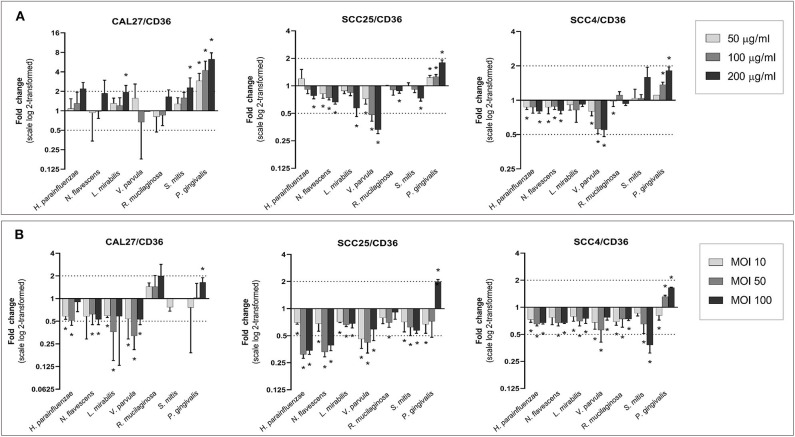
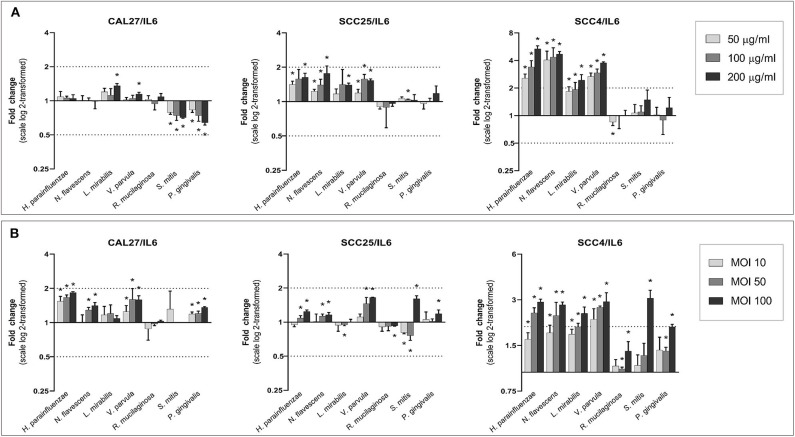
While extensive literature exists about the role of oral bacterial pathogens like and in oral squamous cell carcinoma (OSCC), the role of health-associated species has been largely unexplored. In this study, we assessed the effect of , and on proliferation and expression of marker genes (IL-6, TNF-α, MMP3, CD36, CCD1, and NANOG) in OSCC cell lines CAL27, SCC25, and SCC4. was included as a pathogenic control. Both bacterial lysates (3 concentrations) and live cells (3 MOIs) were tested. , and resulted in substantial, dose-dependent reduction of proliferation, which was found to be mediated by HO for the former and intracellular infection in the latter two species. However, only showed differential antiproliferative effect against the cancer cell lines vs. the normal control (TIGKs). In the gene expression assays, the health-associated species mostly downregulated CD36, a gene that plays an important role in tumor growth and metastasis, while upregulated it. IL6 and TNF expression, on the other hand, was upregulated by almost all species, particularly the Gram-negatives including . The effect on other genes was less evident and varied significantly by cell line. This exploratory study is the first insight into how health-associated bacteria may interact with OSCC. Further studies to explore whether the observed effects may have implications for the prevention or treatment of oral cancer are warranted.
尽管有大量文献探讨了口腔细菌病原体如 和 在口腔鳞状细胞癌(OSCC)中的作用,但健康相关物种的作用在很大程度上尚未得到探索。在这项研究中,我们评估了 、 和 对 OSCC 细胞系 CAL27、SCC25 和 SCC4 中标记基因(IL-6、TNF-α、MMP3、CD36、CCD1 和 NANOG)的增殖和表达的影响。选择 作为病原控制。我们测试了细菌裂解物(3 个浓度)和活菌(3 个 MOI)。 和 导致增殖的显著、剂量依赖性降低,前者是通过 HO 介导的,后两者是通过细胞内感染介导的。然而,只有 对癌细胞系与正常对照(TIGKs)表现出不同的抗增殖作用。在基因表达试验中,健康相关物种主要下调了 CD36,该基因在肿瘤生长和转移中起重要作用,而 则上调了它。另一方面,几乎所有的物种都上调了 IL6 和 TNF 的表达,尤其是包括 在内的革兰氏阴性菌。其他基因的影响则不太明显,并且因细胞系而异变化很大。这项探索性研究首次深入了解健康相关细菌如何与 OSCC 相互作用。进一步的研究探索观察到的影响是否可能对口腔癌的预防或治疗有影响是有必要的。