Department of Odontology, Faculty of Health and Medical Sciences, University of Copenhagen, Copenhagen, Denmark.
Institute of Dental Materials (NIOM), Oslo, Norway.
Clin Exp Dent Res. 2021 Feb;7(1):56-62. doi: 10.1002/cre2.339. Epub 2020 Oct 30.
To examine the knowledge and experience of erosive tooth wear (ETW) among Danish dental practitioners and, based on two cases, explore their treatment decisions.
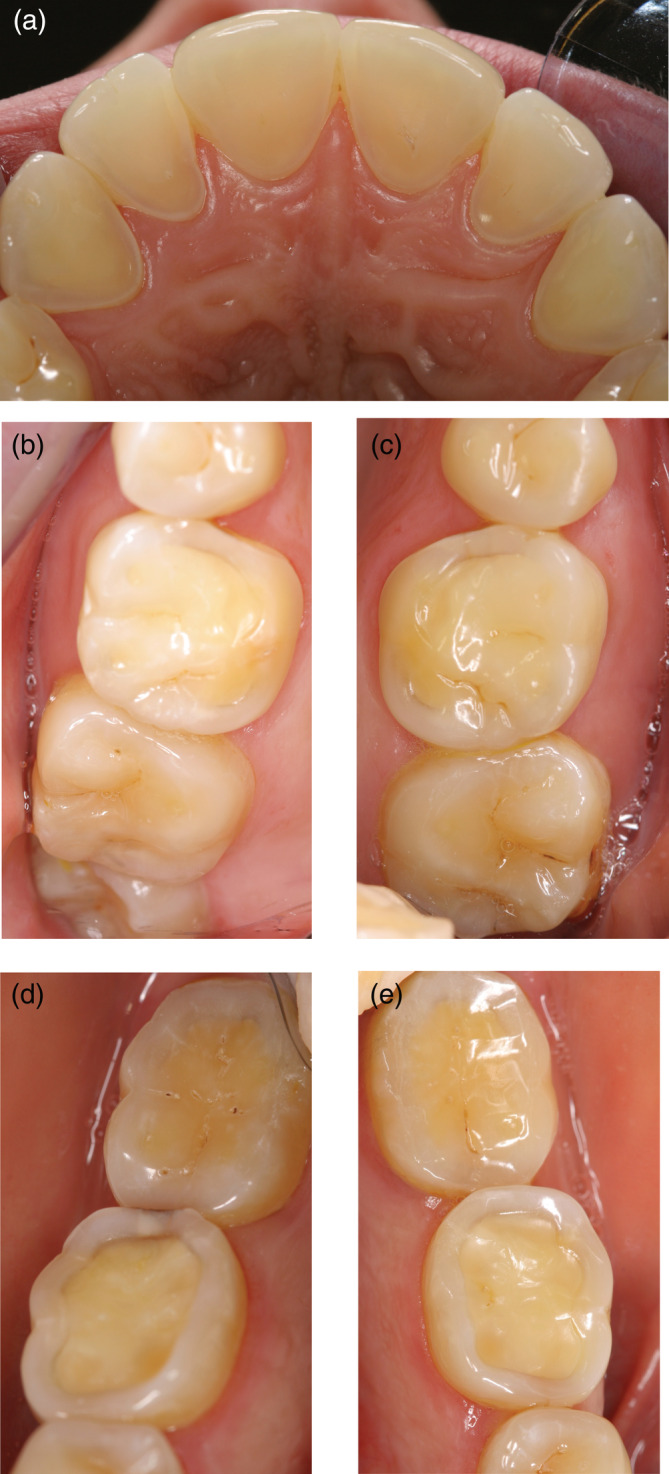
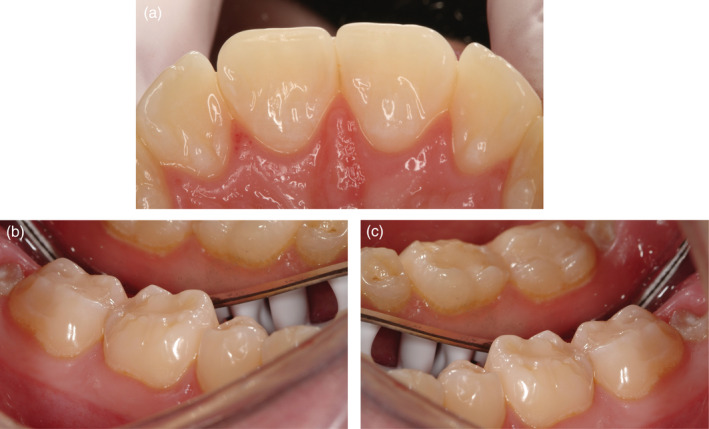
We sent a validated questionnaire electronically to all active members of The Danish Dental Association and The Association of Public Health Dentists in Denmark. The questionnaire had two parts; the first focused on scoring, recordkeeping, knowledge and experience of ETW. The second part presented two patients with different severity of erosive lesions to explore the dentists preventive and restorative treatment decisions.
We received 442 answers from 4,490 potentially eligible dentists in Denmark (response rate 9.8%). The majority (78%) was female and the median age was 44 years. Nearly all respondents (97%) registered ETW in the charts and 49% recorded "always" or "often" the patients' diet history, most commonly with aid of interviews. The respondents perceived the prevalence of ETW to be higher today than 10-15 years ago and male patients (15-25 years) appeared more affected than females. The majority (82%) thought that they usually found the probable cause of the condition with carbonated beverages being the most common factor. The treatment included dietary guidance, soft tooth brushing with non-abrasive fluoride toothpaste, topical fluoride applications and direct composite restorations.
The majority of Danish dentists taking part of this survey had adopted a minimally invasive approach for the management of erosive tooth wear in young adults. There was however room for improvements in diagnosis, scoring and case documentation.
调查丹麦牙科医生对侵蚀性牙磨损(ETW)的认识和经验,并通过两个病例探讨他们的治疗决策。
我们向丹麦牙科协会和公共卫生牙医协会的所有活跃成员发送了一份经过验证的电子问卷。问卷有两部分;第一部分侧重于评分、记录保存、ETW 的知识和经验。第二部分介绍了两名侵蚀性病变程度不同的患者,以探讨牙医的预防性和修复性治疗决策。
我们收到了来自丹麦 4490 名合格牙医中的 442 名回复(回复率 9.8%)。大多数(78%)为女性,中位年龄为 44 岁。几乎所有的受访者(97%)都在图表中记录了 ETW,49%记录了患者的饮食史“经常”或“经常”,最常见的是通过访谈。受访者认为 ETW 的患病率比 10-15 年前更高,而且男性患者(15-25 岁)比女性患者更受影响。大多数(82%)认为他们通常可以通过碳酸饮料等常见因素找到该病症的可能原因。治疗包括饮食指导、使用非研磨性含氟牙膏轻柔刷牙、局部氟化物应用和直接复合树脂修复。
参与这项调查的大多数丹麦牙医对年轻成年人的侵蚀性牙磨损管理采取了微创方法。但在诊断、评分和病例记录方面仍有改进的空间。