Head of Infectious Diseases and Infection Control Units, Sanz Medical Center, Laniado Hospital, 16 Divrei Haim St, Kiryat Sanz, 42150, Netnaya, Israel.
Technion University, Haifa, Israel.
Antimicrob Resist Infect Control. 2020 Oct 30;9(1):169. doi: 10.1186/s13756-020-00826-2.
The environmental role of carbapenemase-producing Enterobacteriaceae (CPE) acquisition and infection in human disease has been described but not thoroughly investigated. We aimed to assess the occurrence of CPE in nearshore aquatic bodies.
Enterobacteriaceae were cultured from coastal and estuary water near Netanya, Israel in June and July of 2018. Bacteria were identified by VITEK2® and their antimicrobial susceptibility was tested according to the CLSI guidelines. Enterobacteriaceae genomes were sequenced to elucidate their resistome and carbapenemase types.
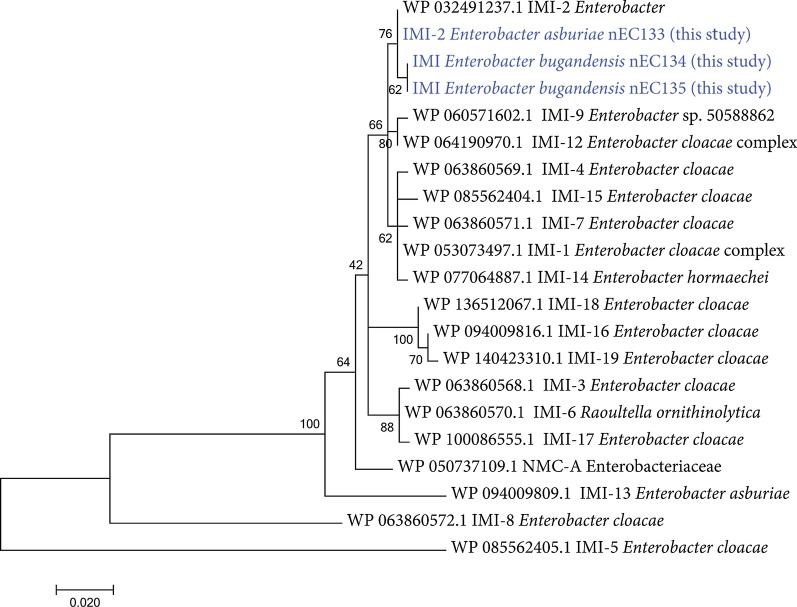
Among other clinically relevant bacteria, four CPE (three Enterobacter spp and one Escherichia coli isolate) were isolated from two river estuaries (Poleg and Alexander Rivers) and coastal water at a popular recreational beach (Beit Yanai). Molecular analysis and genome sequencing revealed the persistent presence of rare beta-lactamase resistance genes, including bla and a previously unknown bla allele, which were not found among the local epidemiological strains. Genome comparisons revealed the high identity of riverine and marine CPE that were cultivated one month apart.
We show that CPE contamination was widespread in nearshore marine and riverine habitats. The high genome-level similarity of riverine and marine CPEs, isolated one month apart, hints at the common source of infection. We discuss the clinical implications of these findings and stress the urgent need to assess the role of the aquatic environment in CPE epidemiology.
碳青霉烯酶产生肠杆菌科(CPE)在人类疾病中的环境作用已被描述,但尚未得到充分研究。我们旨在评估近岸水体中 CPE 的发生情况。
2018 年 6 月至 7 月,从以色列内坦亚附近的沿海和河口水中培养肠杆菌科。细菌通过 VITEK2®进行鉴定,根据 CLSI 指南测试其抗菌药物敏感性。对肠杆菌科基因组进行测序以阐明其耐药组和碳青霉烯酶类型。
在其他临床相关细菌中,从两个河流河口(Poleg 和 Alexander Rivers)和一个受欢迎的娱乐海滩(Beit Yanai)的沿海水中分离出了四种 CPE(三种肠杆菌属和一种大肠杆菌分离株)。分子分析和基因组测序揭示了罕见的β-内酰胺酶耐药基因的持续存在,包括 bla 和以前未知的 bla 等位基因,这些基因在当地流行菌株中未发现。基因组比较显示,相隔一个月培养的河流和海洋 CPE 具有高度的同源性。
我们表明,CPE 污染广泛存在于近岸海洋和河流生境中。相隔一个月分离的河流和海洋 CPE 的高基因组水平相似性暗示着感染的共同来源。我们讨论了这些发现的临床意义,并强调迫切需要评估水生环境在 CPE 流行病学中的作用。