Ben-Soussan Tal Dotan, Marson Fabio, Piervincenzi Claudia, Glicksohn Joseph, De Fano Antonio, Amenduni Francesca, Quattrocchi Carlo C, Carducci Filippo
Research Institute for Neuroscience, Education and Didactics, Patrizio Paoletti Foundation, Assisi, Italy.
Department of Physiology and Pharmacology, Neuroimaging Laboratory, Sapienza University, Rome, Italy.
Front Psychol. 2020 Oct 8;11:543773. doi: 10.3389/fpsyg.2020.543773. eCollection 2020.
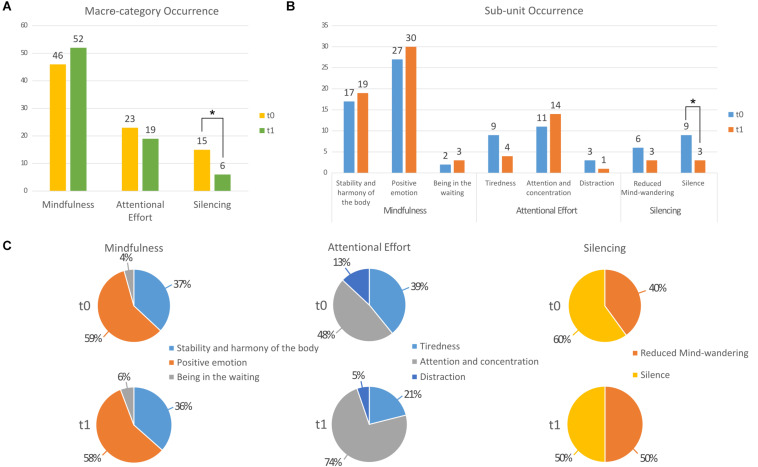
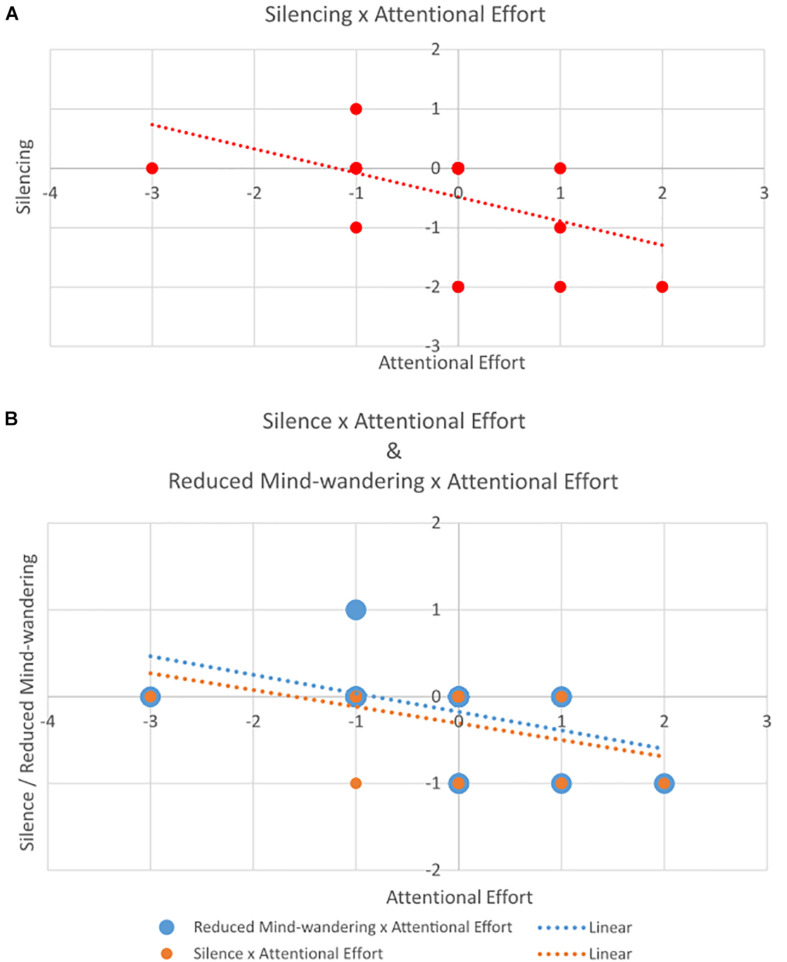
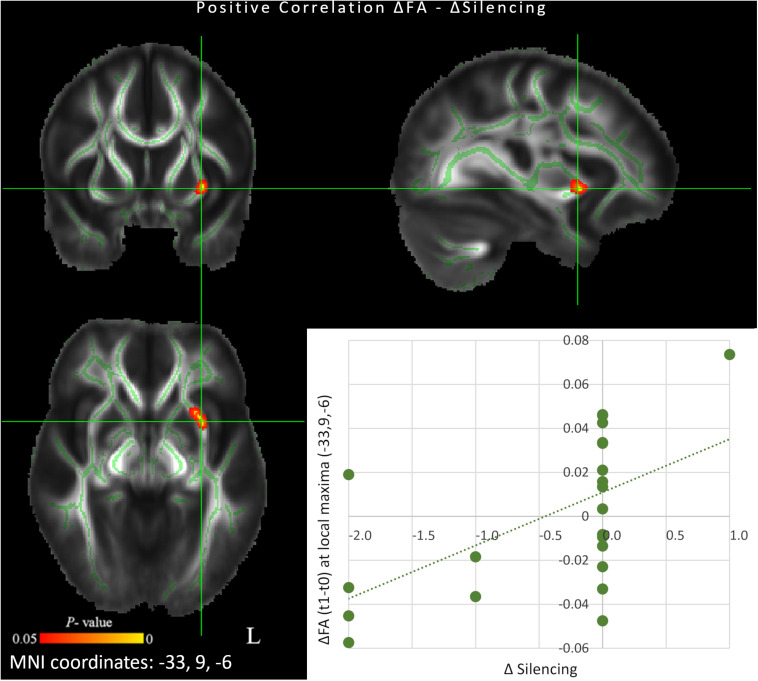
Silence is an important aspect of various meditation practices, but little work has focused specifically on the underlying neurophysiology of silence-related meditative practice, and on how it relates to the self-reported experiences of practitioners. To expand current knowledge regarding the neurophenomenology of silence in meditation, we directly investigated first-person reports of silence-related experiences during the practice of Quadrato Motor Training (QMT) and their association with changes in fractional anisotropy (FA). Participants recorded their cognitive, emotional, and physical experiences upon beginning QMT and again after 6 weeks of QMT practice. These reports were evaluated qualitatively and quantitatively. Findings showed that change between the two time points in self-reported silence-related experiences was negatively correlated with change in attentional effort, and positively correlated with changes in the left uncinate fasciculus. These results expand current knowledge regarding the neuroanatomical correlates of silence-related experiences during meditation.
沉默是各种冥想练习的一个重要方面,但很少有研究专门关注与沉默相关的冥想练习的潜在神经生理学,以及它与练习者自我报告的体验之间的关系。为了扩展当前关于冥想中沉默的神经现象学的知识,我们直接调查了在进行四方运动训练(QMT)期间与沉默相关体验的第一人称报告,以及它们与分数各向异性(FA)变化的关联。参与者在开始QMT时以及在QMT练习6周后再次记录他们的认知、情感和身体体验。这些报告进行了定性和定量评估。结果表明,自我报告的与沉默相关体验在两个时间点之间的变化与注意力努力的变化呈负相关,与左侧钩束的变化呈正相关。这些结果扩展了当前关于冥想期间与沉默相关体验的神经解剖学相关性的知识。