Department of Orthopedic Surgery, The First Affiliated Hospital of Chongqing Medical University, Chongqing, China.
Department of Orthopaedic Surgery, First Affiliated Hospital, Sun Yat-sen University, Guangzhou, Guangdong, China.
Cell Death Dis. 2020 Nov 3;11(11):947. doi: 10.1038/s41419-020-03155-9.
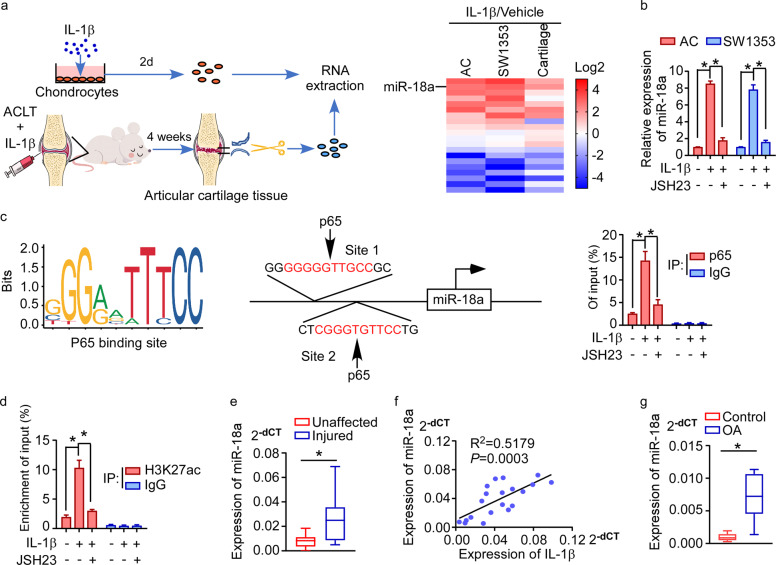
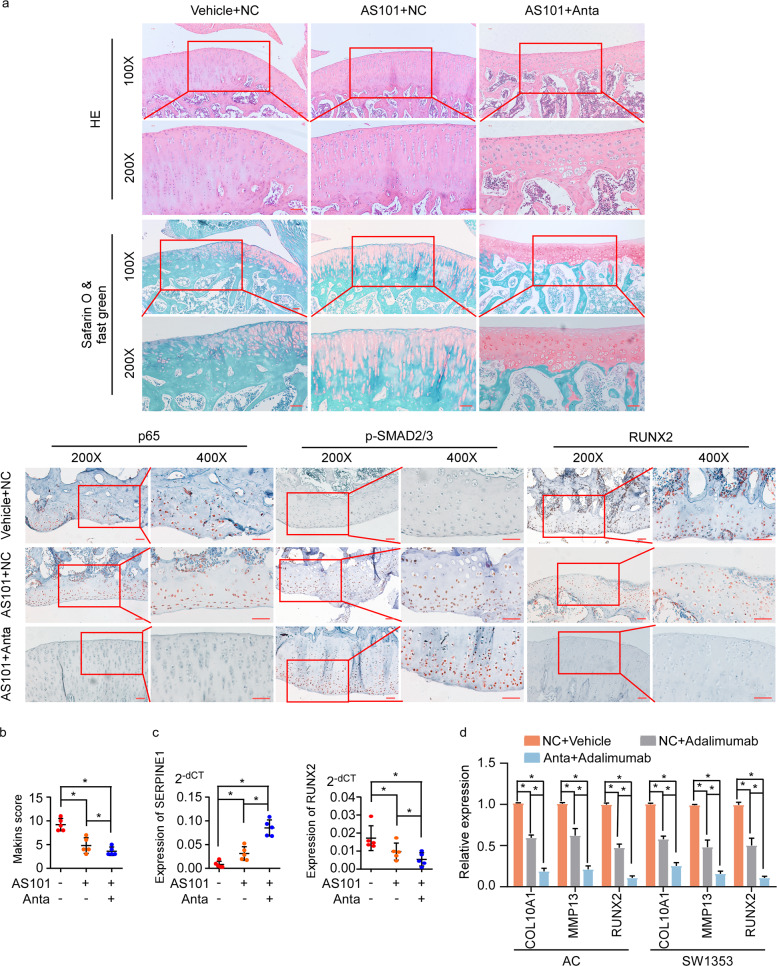
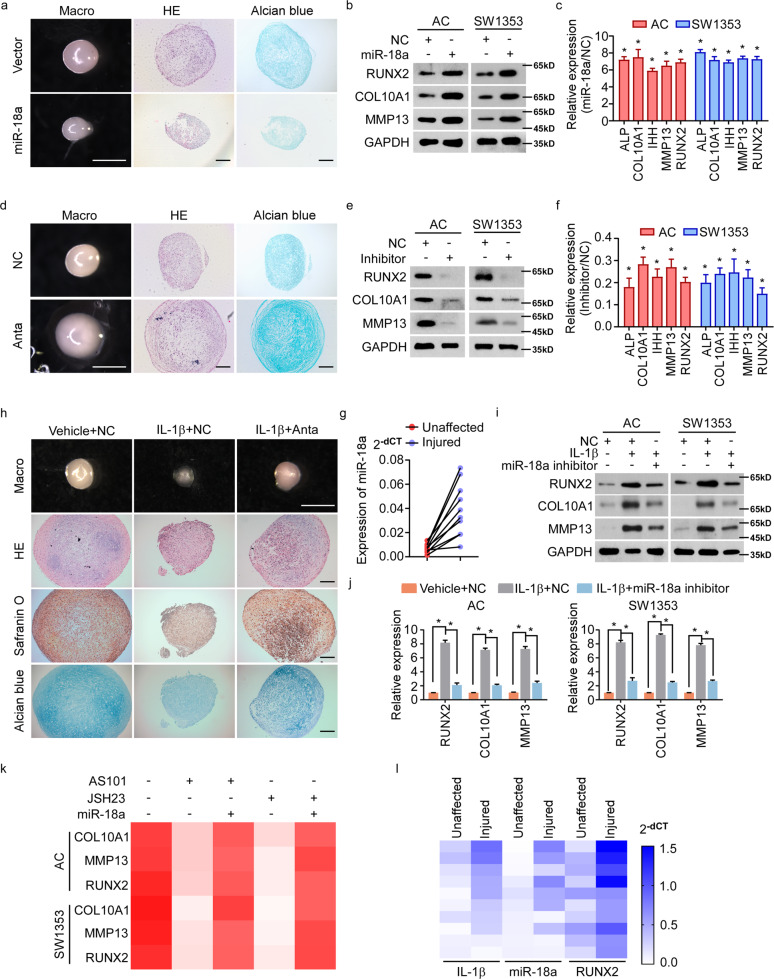
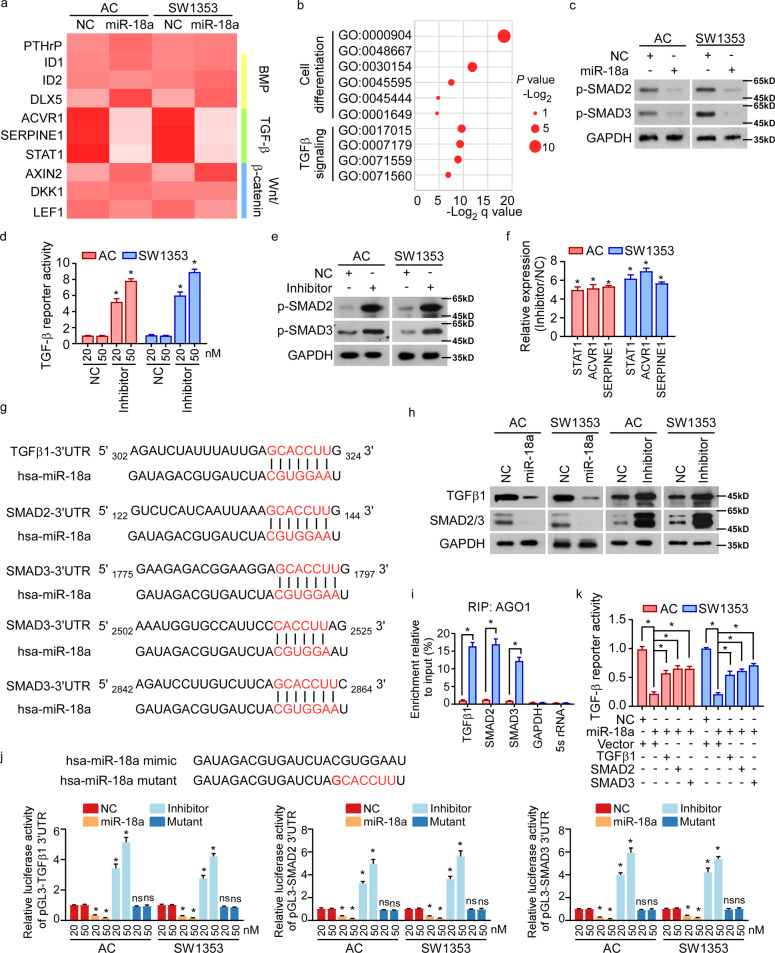
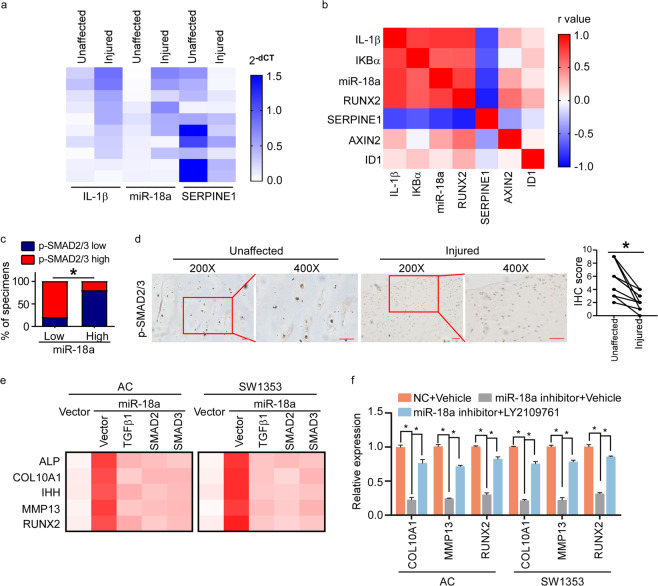
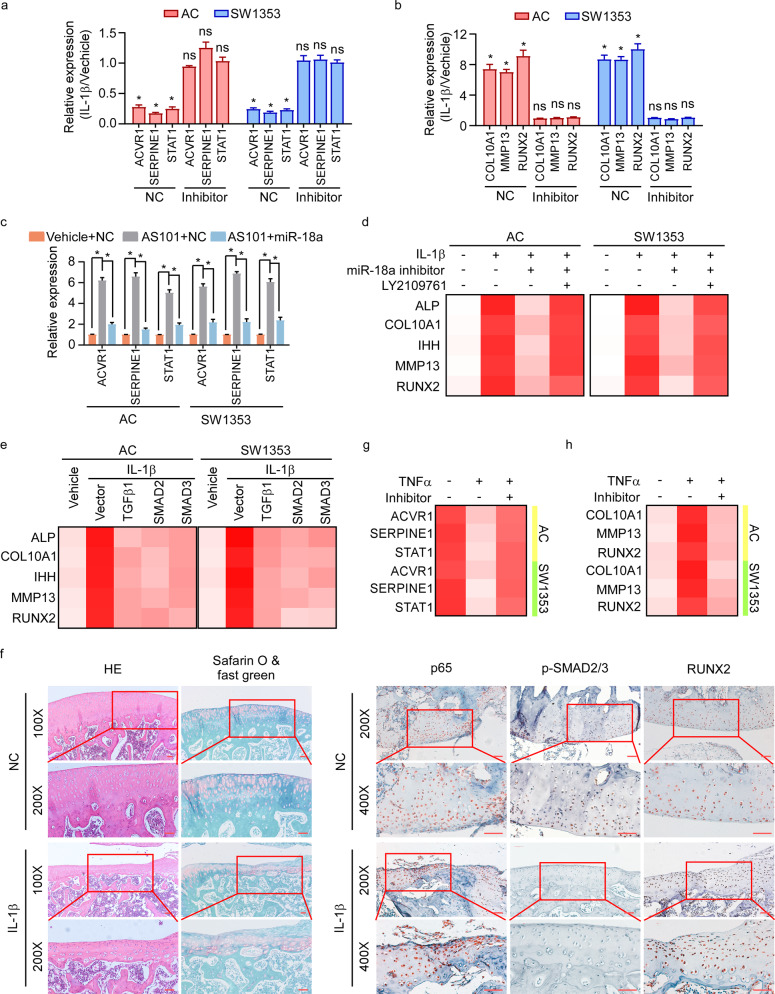
Inflammation participates in the development of OA and targeting inflammatory signaling pathways is a potential strategy for OA treatment. IL-1β is one of the most important inflammatory factors to trigger the activation of NF-κB signaling and accelerate OA progression, whereas OA patients could hardly benefit from inhibiting IL-1β in clinic, suggesting the importance to further explore the details of OA inflammation. We here showed that expression of miR-18a in chondrocytes was specifically induced in response to IL-1β in vitro as well as in rat model of OA during which NF-κB signaling was involved, and that nuclear-translocated p65 directly upregulated miR-18a expression at transcriptional level. Further, increased miR-18a mediated hypertrophy of chondrocytes, resulting in OA degeneration, by targeting TGFβ1, SMAD2, and SMAD3 and subsequently leading to repression of TGF-β signaling. And the level of serum miR-18a was positively correlated to severity of OA. Interestingly, other than IL-1β, pro-inflammation cytokines involving TNFα could also remarkably upregulate miR-18a via activating NF-κB signaling and subsequently induce chondrocytes hypertrophy, suggesting a pivotal central role of miR-18a in inflammatory OA progression. Thus, our study revealed a novel convergence of NF-κB and TGF-β signaling mediated by miR-18a, and a novel mechanism underlying inflammation-regulated OA dependent of NF-κB/miR-18a/TGF-β axis. Notably, in vivo assay showed that targeting miR-18a sensitized OA chondrocytes to IL-1β inhibitor as targeting IL-1β and miR-18a simultaneously had much stronger inhibitory effects on OA progression than suppressing IL-1β alone. Therefore, the diagnostic and therapeutic potentials of miR-18a for OA were also revealed.
炎症参与 OA 的发展,靶向炎症信号通路是 OA 治疗的潜在策略。IL-1β 是触发 NF-κB 信号激活并加速 OA 进展的最重要炎症因子之一,然而 OA 患者在临床上很难从抑制 IL-1β 中获益,这表明进一步探索 OA 炎症的细节非常重要。我们在这里表明,miR-18a 在软骨细胞中的表达在体外以及在 NF-κB 信号参与的 OA 大鼠模型中特异性地被 IL-1β 诱导,并且核转位的 p65 直接在转录水平上上调 miR-18a 的表达。此外,增加的 miR-18a 通过靶向 TGFβ1、SMAD2 和 SMAD3 介导软骨细胞肥大,导致 OA 退化,从而导致 TGF-β 信号通路受到抑制。并且血清 miR-18a 的水平与 OA 的严重程度呈正相关。有趣的是,除了 IL-1β 之外,涉及 TNFα 的促炎细胞因子也可以通过激活 NF-κB 信号显著上调 miR-18a,从而诱导软骨细胞肥大,这表明 miR-18a 在炎症性 OA 进展中起着关键的中心作用。因此,我们的研究揭示了 NF-κB 和 TGF-β 信号通过 miR-18a 的新融合,以及 NF-κB/miR-18a/TGF-β 轴调节的炎症性 OA 新的潜在机制。值得注意的是,体内试验表明,针对 miR-18a 可使 OA 软骨细胞对 IL-1β 抑制剂敏感,因为同时靶向 IL-1β 和 miR-18a 对 OA 进展的抑制作用比单独抑制 IL-1β 要强得多。因此,miR-18a 对 OA 的诊断和治疗潜力也得到了揭示。