Fessi Nidhal, Nsib Mohamed Faouzi, Chevalier Yves, Guillard Chantal, Dappozze Frédéric, Houas Ammar, Palmisano Leonardo, Parrino Francesco
Laboratoire de Recherche Catalyse et Matériaux pour l'Environnement et les Procédés LRCMEP (UR11ES85), Faculté des Sciences de Gabès, University of Gabès, Campus Universitaire, Cité Erriadh, 6072 Gabès, Tunisia.
University of Lyon, Laboratoire d'Automatique et de Génie des Procédés (LAGEPP), UMR 5007 CNRS, University Claude Bernard Lyon 1, 43 Boulevard 11 Novembre, 69622 Villeurbanne, France.
Langmuir. 2020 Nov 17;36(45):13545-13554. doi: 10.1021/acs.langmuir.0c02285. Epub 2020 Nov 4.
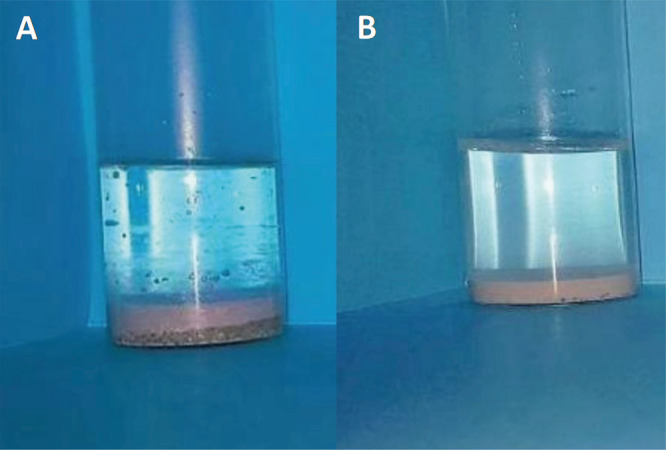
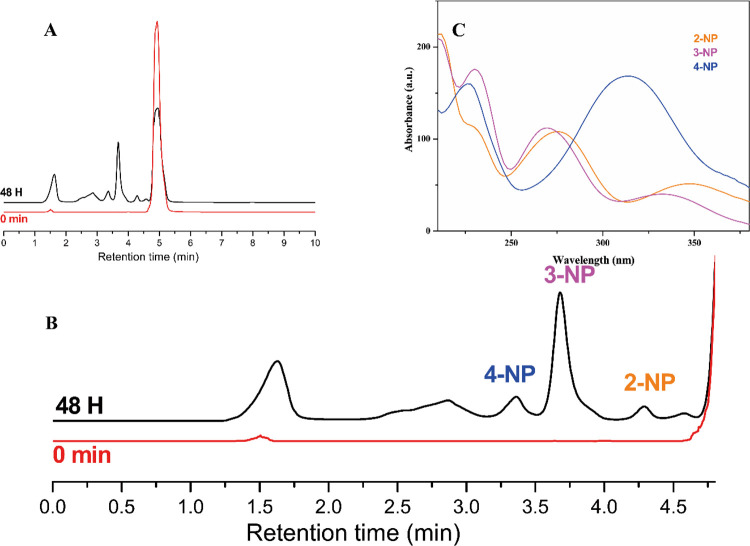
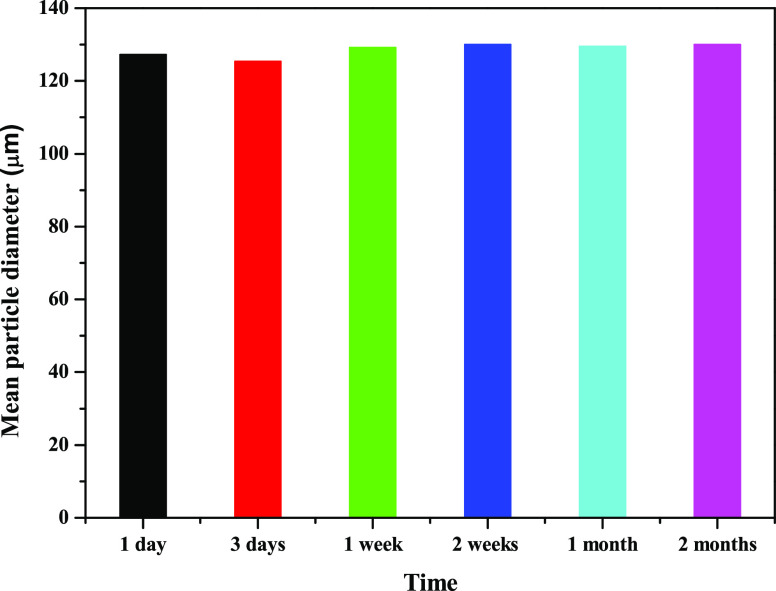
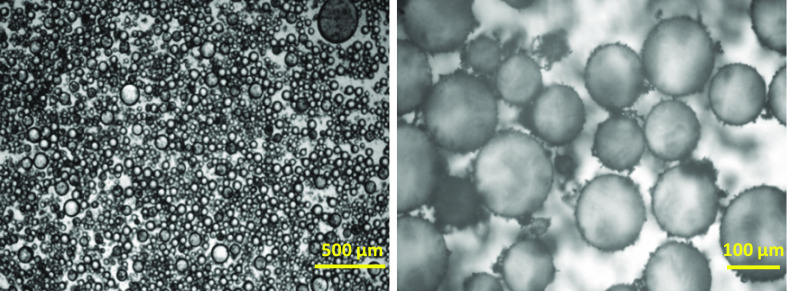
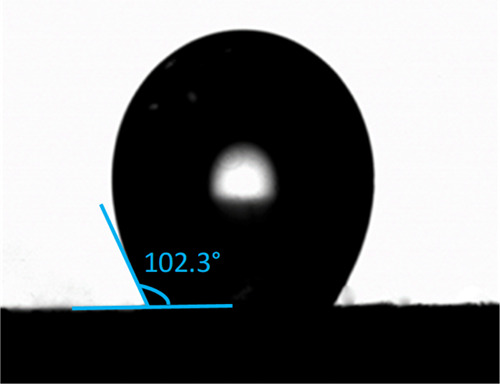
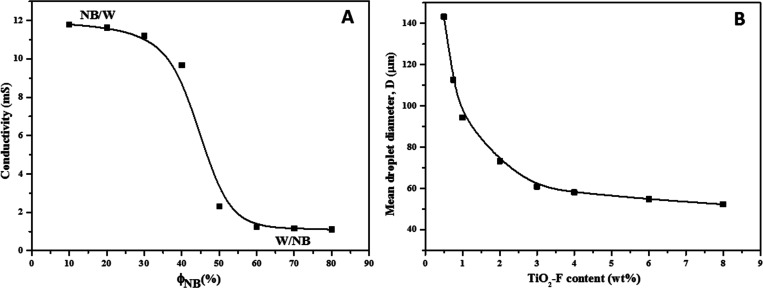
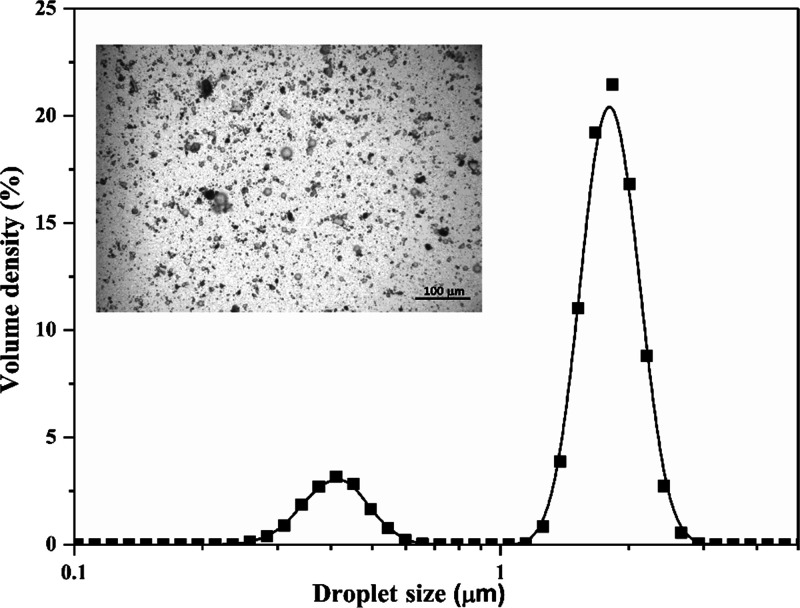
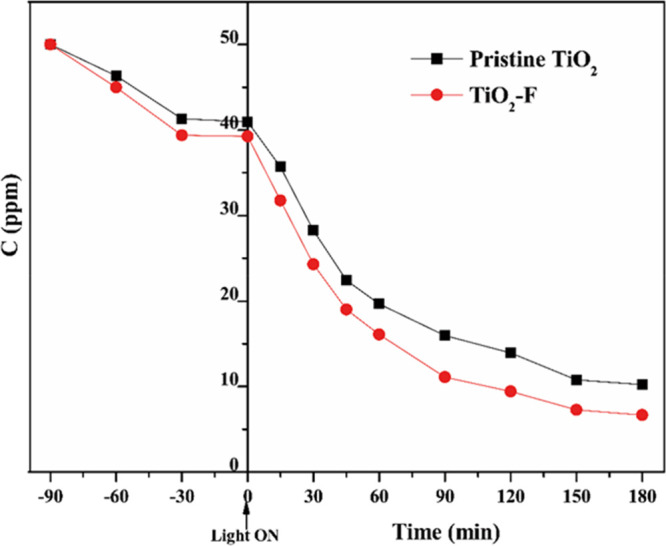
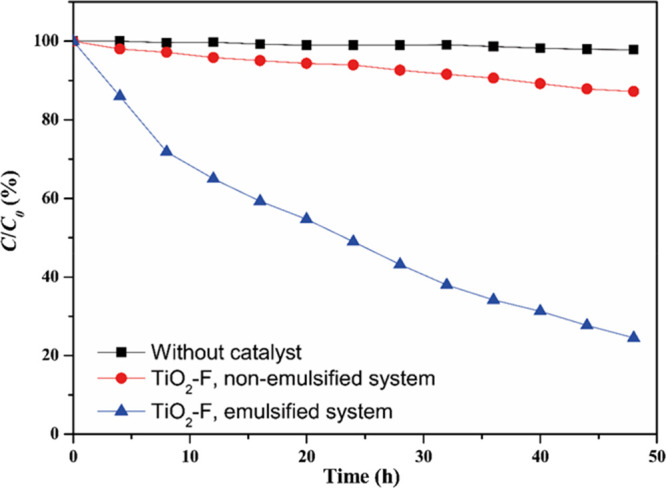
Fluorination of the TiO surface has been often reported as a tool to increase the photocatalytic efficiency due to the beneficial effects in terms of production of oxidizing radicals. Moreover, it is shown that the unique amphiphilic properties of the fluorinated TiO (TiO-F) surface allow one to use this material as a stabilizer for the formulation of Pickering emulsions of poorly soluble pollutants such as nitrobenzene (NB) in water. The emulsions have been characterized in terms of size of the droplets, type of emulsion, possibility of phase inversion, contact angle measurements, and optical microscopy. The emulsified system presents micrometer-sized droplets of pollutant surrounded by the TiO-F photocatalyst. Consequently, the system can be considered to be composed of microreactors for the degradation of the pollutant, which maximize the contact area between the photocatalyst and substrate. The enhanced photocatalytic activity of TiO-F was confirmed in the present paper as the apparent rate constants of NB photodegradation were 16 × 10 and 12 × 10 min for fluorinated and bare TiO, respectively. At NB concentrations largely exceeding its solubility, the rate constant was 0.04 × 10 min in the presence of both TiO and TiO-F. However, unlike TiO, TiO-F stabilized NB/water emulsions and, under these conditions, the efficiency of NB photocatalytic degradation in the emulsified system was ca. 18 times higher than in the nonemulsified one. This result is relevant also in terms of practical applications because it opens the route to one-pot treatments of biphasic polluted streams without the need of preliminary physical separation treatments.
由于在产生氧化自由基方面具有有益效果,TiO表面的氟化常常被报道为一种提高光催化效率的手段。此外,研究表明,氟化TiO(TiO-F)表面独特的两亲性质使得该材料能够用作稳定剂,用于配制难溶性污染物(如水中的硝基苯(NB))的Pickering乳液。这些乳液已通过液滴尺寸、乳液类型、相转变可能性、接触角测量和光学显微镜等方面进行了表征。乳化体系呈现出被TiO-F光催化剂包围的微米级污染物液滴。因此,该体系可被视为由用于污染物降解的微反应器组成,这最大限度地增加了光催化剂与底物之间的接触面积。本文证实了TiO-F增强的光催化活性,因为氟化TiO和裸露TiO的NB光降解表观速率常数分别为16×10⁻³ 和12×10⁻³ min⁻¹。在NB浓度大大超过其溶解度时,在TiO和TiO-F存在下速率常数为0.04×10⁻³ min⁻¹。然而,与TiO不同,TiO-F稳定了NB/水乳液,在这些条件下,乳化体系中NB光催化降解的效率比未乳化体系高约18倍。这一结果在实际应用方面也具有重要意义,因为它开辟了无需预先进行物理分离处理即可对两相污染物流进行一锅法处理的途径。