Kim Jae-Hoon, Noh Gunwoo, Hong Seoung-Jin, Lee Hyeonjong
Department of Dental Education, Dental Research Institute, Dental and Life Science Institute, School of Dentistry, Pusan National University, Yangsan, Republic of Korea.
School of Mechanical Engineering, Kyungpook National University, Daegu, Republic of Korea.
J Adv Prosthodont. 2020 Oct;12(5):316-321. doi: 10.4047/jap.2020.12.5.316. Epub 2020 Oct 26.
The stress distribution and microgap formation on an implant abutment structure was evaluated to determine the relationship between the direction of the load and the stress value.
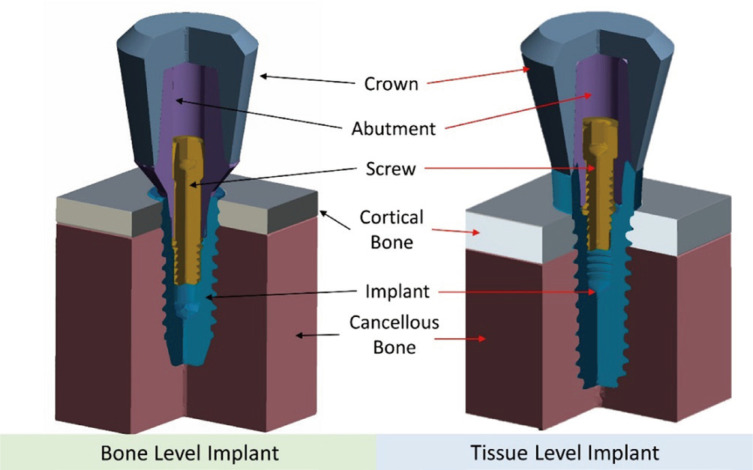
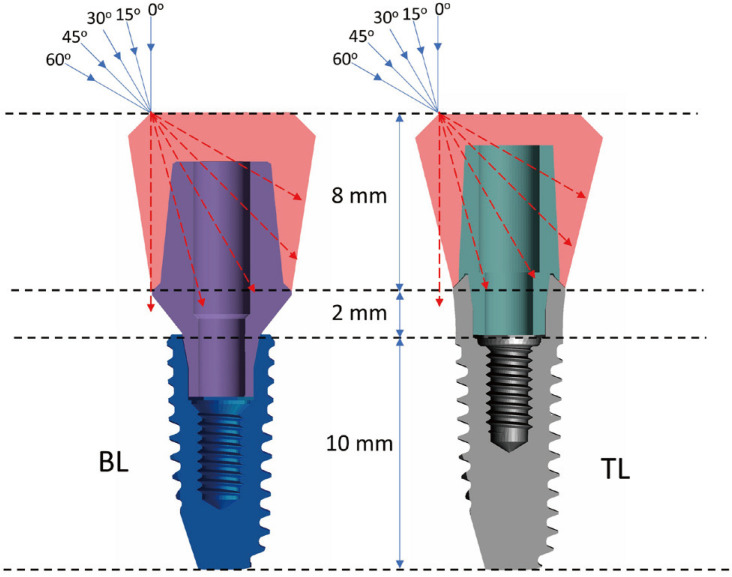
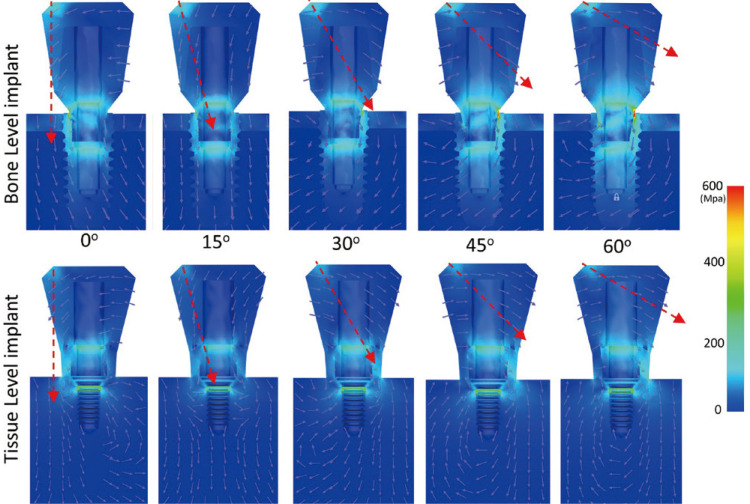
Two types of three-dimensional models for the mandibular first molar were designed: bone-level implant and tissue-level implant. Each group consisted of an implant, surrounding bone, abutment, screw, and crown. Static finite element analysis was simulated through 200 N of occlusal load and preload at five different load directions: 0, 15, 30, 45, and 60°. The von Mises stress of the abutment and implant was evaluated. Microgap formation on the implant-abutment interface was also analyzed.
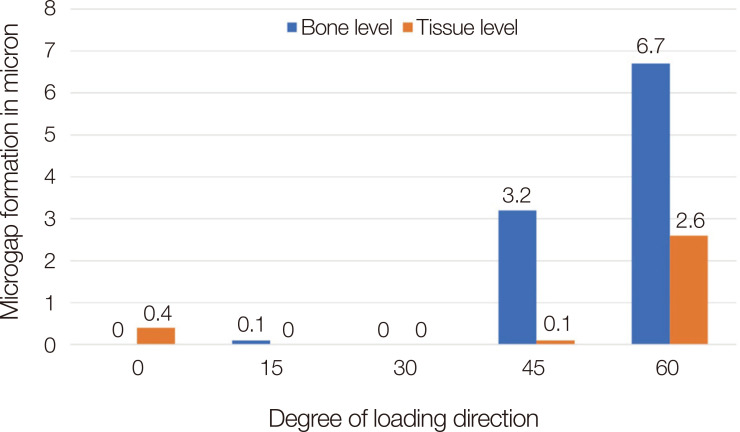
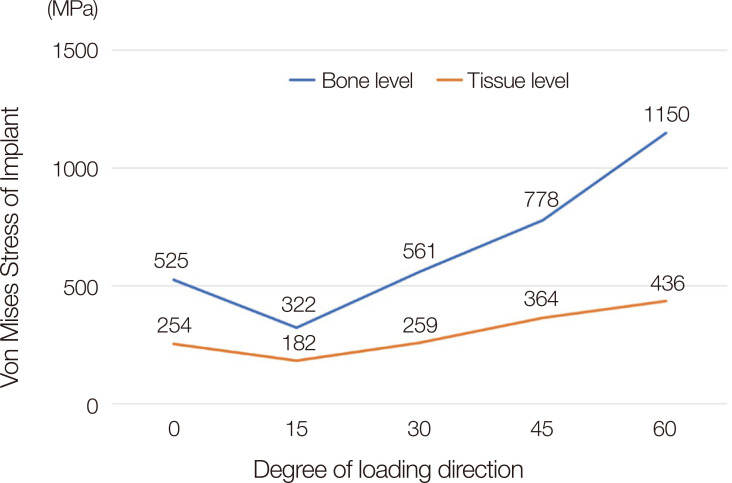
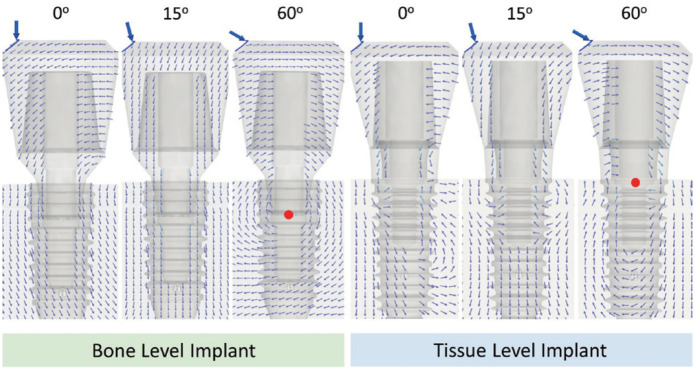
The stress values in the implant were as follows: 525, 322, 561, 778, and 1150 MPa in a bone level implant, and 254, 182, 259, 364, and 436 MPa in a tissue level implant at a load direction of 0, 15, 30, 45, and 60°, respectively. For microgap formation between the implant and abutment interface, three to seven-micron gaps were observed in the bone level implant under a load at 45 and 60°. In contrast, a three-micron gap was observed in the tissue level implant under a load at only 60°.
The mean stress of bone-level implant showed 2.2 times higher than that of tissue-level implant. When considering the loading point of occlusal surface and the direction of load, higher stress was noted when the vector was from the center of rotation in the implant prostheses.
评估种植体基台结构上的应力分布和微间隙形成情况,以确定负荷方向与应力值之间的关系。
设计了两种下颌第一磨牙的三维模型:骨水平种植体和软组织水平种植体。每组均由种植体、周围骨组织、基台、螺钉和牙冠组成。通过在五个不同负荷方向(0°、15°、30°、45°和60°)施加200 N的咬合负荷和预负荷来模拟静态有限元分析。评估基台和种植体的冯·米塞斯应力。还分析了种植体-基台界面处的微间隙形成情况。
在负荷方向为0°、15°、30°、45°和60°时,骨水平种植体中种植体的应力值分别为525、322、561、778和1150 MPa,软组织水平种植体中种植体的应力值分别为254、182、259、364和436 MPa。对于种植体与基台界面处的微间隙形成,在45°和60°负荷下,骨水平种植体中观察到3至7微米的间隙。相比之下,软组织水平种植体仅在60°负荷下观察到3微米的间隙。
骨水平种植体的平均应力比软组织水平种植体高2.2倍。当考虑咬合面的负荷点和负荷方向时,当矢量来自种植体假体的旋转中心时,应力较高。