Department of Biostatistics, School of Public Health, Hamadan University of Medical Sciences, Hamadan, Iran.
Modeling of Non-communicable diseases research center, Hamadan University of Medical Sciences, Hamadan, Iran.
J Prev Med Hyg. 2020 Oct 6;61(3):E482-E488. doi: 10.15167/2421-4248/jpmh2020.61.3.1421. eCollection 2020 Sep.
Hemodialysis patients are at a high risk for morbidity and mortality. This study aimed to find the predictors of mortality and survival in hemodialysis patients in Hamadan province of Iran.
A number of 785 patients during the entire 10 years were enrolled into this historical cohort study. Data were gathered by a checklist of hospital records. The survival time was the time between the start of hemodialysis treatment to patient's death as the end point. Random survival forests (RSF) method was used to identify the main predictors of survival among the patients.
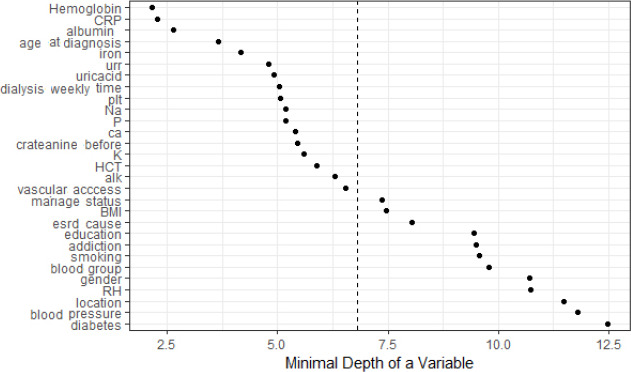
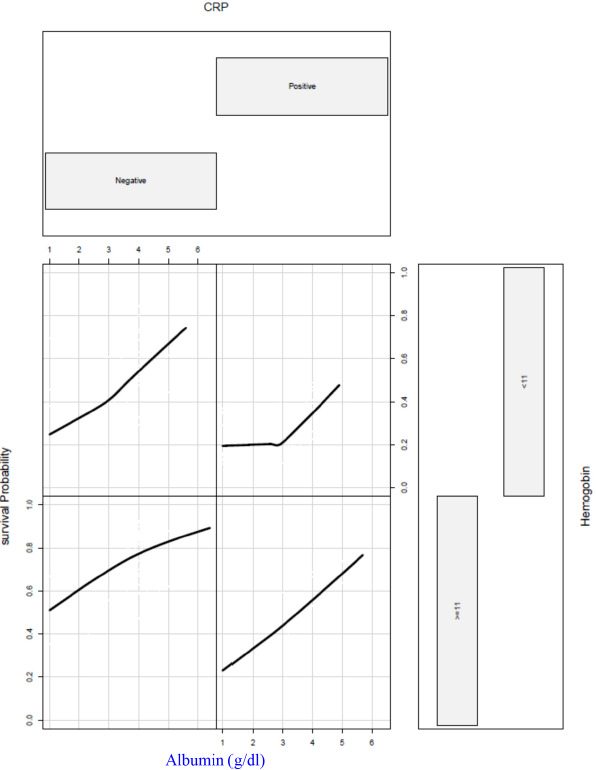
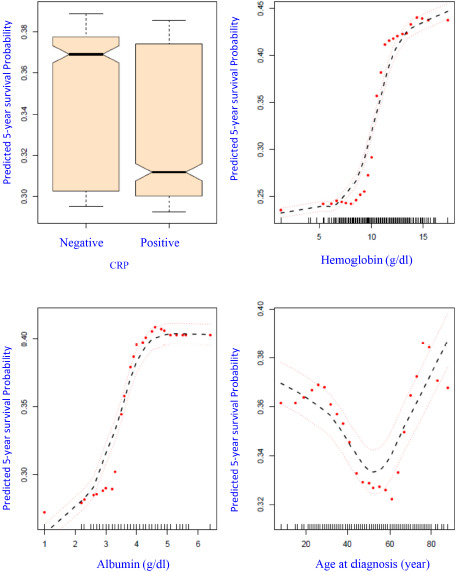
The median survival time was 613 days. The number of 376 deaths was occurred. The three most important predictors of survival were hemoglobin, CRP and albumin. RSF method predicted survival better than the conventional Cox-proportional hazards model (out-of-bag C-index of 0.808 for RSF vs. 0.727 for Cox model).
We found that positivity of CRP, low serum albumin and low serum hemoglobin were the top three most important predictors of low survival for HD patients.
血液透析患者的发病率和死亡率都很高。本研究旨在寻找伊朗哈马丹省血液透析患者死亡和生存的预测因素。
在整个 10 年期间,共有 785 名患者被纳入这项历史性队列研究。通过医院记录清单收集数据。生存时间是从血液透析治疗开始到患者死亡的时间作为终点。随机生存森林(RSF)方法用于确定患者生存的主要预测因素。
中位生存时间为 613 天。共发生 376 例死亡。生存的三个最重要预测因素是血红蛋白、CRP 和白蛋白。RSF 方法预测生存情况优于传统 Cox 比例风险模型(RSF 的袋外 C 指数为 0.808,Cox 模型为 0.727)。
我们发现 CRP 阳性、血清白蛋白和血红蛋白低是血液透析患者低生存率的三个最重要的预测因素。