Wuxi School of Medicine, Jiangnan University, Wuxi, 214122, China.
Department of Urology, Affiliated Wuxi No.2 Hospital, Nanjing Medical University, Wuxi, 214002, China.
BMC Microbiol. 2020 Nov 5;20(1):336. doi: 10.1186/s12866-020-01992-4.
The long-held notion that, without urinary tract or circulatory infection, bladder urine and blood are sterile biofluids has been disproven. There have been no previous reports on the kidney pelvis urinary microbiome after bladder disinfection in kidney stone patients. This study aimed to determine whether a kidney pelvis urinary microbiome is present after eliminating the influence of the bladder urinary microbiome, whether the microbiome composition is different in patients with stone kidney pelvis (SKP) and non-stone kidney pelvis (NSKP), and the correlation between SKP and patient clinical characteristics.
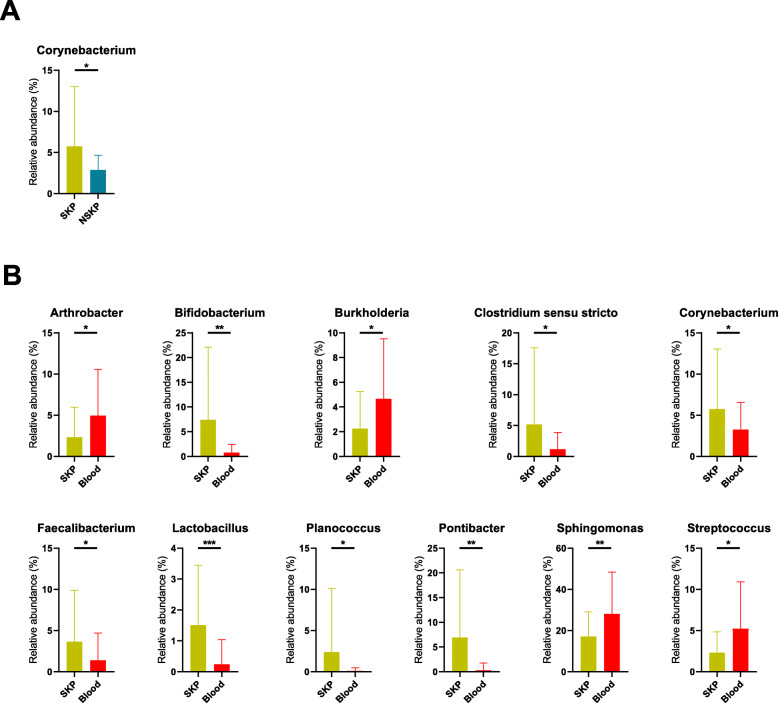
Comparisons of bacterial diversity and community structure exhibited that urine in bladder was similar to SKP and NSKP. However, the comparisons showed that urine samples were different from blood. The most common operational taxonomic units were shared by all three types of urine samples. Corynebacterium was significantly higher in SKP compared to NSKP. Several bacteria were associated with patient characteristics, including Lactobacillus, which was positively correlated with fasting blood glucose, and Prevotella was negatively correlated with BMI. Lactobacillus was significantly higher in SKP compared to blood but not in NSKP compared to blood.
The composition of the kidney pelvis urinary microbiome after disinfection of the bladder and its similarity to the bladder microbiome indicate that bladder urine can be used to replace kidney pelvis urine in microbiome research. Additionally, the comparison of SKP and NSKP and clinical associations suggest that the occurrence of kidney stones is responsible for the SKP urinary microbiome.
长期以来人们一直认为,在没有尿路或循环感染的情况下,膀胱尿液和血液是无菌的生物液体。此前尚无关于肾结石患者膀胱消毒后肾盂尿微生物组的报道。本研究旨在确定在消除膀胱尿微生物组影响后是否存在肾盂尿微生物组,结石性肾盂(SKP)和非结石性肾盂(NSKP)患者的微生物组组成是否不同,以及 SKP 与患者临床特征的相关性。
细菌多样性和群落结构的比较表明,膀胱中的尿液与 SKP 和 NSKP 相似。然而,这些比较表明尿液样本与血液不同。所有三种尿液样本都具有共同的最常见操作分类单元。与 NSKP 相比,SKP 中的 Corynebacterium 明显更高。一些细菌与患者特征相关,包括与空腹血糖呈正相关的乳杆菌,与 BMI 呈负相关的普雷沃特菌。与血液相比,SKP 中的乳杆菌明显更高,但 NSKP 与血液相比则不然。
膀胱消毒后肾盂尿微生物组的组成及其与膀胱微生物组的相似性表明,在微生物组研究中可以使用膀胱尿液代替肾盂尿液。此外,对 SKP 和 NSKP 的比较以及临床相关性表明,肾结石的发生是导致 SKP 尿微生物组的原因。