Liu Fengping, Zhang Nan, Jiang Peng, Zhai Qixiao, Li Chen, Yu Deshui, Wu Yan, Zhang Yuwei, Lv Longxian, Xu Xinyu, Feng Ninghan
Wuxi School of Medicine, Jiangnan University, Wuxi, Jiangsu, China.
Department of Urology, Affiliated Wuxi No. 2 Hospital, Nanjing Medical University, Wuxi, Jiangsu, China.
J Transl Med. 2020 Mar 17;18(1):130. doi: 10.1186/s12967-020-02282-3.
Kidney stone disease (KSD) is more common in individuals with hypertension (HTN) than in individuals with normotension (NTN). Urinary dysbiosis is associated with urinary tract disease and systemic diseases. However, the role of the urinary microbiome in KSD complicated with HTN remains unclear.
This study investigated the relationship between the pelvis urinary microbiome and blood pressure (BP) in patients with KSD co-occurring with HTN (KSD-HTN) and healthy controls (HC) by conducting 16S rRNA gene sequencing of bacteria in urine samples. The urine samples were collected (after bladder disinfection) from 50 patients with unilateral kidney calcium stones and NTN (n = 12), prehypertension (pHTN; n = 11), or HTN (n = 27), along with 12 HCs.
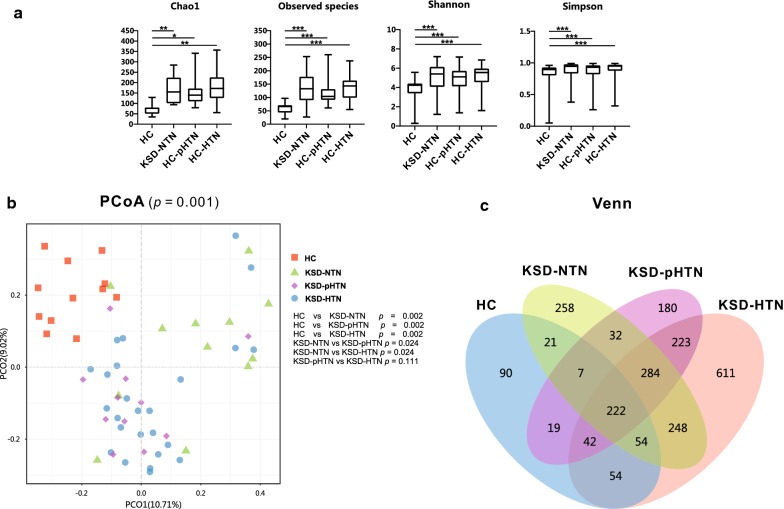
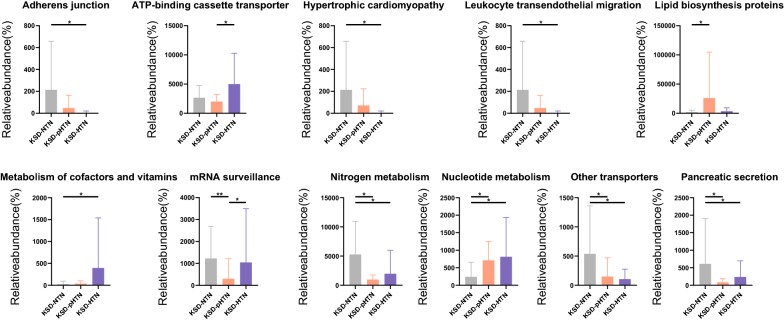
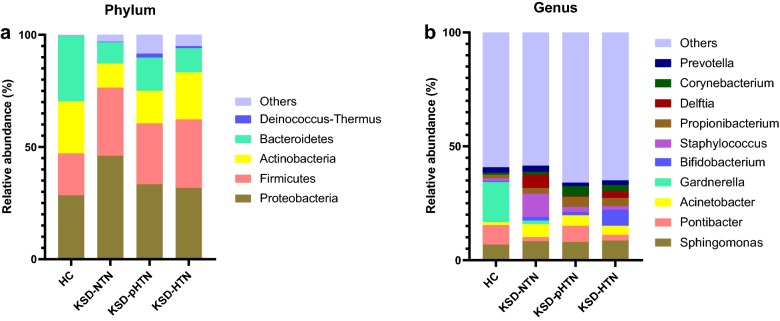
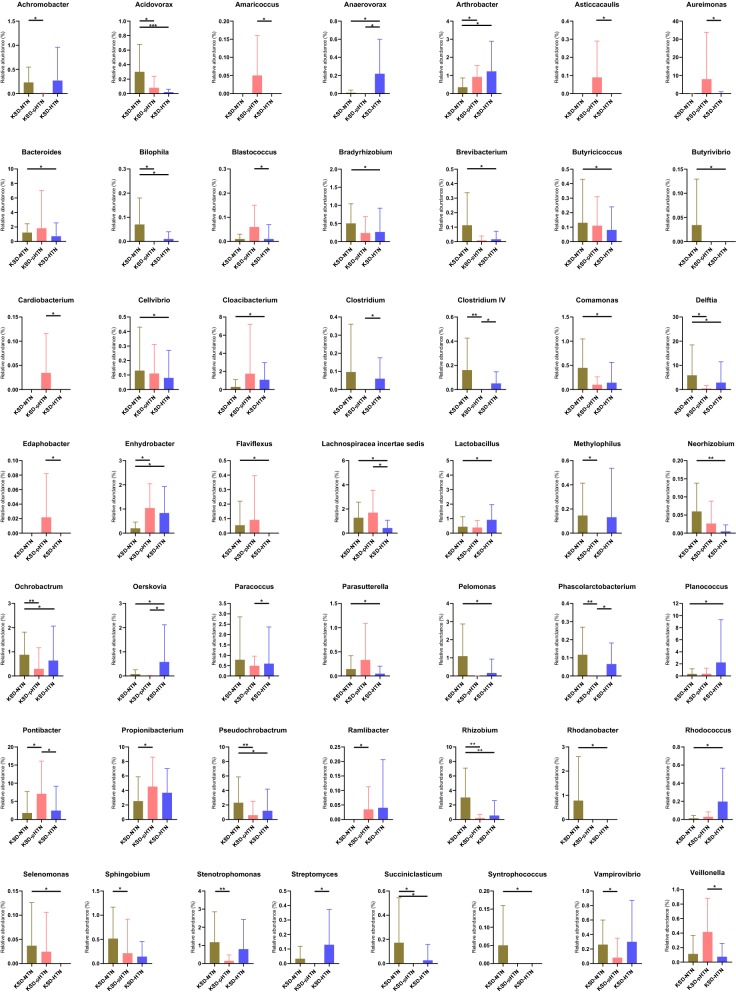
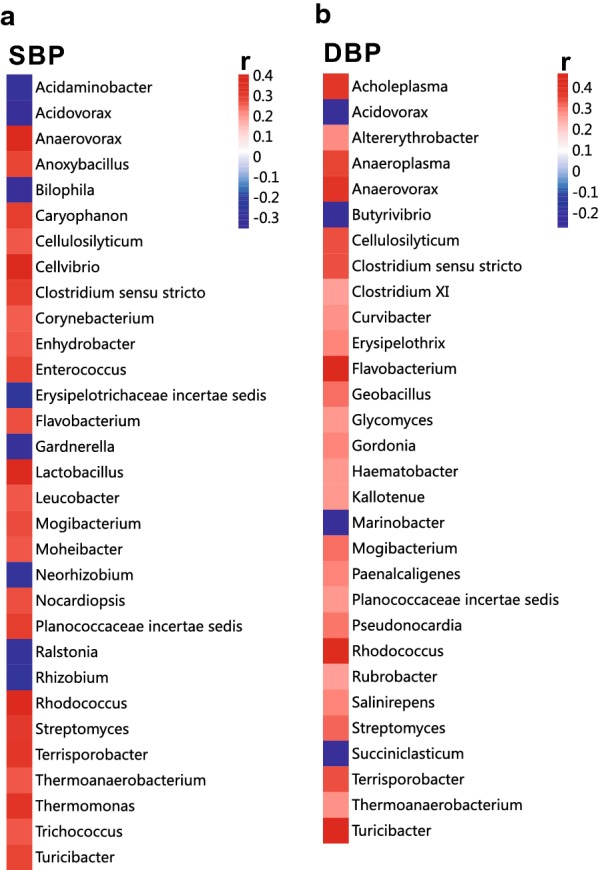
Principal coordinates analysis showed that there were significant differences in the urinary microbiomes not only between KSD patients and HCs but also between KSD-pHTN or KSD-HTN patients and KSD-NTN patients. Gardnerella dominated in HCs, Staphylococcus dominated in KSD-NTN patients and Sphingomonas dominated in both KSD-pHTN and KSD-HTN patients. The abundance of several genera including Acidovorax, Gardnerella and Lactobacillus was correlated with BP. Adherens junction and nitrogen and nucleotide metabolism pathways, among others, were associated with changes in BP.
The findings suggest that patients with KSD complicated with HTN have a unique urinary microbiome profile and that changes in the microbiome may reflect disease progression and may be useful to monitor response to treatments.
肾结石疾病(KSD)在高血压(HTN)患者中比在血压正常(NTN)的个体中更为常见。尿路微生物失调与尿路疾病和全身性疾病相关。然而,尿路微生物群在合并高血压的KSD中的作用仍不清楚。
本研究通过对尿液样本中的细菌进行16S rRNA基因测序,调查了合并HTN的KSD患者(KSD-HTN)和健康对照(HC)的肾盂尿路微生物群与血压(BP)之间的关系。从50例单侧肾钙结石且血压正常(n = 12)、高血压前期(pHTN;n = 11)或高血压(n = 27)的患者以及12例HC中收集(膀胱消毒后)尿液样本。
主坐标分析表明,不仅KSD患者与HC之间的尿路微生物群存在显著差异,而且KSD-pHTN或KSD-HTN患者与KSD-NTN患者之间也存在显著差异。加德纳菌在HC中占主导,葡萄球菌在KSD-NTN患者中占主导,鞘氨醇单胞菌在KSD-pHTN和KSD-HTN患者中均占主导。包括嗜酸菌属、加德纳菌属和乳杆菌属在内的几个属的丰度与血压相关。黏附连接以及氮和核苷酸代谢途径等与血压变化有关。
研究结果表明,合并HTN的KSD患者具有独特的尿路微生物群特征,微生物群的变化可能反映疾病进展,并且可能有助于监测治疗反应。