Stupin Victor, Manturova Natalia, Silina Ekaterina, Litvitskiy Petr, Vasin Vitaly, Artyushkova Elena, Ivanov Alexander, Gladchenko Mikhail, Aliev Salekh
Department of Hospital Surgery No 1, Pirogov Russian National Research Medical University, Moscow, Russia.
Department of Plastic and Reconstructive Surgery, Cosmetology and Cell Technologies, Pirogov Russian National Research Medical University, Moscow, Russia.
J Exp Pharmacol. 2020 Oct 30;12:409-422. doi: 10.2147/JEP.S275791. eCollection 2020.
To study the effects of inflammation on the healing process of rats' acute skin wounds during treatment with different injections.
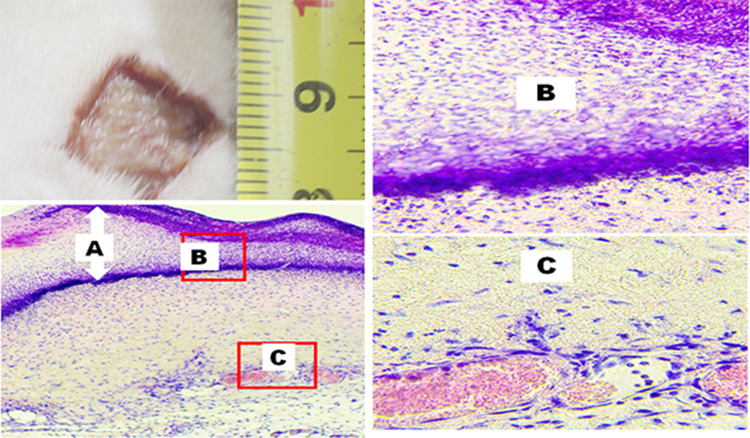
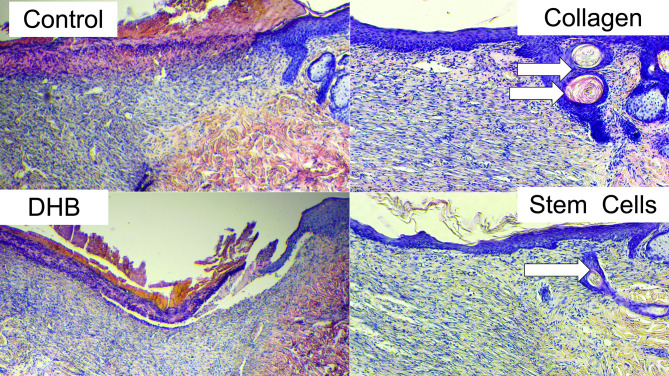
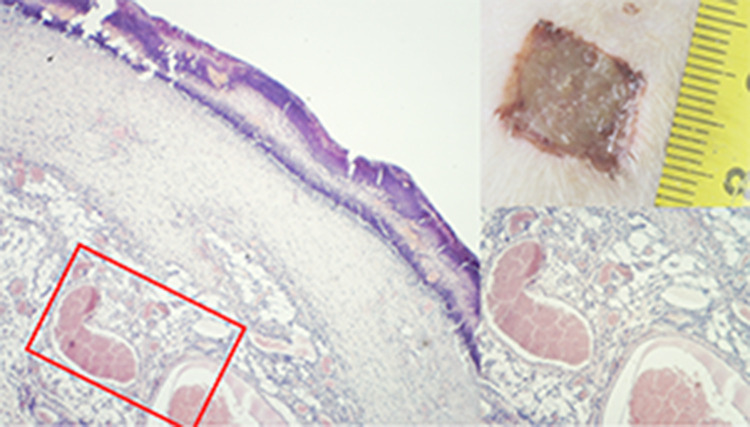
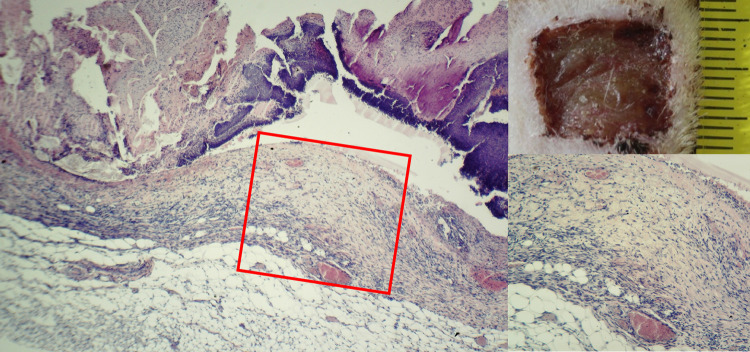
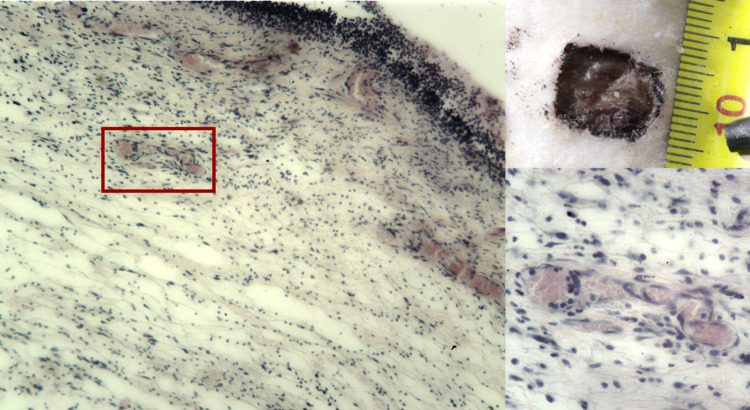
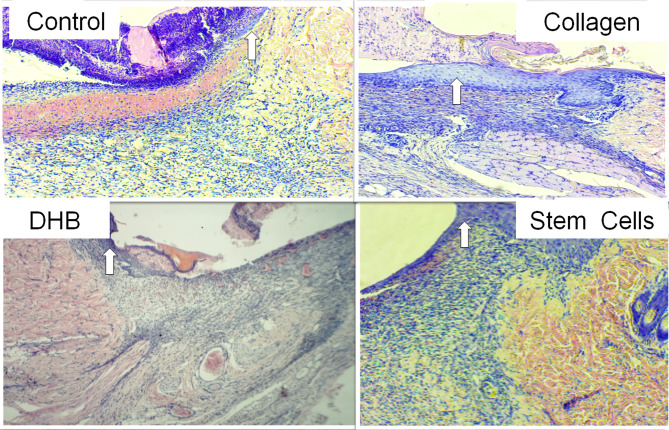
The study was carried out on Wistar rats, on which square wounds were simulated in the back region. Four groups of wounds were studied. On the day of the simulation (day 0), solutions of the drugs were injected into the wounds: an isotonic sodium chloride solution (Control group), mesenchymal stem cells (SC group), collagen (Collagen group), and a deproteinized hemoderivative of calf blood (DHB group). Within 2 weeks, the wound healing process was assessed by observing and calculating changes in the wound areas, temperatures, and epithelialization levels. On days 3, 7, and 14, wound tissue samples were taken for histological examination, morphological analysis of the healing process, and quantitative assessment of granulation layers' leukocyte infiltration.
A correlation between the process of inflammation and epithelization during the healing of skin wounds was established. The anti-inflammatory effect of SC injection on the wound edge tissues was determined, as well as the pro-inflammatory effect of DHB, and the absence of effects on the inflammation course under the collagen treatment. Compared to the control group, the transition from the exudative phase of inflammation to the proliferative phase was faster, as well was wound epithelialization in the SC and Collagen groups. A negative correlation between the level of tissue temperature in the center of wounds and their area were recorded, which intensified over time.
The severity and duration of the inflammation process during wound healing were ambiguous with the use of different injection treatments. This should compel clinicians to use different markers of drug therapy effectiveness during wound healing. Excessive leukocyte infiltration with a low temperature of wounds and a large scab were markers of delayed wound healing.
研究在不同注射治疗过程中炎症对大鼠急性皮肤伤口愈合过程的影响。
对Wistar大鼠进行研究,在其背部模拟方形伤口。研究四组伤口。在模拟当天(第0天),将药物溶液注射到伤口中:等渗氯化钠溶液(对照组)、间充质干细胞(SC组)、胶原蛋白(胶原蛋白组)和小牛血去蛋白血衍生物(DHB组)。在2周内,通过观察和计算伤口面积、温度和上皮化水平的变化来评估伤口愈合过程。在第3天、第7天和第14天,采集伤口组织样本进行组织学检查、愈合过程的形态学分析以及肉芽层白细胞浸润的定量评估。
建立了皮肤伤口愈合过程中炎症与上皮化之间的相关性。确定了SC注射对伤口边缘组织的抗炎作用,以及DHB的促炎作用,并且胶原蛋白治疗对炎症过程无影响。与对照组相比,SC组和胶原蛋白组从炎症渗出期到增殖期的转变更快,伤口上皮化也更快。记录到伤口中心组织温度水平与其面积之间呈负相关,且随时间加剧。
使用不同注射治疗时,伤口愈合过程中炎症过程的严重程度和持续时间存在差异。这应促使临床医生在伤口愈合期间使用不同的药物治疗效果标志物。白细胞过度浸润、伤口温度低和结痂大是伤口愈合延迟的标志物。