Center for Neurobehavioral Genetics, Semel Institute for Neuroscience and Human Behavior, University of California Los Angeles, Los Angeles, CA, USA.
Department of Molecular Genetics, Institute of Bioorganic Chemistry, Polish Academy of Sciences, Poznan, Poland.
Microbiome. 2020 Nov 6;8(1):154. doi: 10.1186/s40168-020-00928-4.
The microbiota plays an important role in HIV pathogenesis in humans. Microbiota can impact health through several pathways such as increasing inflammation in the gut, metabolites of bacterial origin, and microbial translocation from the gut to the periphery which contributes to systemic chronic inflammation and immune activation and the development of AIDS. Unlike HIV-infected humans, SIV-infected vervet monkeys do not experience gut dysfunction, microbial translocation, and chronic immune activation and do not progress to immunodeficiency. Here, we provide the first reported characterization of the microbial ecosystems of the gut and genital tract in a natural nonprogressing host of SIV, wild vervet monkeys from South Africa.
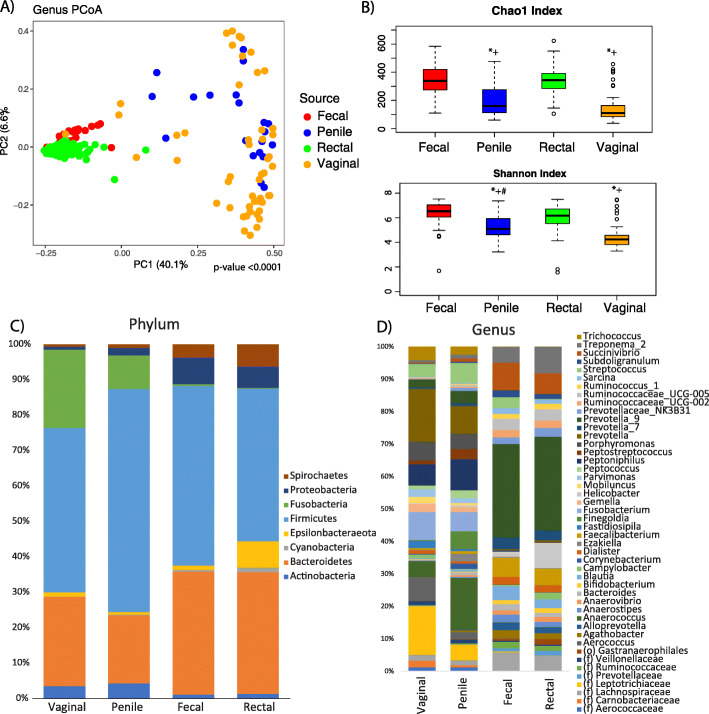
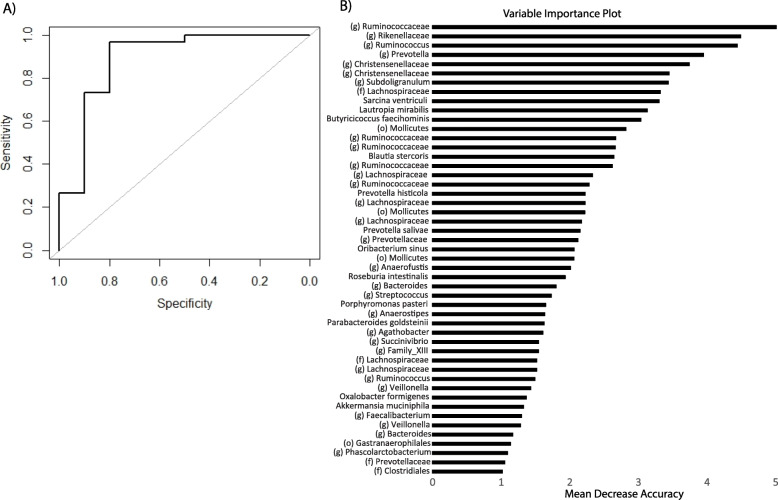
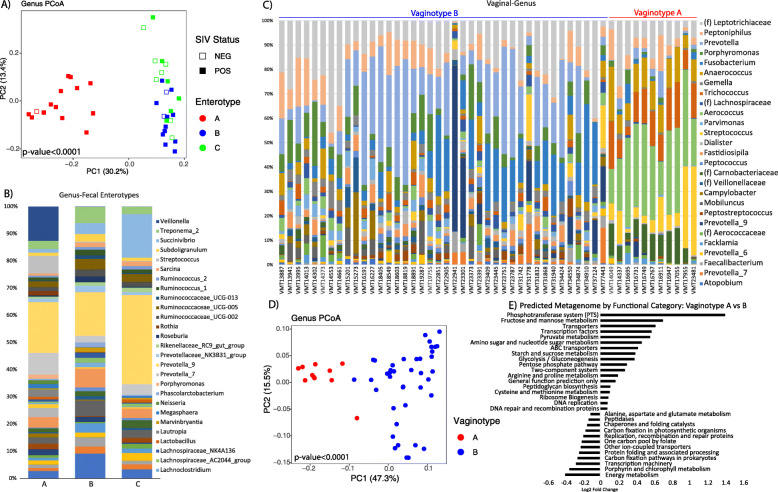
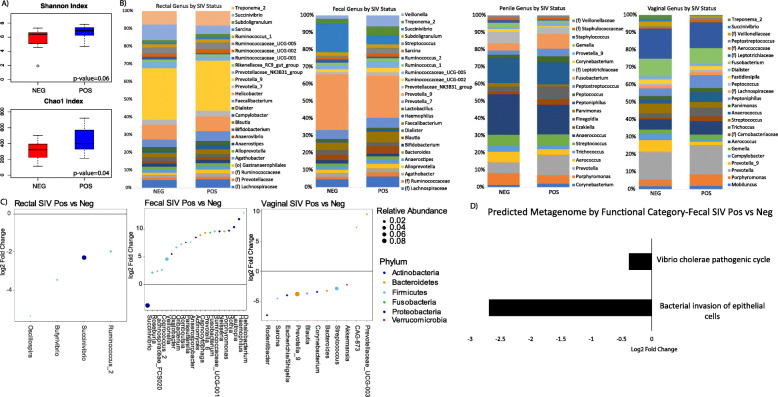
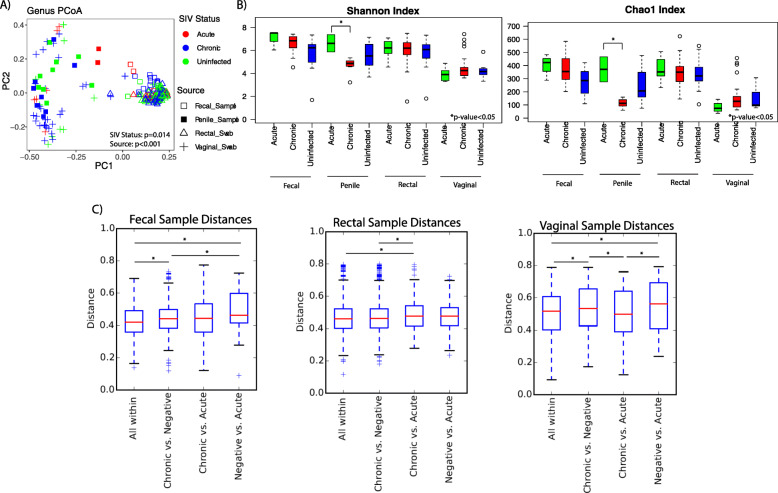
We characterized fecal, rectal, vaginal, and penile microbiomes in vervets from populations heavily infected with SIV from diverse locations across South Africa. Geographic site, age, and sex affected the vervet microbiome across different body sites. Fecal and vaginal microbiome showed marked stratification with three enterotypes in fecal samples and two vagitypes, which were predicted functionally distinct within each body site. External bioclimatic factors, biome type, and environmental temperature influenced microbiomes locally associated with vaginal and rectal mucosa. Several fecal microbial taxa were linked to plasma levels of immune molecules, for example, MIG was positively correlated with Lactobacillus and Escherichia/Shigella and Helicobacter, and IL-10 was negatively associated with Erysipelotrichaceae, Anaerostipes, Prevotella, and Anaerovibrio, and positively correlated with Bacteroidetes and Succinivibrio. During the chronic phase of infection, we observed a significant increase in gut microbial diversity, alterations in community composition (including a decrease in Proteobacteria/Succinivibrio in the gut) and functionality (including a decrease in genes involved in bacterial invasion of epithelial cells in the gut), and partial reversibility of acute infection-related shifts in microbial abundance observed in the fecal microbiome. As part of our study, we also developed an accurate predictor of SIV infection using fecal samples.
The vervets infected with SIV and humans infected with HIV differ in microbial responses to infection. These responses to SIV infection may aid in preventing microbial translocation and subsequent disease progression in vervets, and may represent host microbiome adaptations to the virus. Video Abstract.
微生物群在人类 HIV 发病机制中发挥着重要作用。微生物群可以通过多种途径影响健康,例如增加肠道炎症、细菌来源的代谢物以及从肠道到外周的微生物易位,从而导致全身慢性炎症和免疫激活以及艾滋病的发展。与感染 HIV 的人类不同,感染 SIV 的恒河猴不会经历肠道功能障碍、微生物易位和慢性免疫激活,也不会进展为免疫缺陷。在这里,我们提供了首例对南非自然非进展性 SIV 宿主的肠道和生殖道微生物生态系统的报告特征。
我们对来自南非各地高度感染 SIV 的恒河猴的粪便、直肠、阴道和阴茎微生物组进行了描述。地理位置、年龄和性别影响了不同身体部位的恒河猴微生物组。粪便和阴道微生物组在粪便样本中表现出明显的分层,有三种肠型,两种阴道型,这在每个身体部位的功能上预测是不同的。外部生物气候因素、生物群类型和环境温度影响了与阴道和直肠黏膜局部相关的微生物组。一些粪便微生物类群与免疫分子的血浆水平有关,例如,MIG 与乳杆菌和大肠杆菌/志贺氏菌和幽门螺杆菌呈正相关,而 IL-10 与拟杆菌科、厌氧螺菌、普雷沃氏菌和拟杆菌呈负相关,与拟杆菌和琥珀酸杆菌呈正相关。在感染的慢性期,我们观察到肠道微生物多样性显著增加,群落组成发生变化(包括肠道中变形菌/琥珀酸杆菌减少)和功能改变(包括肠道上皮细胞细菌入侵相关基因减少),以及粪便微生物组中观察到的急性感染相关微生物丰度变化的部分逆转。在我们的研究中,我们还使用粪便样本开发了一种准确预测 SIV 感染的方法。
感染 SIV 的恒河猴与感染 HIV 的人类在微生物对感染的反应上存在差异。这些对 SIV 感染的反应可能有助于防止恒河猴中的微生物易位和随后的疾病进展,并可能代表宿主微生物组对病毒的适应。视频摘要。