School of Chemistry and Biochemistry, Georgia Institute of Technology, Atlanta, GA, 30332, USA.
School of Materials Science and Engineering, Georgia Institute of Technology, Atlanta, GA, 30332, USA.
Nat Commun. 2020 Nov 6;11(1):5625. doi: 10.1038/s41467-020-19444-y.
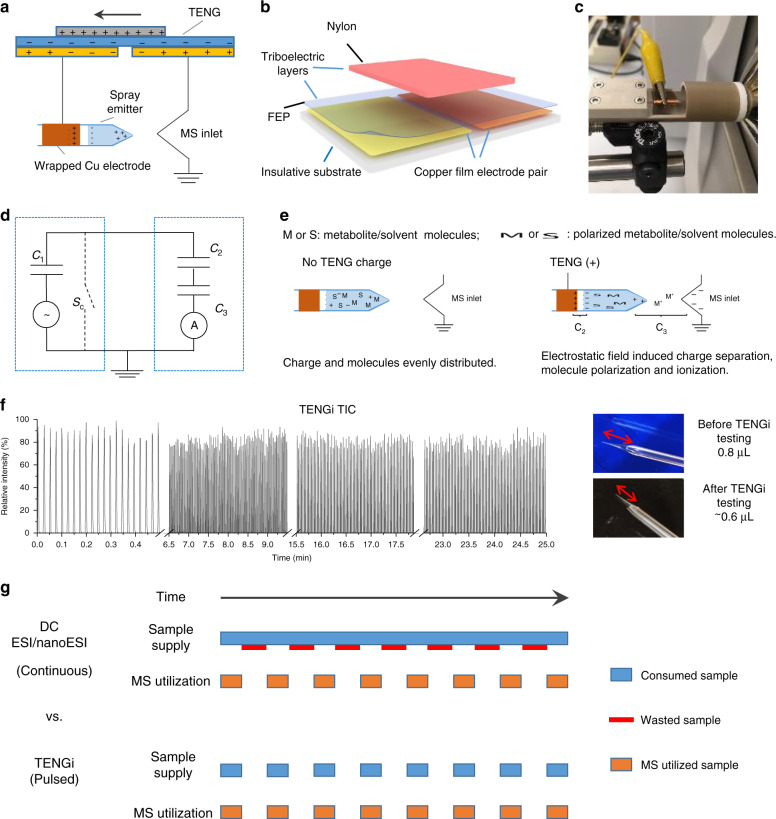
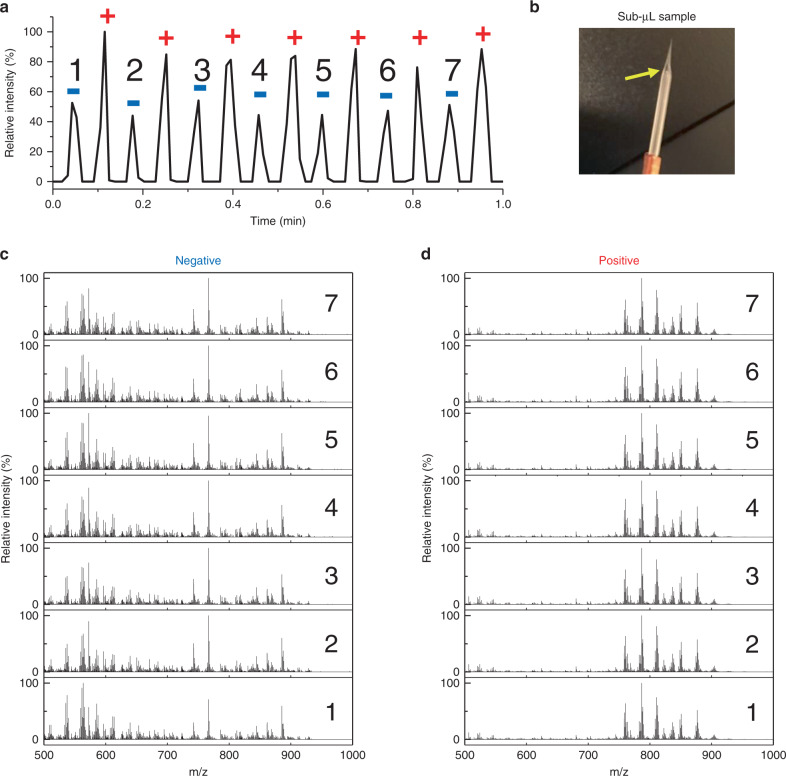
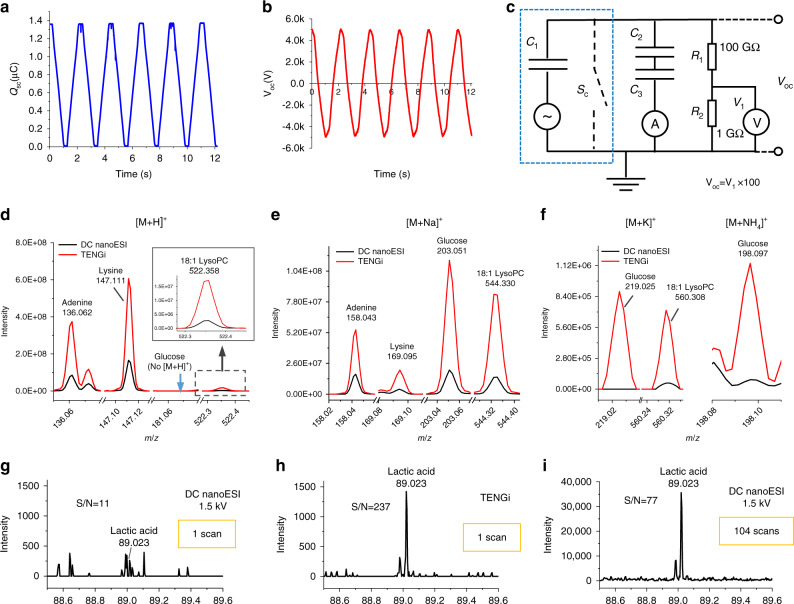
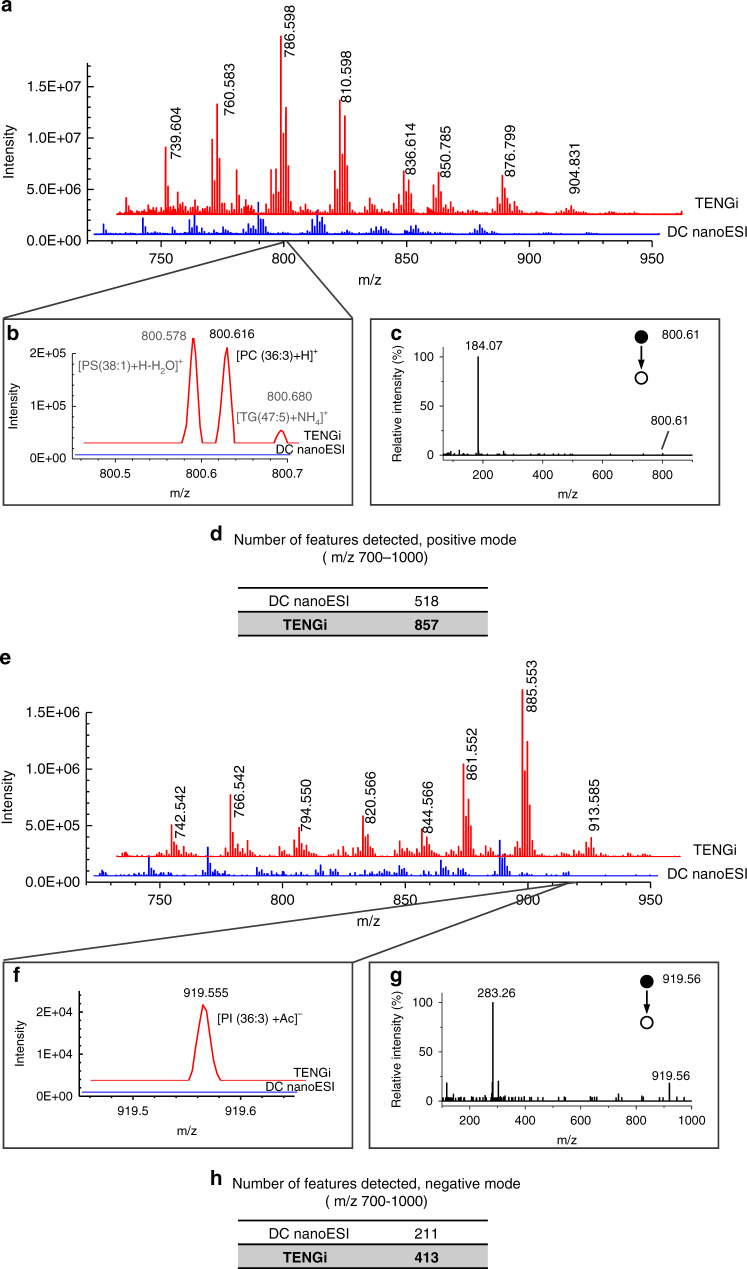
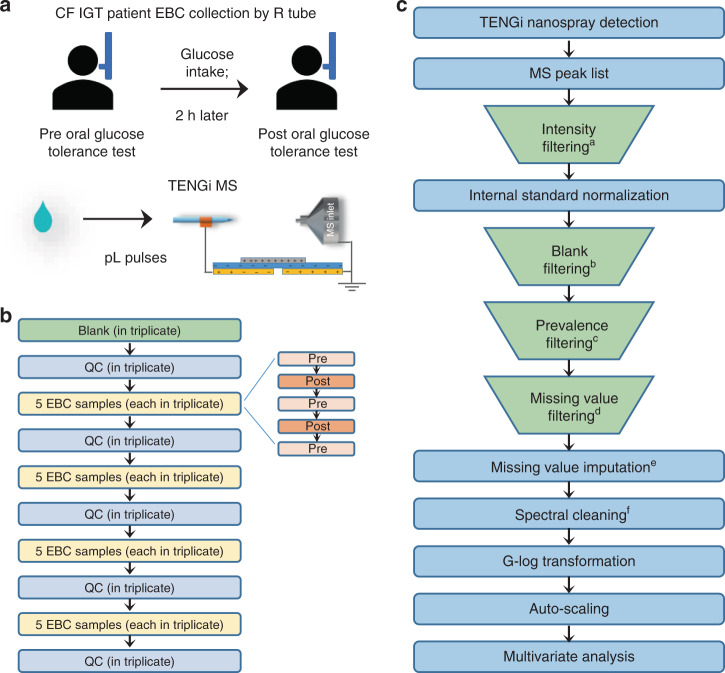
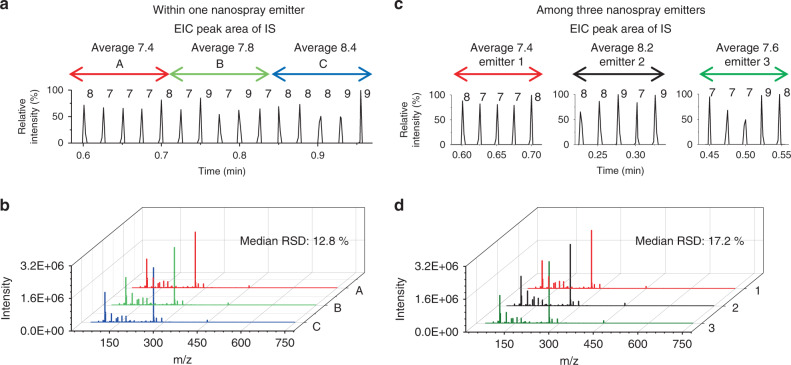
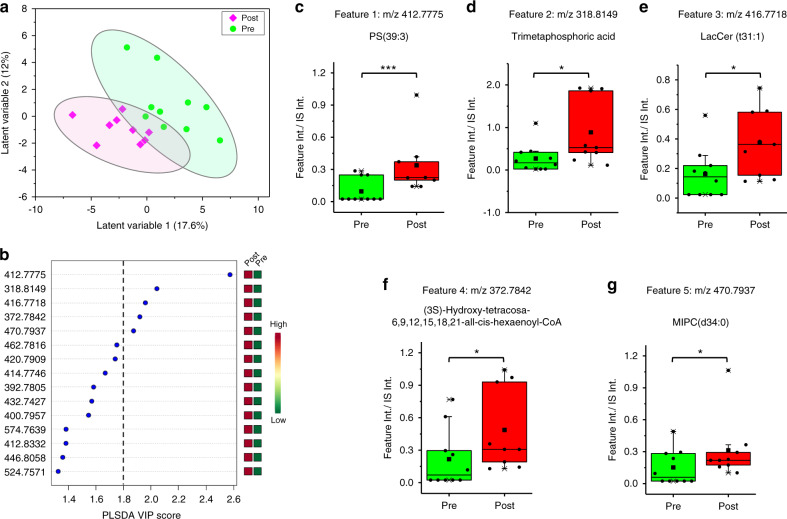
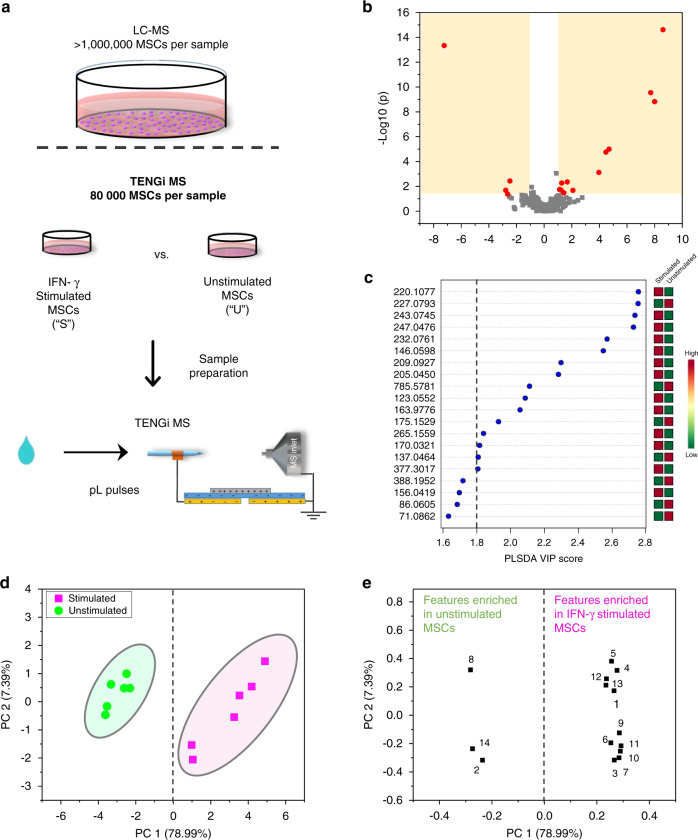
The human metabolome provides a window into the mechanisms and biomarkers of various diseases. However, because of limited availability, many sample types are still difficult to study by metabolomic analyses. Here, we present a mass spectrometry (MS)-based metabolomics strategy that only consumes sub-nanoliter sample volumes. The approach consists of combining a customized metabolomics workflow with a pulsed MS ion generation method, known as triboelectric nanogenerator inductive nanoelectrospray ionization (TENGi nanoESI) MS. Samples tested with this approach include exhaled breath condensate collected from cystic fibrosis patients as well as in vitro-cultured human mesenchymal stromal cells. Both test samples are only available in minimum amounts. Experiments show that picoliter-volume spray pulses suffice to generate high-quality spectral fingerprints, which increase the information density produced per unit sample volume. This TENGi nanoESI strategy has the potential to fill in the gap in metabolomics where liquid chromatography-MS-based analyses cannot be applied. Our method opens up avenues for future investigations into understanding metabolic changes caused by diseases or external stimuli.
人类代谢组学提供了一个了解各种疾病机制和生物标志物的窗口。然而,由于样本的有限可用性,许多样本类型仍然难以通过代谢组学分析进行研究。在这里,我们提出了一种基于质谱(MS)的代谢组学策略,该策略仅消耗亚纳升级别的样本量。该方法包括将定制的代谢组学工作流程与称为摩擦纳米发电机感应纳升电喷雾电离(TENGi nanoESI)MS 的脉冲 MS 离子产生方法相结合。该方法测试的样本包括从囊性纤维化患者收集的呼出气冷凝物以及体外培养的人间充质基质细胞。这两种测试样本的数量都非常有限。实验表明,皮升级别的喷雾脉冲足以产生高质量的光谱指纹,从而增加了单位样本体积产生的信息量密度。这种 TENGi nanoESI 策略有可能填补代谢组学中的空白,在这个领域中,基于液相色谱-MS 的分析无法应用。我们的方法为未来研究疾病或外部刺激引起的代谢变化开辟了途径。