ICAR-Central Soil Salinity Research Institute (CSSRI), Karnal, India.
International Maize and Wheat Improvement Center (CIMMYT), New Delhi, India.
Sci Rep. 2020 Nov 6;10(1):19267. doi: 10.1038/s41598-020-76035-z.
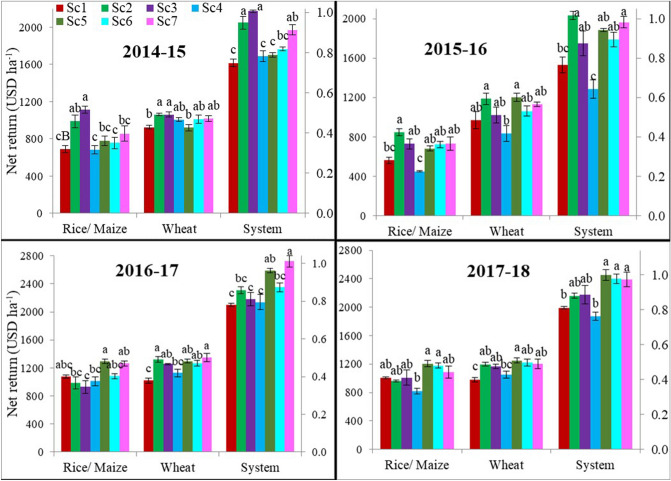
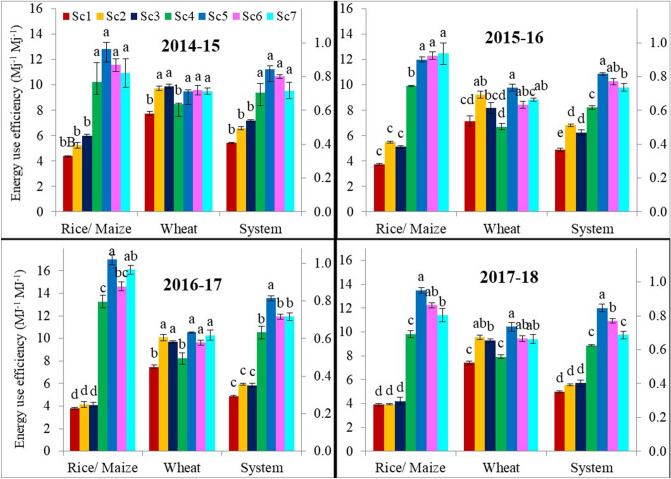
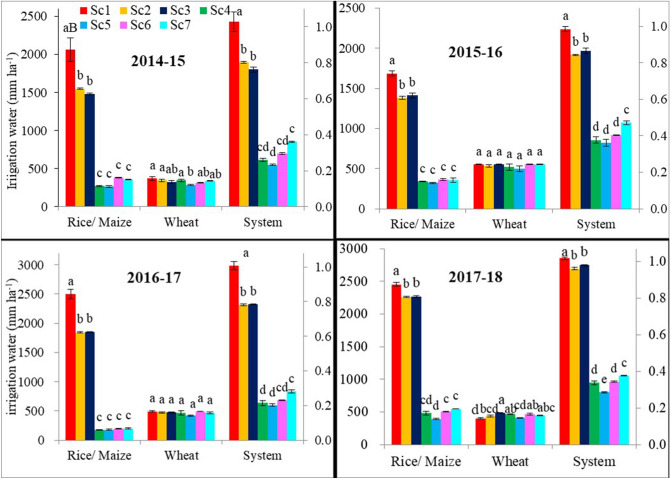
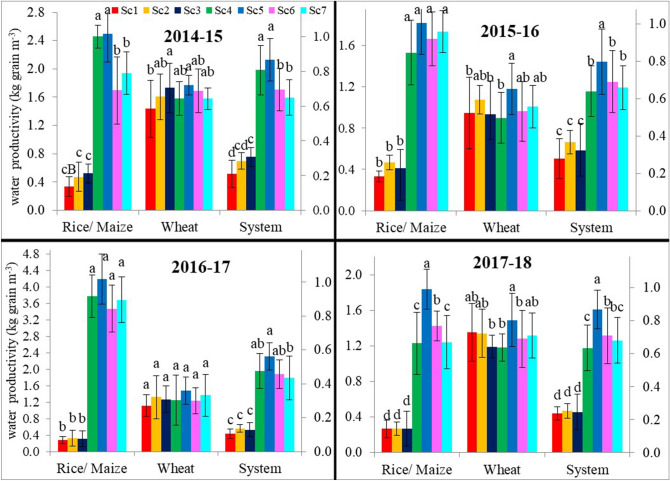
In the western Indo-Gangetic plains, issues of deterioration in soil, water, and environment quality coupled with low profitability jeopardize the sustainability of the dominant rice-wheat (RW) system. To address these issues, crop diversification and conservation agriculture (CA)-based management hold considerable promise but the adoption of both approaches has been low, and additional evidence generation from a multi-criteria productivity and sustainability perspective is likely required to help drive the change. Compared to prevailing farmers' practice (FP), results suggest that CA-based rice management increased profitability by 13% and energy use efficiency (EUE) by 21% while reducing irrigation by 19% and global warming potential (GWP) by 28%. By substituting CA-based maize for rice, similar mean profitability gains were realized (16%) but transformative improvements in irrigation (- 84%), EUE (+ 231%), and GWP (- 95%) were observed compared to FP. Inclusion of mungbean in the rotation (i.e. maize-wheat-mungbean) with CA-based management increased the system productivity, profitability, and EUE by 11, 25 and 103%, respectively while decreasing irrigation water use by 64% and GWP by 106% compared to FP. Despite considerable benefits from the CA-based maize-wheat system, adoption of maize is not widespread due to uneven market demand and assured price guarantees for rice.
在印度河-恒河平原西部,土壤、水和环境质量恶化以及盈利能力低下等问题危及到主导的稻麦轮作(RW)系统的可持续性。为了解决这些问题,作物多样化和基于保护性农业(CA)的管理方法具有很大的潜力,但这两种方法的采用率都很低,可能需要从多标准生产力和可持续性角度生成更多证据,以帮助推动变革。与现有的农民实践(FP)相比,结果表明,基于 CA 的水稻管理使盈利能力提高了 13%,能源使用效率(EUE)提高了 21%,同时减少了 19%的灌溉和 28%的全球变暖潜势(GWP)。通过用 CA 玉米替代水稻,实现了类似的平均盈利增长(16%),但与 FP 相比,灌溉(-84%)、EUE(+231%)和 GWP(-95%)方面的变革性改进更为显著。与 FP 相比,在轮作中纳入 CA 管理的绿豆(即玉米-小麦-绿豆),使系统生产力、盈利能力和 EUE 分别提高了 11%、25%和 103%,同时减少了 64%的灌溉用水量和 106%的 GWP。尽管基于 CA 的玉米-小麦系统带来了可观的效益,但由于市场需求不均衡和对水稻的价格保障,玉米的采用并不广泛。