Li Xiaoyi, Zhang Qifan, Zhang Wanyue, Ye Guofu, Ma Yanchen, Wen Chunhua, Gu Shuqin, Tang Libo, Li Yongyin
State Key Laboratory of Organ Failure Research, Guangdong Provincial Key Laboratory of Viral Hepatitis Research, Department of Infectious Diseases, Nanfang Hospital, Southern Medical University, No. 1838 North Guangzhou Avenue, Guangzhou, 510515, China.
Division of Hepatobiliopancreatic Surgery, Department of General Surgery, Nanfang Hospital, Southern Medical University, Guangzhou, China.
J Transl Med. 2020 Nov 7;18(1):417. doi: 10.1186/s12967-020-02584-6.
The restoration of host hepatitis B virus (HBV)-specific antiviral immunity is an effective strategy for hepatitis B recovery. Follicular dendritic cells (FDCs) play a crucial role in immune regulation. The goal of the present study was to investigate the characteristics and functions of FDCs in chronic HBV infection.
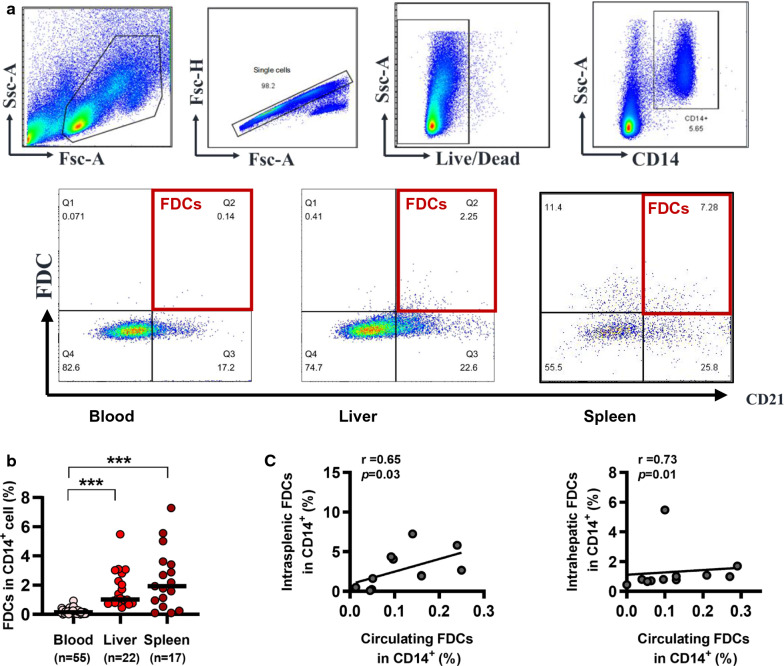
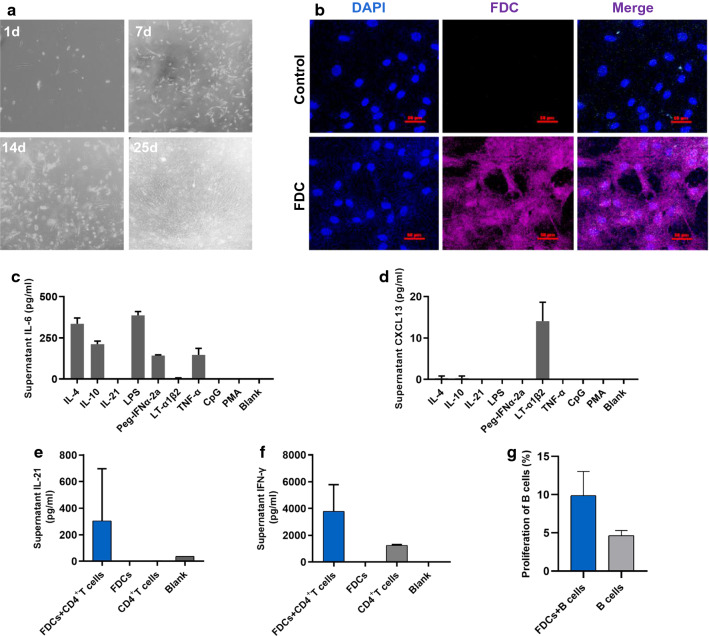
The frequencies of FDCs in peripheral blood, liver, and spleen were measured in patients with chronic HBV infection. Isolated FDCs from splenic tissues of HBV-related liver cirrhosis-induced hypersplenism patients were cultured with autologous intrasplenic CD4 T cells and CD19 B cells.
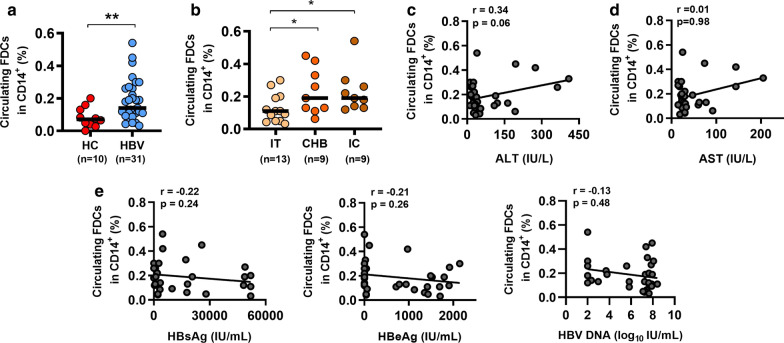
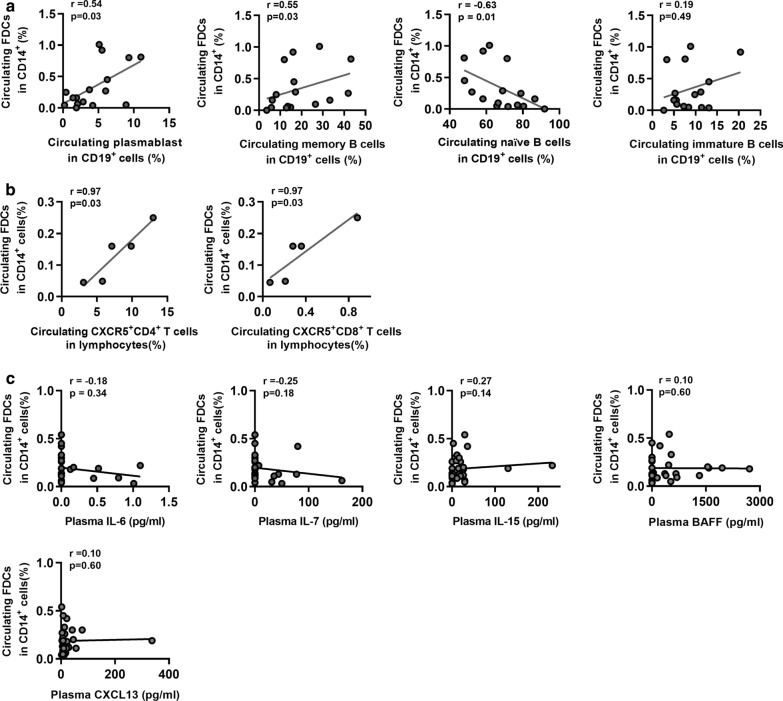
We observed that patients with chronic HBV infection had a significantly increased frequency of circulating FDCs compared to that of healthy controls. Additionally, the frequency of circulating FDCs was positively correlated with that of intrahepatic and intrasplenic counterparts. Moreover, positive correlations were observed between the frequencies of circulating FDCs and plasmablast and memory B cells, as well as C-X-C motif chemokine receptor type 5 (CXCR5)CD4 T cells and CXCR5CD8 T cells. Notably, in vitro experimental results demonstrated that FDCs derived from splenic tissues of chronic HBV patients facilitated interferon-γ and interleukin-21 production from autologous intrasplenic CD4 T cells and promoted the proliferation of autologous intrasplenic CD19 B cells.
Expanded FDCs in patients with chronic HBV infection may favor host immune responses against HBV. The identification of this unique population of cell may contribute to a better understanding of the immune regulatory mechanisms associated with chronic HBV infection and provide a potential immunotherapeutic target for this disease.
恢复宿主乙肝病毒(HBV)特异性抗病毒免疫是乙肝康复的有效策略。滤泡树突状细胞(FDC)在免疫调节中起关键作用。本研究的目的是探讨慢性HBV感染中FDC的特征和功能。
检测慢性HBV感染患者外周血、肝脏和脾脏中FDC的频率。将HBV相关肝硬化所致脾功能亢进患者脾组织中分离出的FDC与自体脾内CD4 T细胞和CD19 B细胞共同培养。
我们观察到,与健康对照相比,慢性HBV感染患者循环FDC的频率显著增加。此外,循环FDC的频率与肝内和脾内对应细胞的频率呈正相关。而且,循环FDC的频率与浆母细胞和记忆B细胞,以及C-X-C基序趋化因子受体5(CXCR5)CD4 T细胞和CXCR5 CD8 T细胞的频率之间存在正相关。值得注意的是,体外实验结果表明,慢性HBV患者脾组织来源的FDC促进自体脾内CD4 T细胞产生干扰素-γ和白细胞介素-21,并促进自体脾内CD19 B细胞的增殖。
慢性HBV感染患者中FDC的扩增可能有利于宿主针对HBV的免疫反应。鉴定这一独特的细胞群体可能有助于更好地理解与慢性HBV感染相关的免疫调节机制,并为该疾病提供潜在的免疫治疗靶点。