Department of Computer Science & Engineering, Bangladesh University of Engineering & Technology, West Palasi, Dhaka 1205, Bangladesh.
Department of Biostatistics and Epidemiology, University of North Texas Health Science Center, Fort Worth, TX, USA.
Acta Trop. 2021 Jan;213:105731. doi: 10.1016/j.actatropica.2020.105731. Epub 2020 Oct 22.
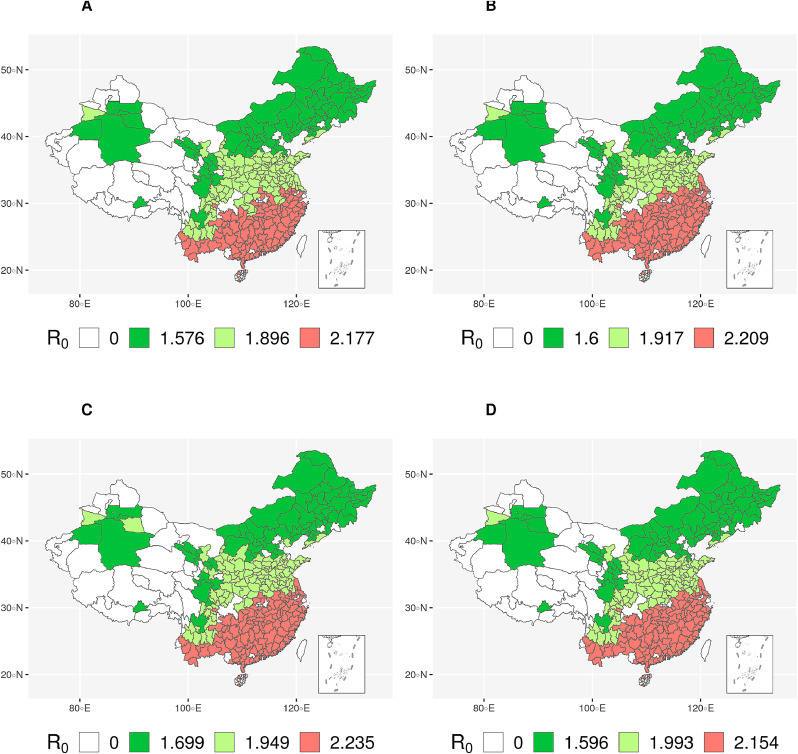
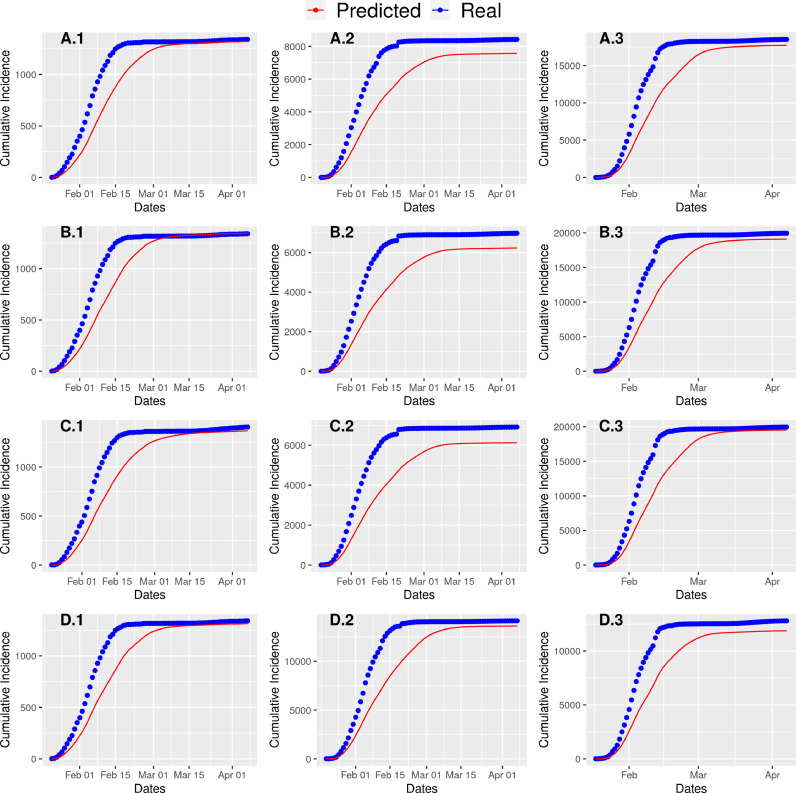
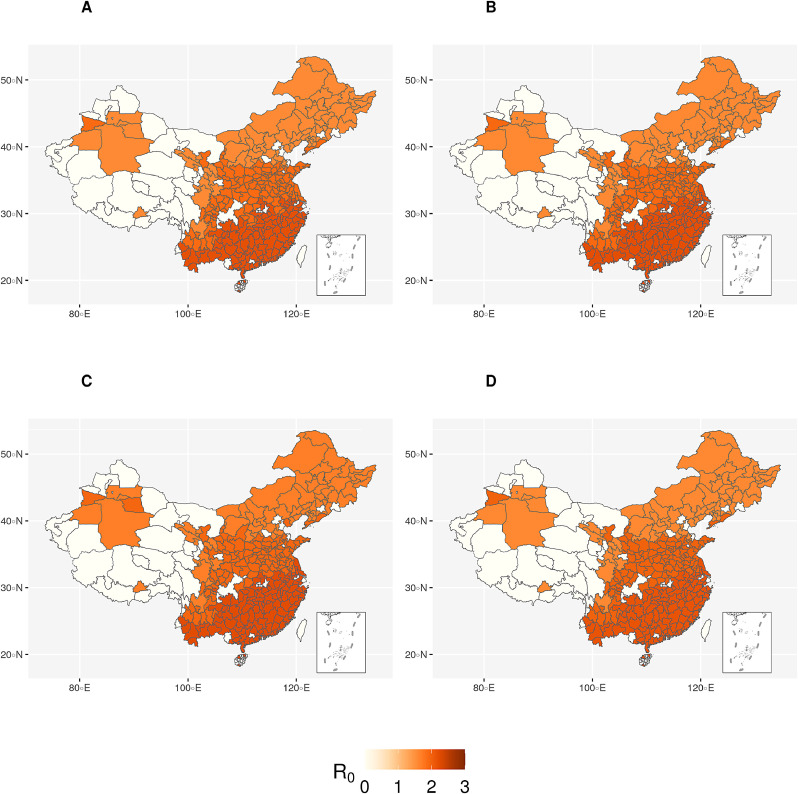
The COVID-19 epidemic spread rapidly through China and subsequently proliferated globally leading to a pandemic situation around the globe. Human-to-human transmission, as well as asymptomatic transmission of the infection, have been confirmed. As of April 03, 2020, public health crisis in China due to COVID-19 was potentially under control. We compiled a daily dataset of case counts, mortality, recovery, temperature, population density, and demographic information for each prefecture during the period of January 11 to April 07, 2020. Understanding the characteristics of spatial clustering of the COVID-19 epidemic and R is critical in effectively preventing and controlling the ongoing global pandemic. Considering this, the prefectures were grouped based on several relevant features using unsupervised machine learning techniques. Subsequently, we performed a computational analysis utilizing the reported cases in China to estimate the revised R among different regions. Finally, our overall research indicates that the impact of temperature and demographic factors on virus transmission may be characterized using a stochastic transmission model. Such predictions will help in prevention planning in an ongoing global pandemic, prioritizing segments of a given community/region for action and providing a visual aid in designing prevention strategies for a specific geographic region. Furthermore, revised estimation and our methodology will aid in improving the human health consequences of COVID-19 elsewhere.
新冠疫情在中国迅速蔓延,随后在全球范围内扩散,导致了全球大流行。目前已经证实存在人际传播和无症状感染。截至 2020 年 4 月 3 日,中国因新冠疫情引发的公共卫生危机已得到有效控制。我们收集了 2020 年 1 月 11 日至 4 月 7 日期间每日的病例数、死亡率、康复率、温度、人口密度和人口统计信息。了解新冠疫情空间聚类的特征以及 R 值对于有效预防和控制当前的全球大流行至关重要。基于这些考虑,我们使用无监督机器学习技术,根据几个相关特征对各地区进行了分组。然后,我们利用中国报告的病例进行了计算分析,以估算不同地区的修正 R 值。总的来说,我们的研究表明,温度和人口因素对病毒传播的影响可以用随机传播模型来描述。这些预测有助于在当前的全球大流行中进行预防规划,为特定地理区域的行动确定社区/地区的优先级,并为设计特定地理区域的预防策略提供直观的辅助。此外,修正后的估计值和我们的方法将有助于改善其他地区新冠疫情对人类健康的影响。