Computational Health Informatics Program, Boston Children's Hospital, Boston, MA, 02215, USA.
Department of Pediatrics, Harvard Medical School, Boston, MA, 02215, USA.
Sci Rep. 2020 Oct 12;10(1):17002. doi: 10.1038/s41598-020-74089-7.
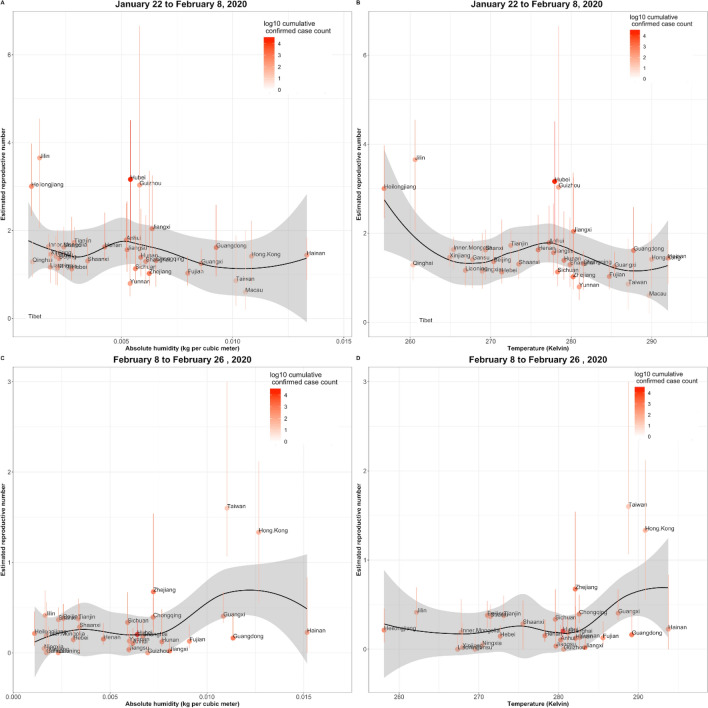
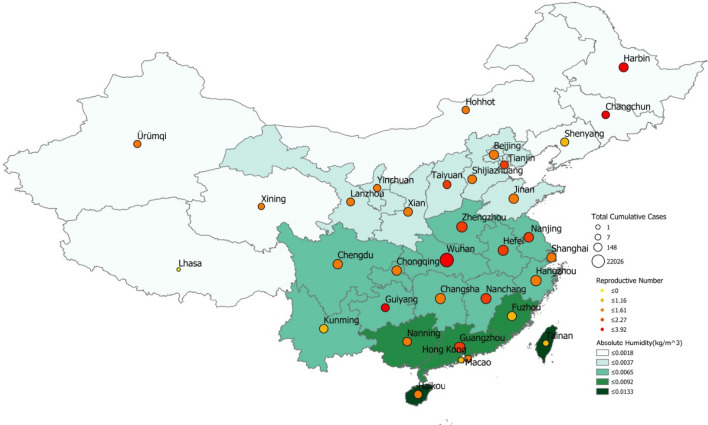
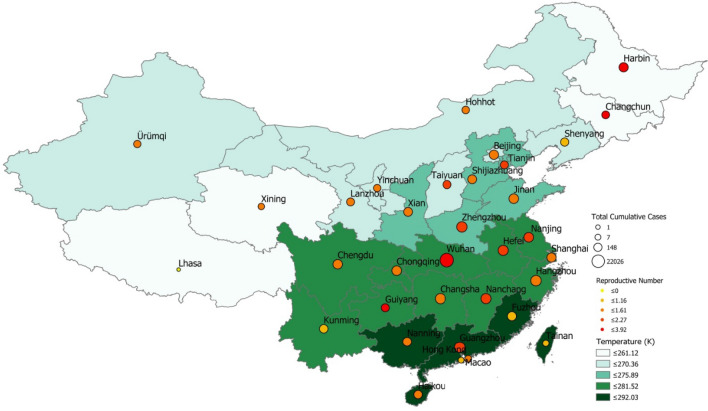
First identified in Wuhan, China, in December 2019, a novel coronavirus (SARS-CoV-2) has affected over 16,800,000 people worldwide as of July 29, 2020 and was declared a pandemic by the World Health Organization on March 11, 2020. Influenza studies have shown that influenza viruses survive longer on surfaces or in droplets in cold and dry air, thus increasing the likelihood of subsequent transmission. A similar hypothesis has been postulated for the transmission of COVID-19, the disease caused by SARS-CoV-2. It is important to propose methodologies to understand the effects of environmental factors on this ongoing outbreak to support decision-making pertaining to disease control. Here, we examine the spatial variability of the basic reproductive numbers of COVID-19 across provinces and cities in China and show that environmental variables alone cannot explain this variability. Our findings suggest that changes in weather (i.e., increase of temperature and humidity as spring and summer months arrive in the Northern Hemisphere) will not necessarily lead to declines in case counts without the implementation of drastic public health interventions.
该病毒于 2019 年 12 月在中国武汉首次被发现,截至 2020 年 7 月 29 日,已在全球范围内影响了超过 1680 万人,并于 2020 年 3 月 11 日被世界卫生组织宣布为大流行。流感研究表明,流感病毒在寒冷干燥的空气中在表面或飞沫中存活时间更长,从而增加了后续传播的可能性。对于由 SARS-CoV-2 引起的 COVID-19 疾病,人们已经提出了类似的假设。提出了解释环境因素对这种持续爆发的影响的方法学非常重要,这有助于为疾病控制做出决策。在这里,我们研究了中国各省和城市 COVID-19 的基本繁殖数的空间变异性,并表明仅环境变量不能解释这种变异性。我们的研究结果表明,随着北半球春季和夏季的到来,天气(即温度和湿度的增加)的变化如果没有采取严厉的公共卫生干预措施,并不一定会导致病例数量的减少。