Child and Adolescent Imaging Research Program, University of Calgary, Calgary, Canada; Alberta Children's Hospital Research Institute, University of Calgary, Calgary, Canada; Department of Radiology, Cumming School of Medicine, University of Calgary, Calgary, Canada.
Child and Adolescent Imaging Research Program, University of Calgary, Calgary, Canada; Alberta Children's Hospital Research Institute, University of Calgary, Calgary, Canada; Department of Radiology, Cumming School of Medicine, University of Calgary, Calgary, Canada; Hotchkiss Brain Institute, University of Calgary, Calgary, Canada.
Dev Cogn Neurosci. 2020 Dec;46:100875. doi: 10.1016/j.dcn.2020.100875. Epub 2020 Oct 24.
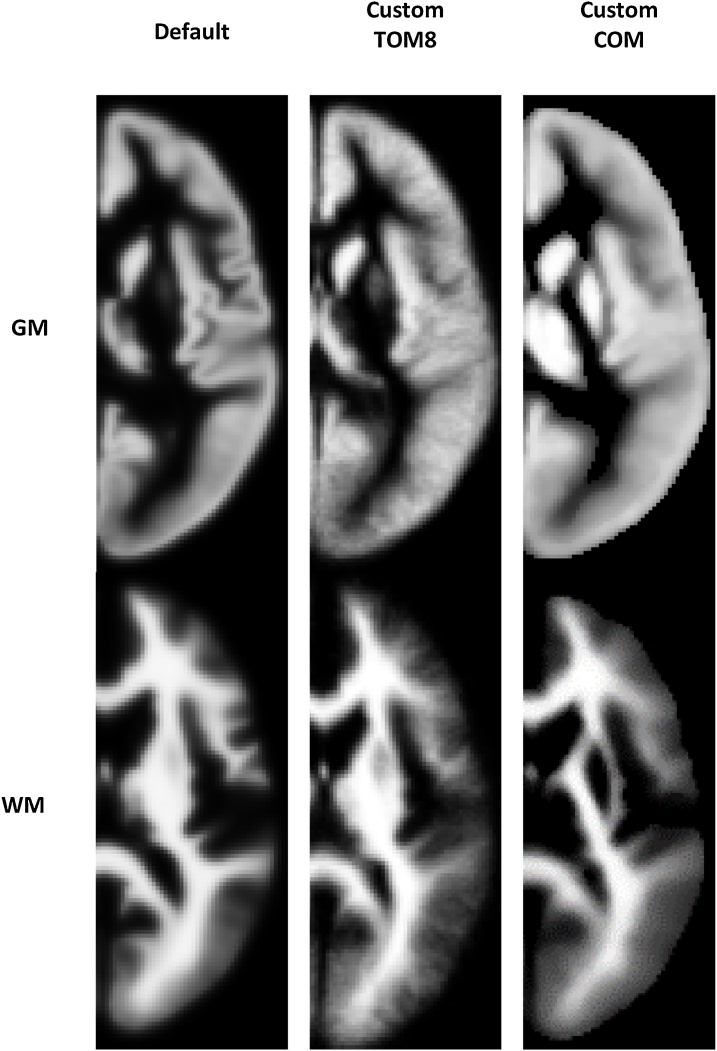
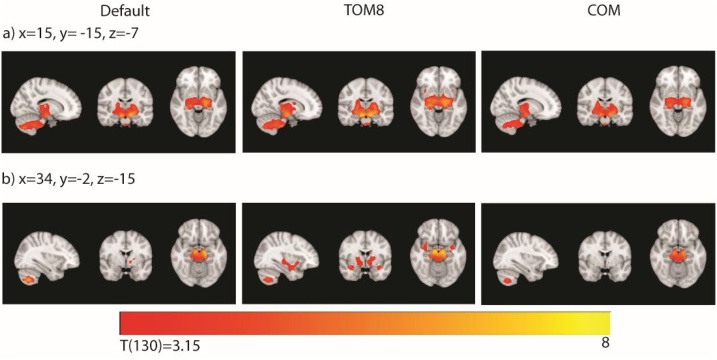
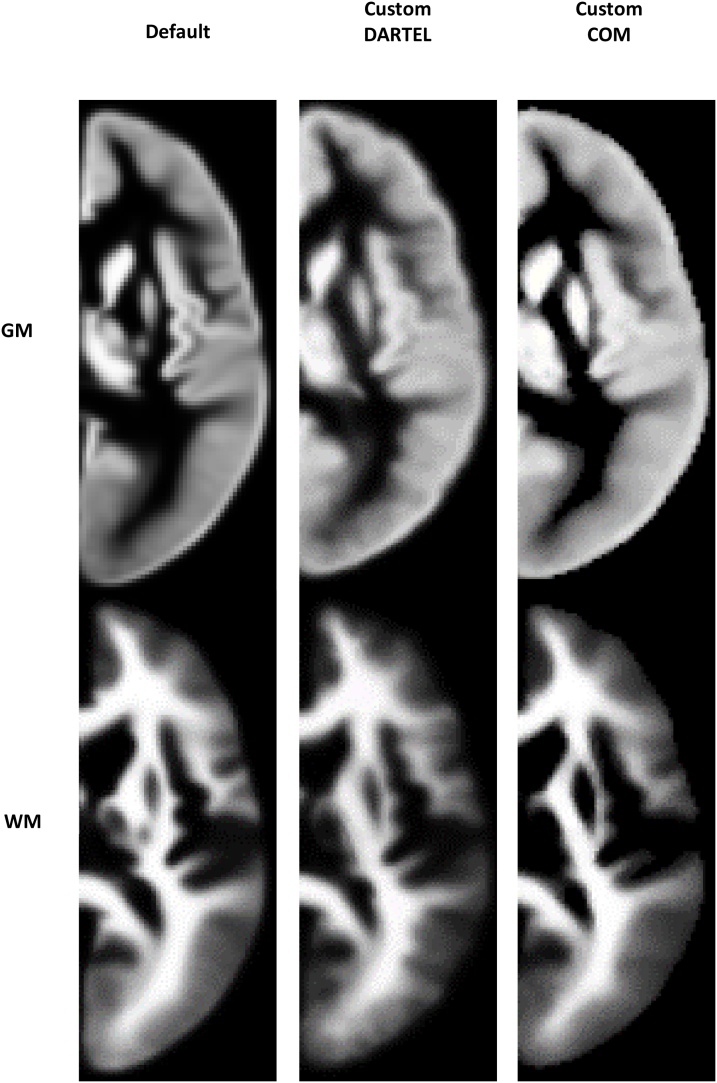
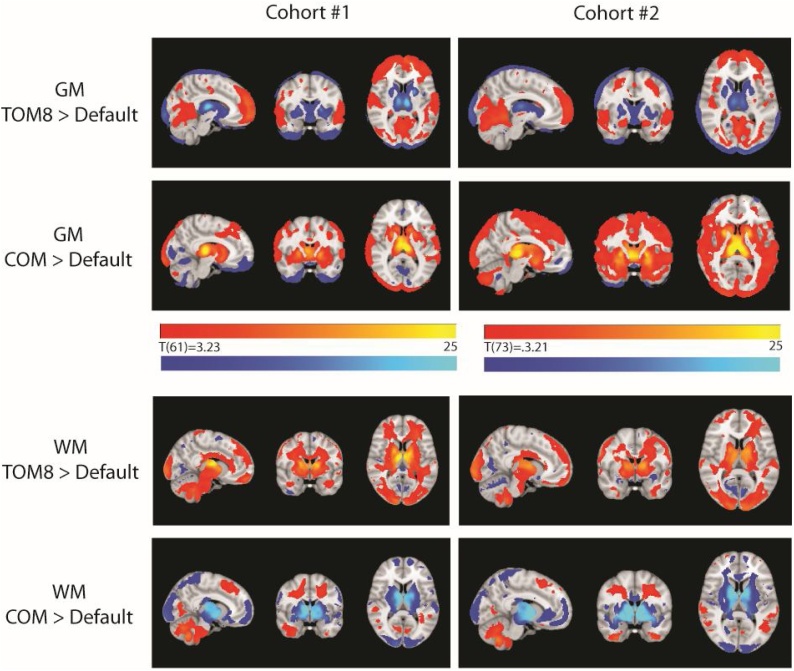
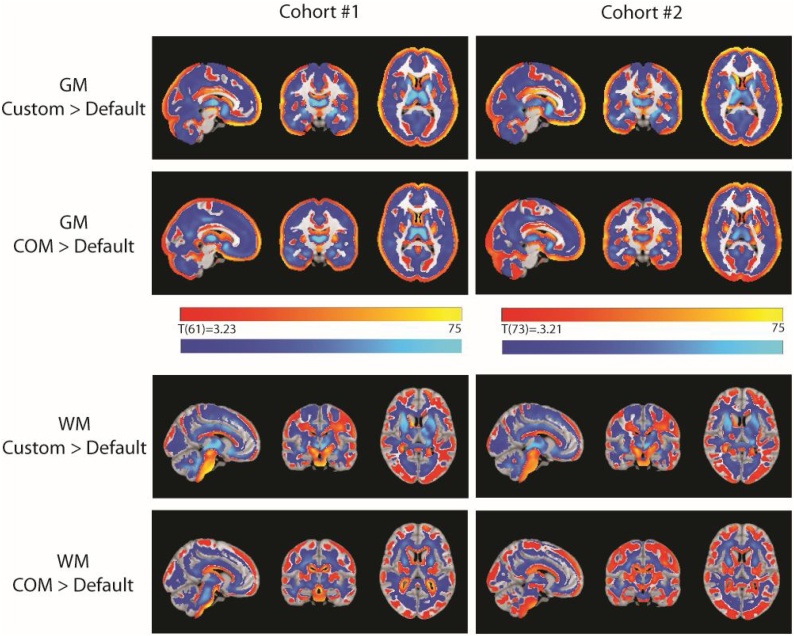
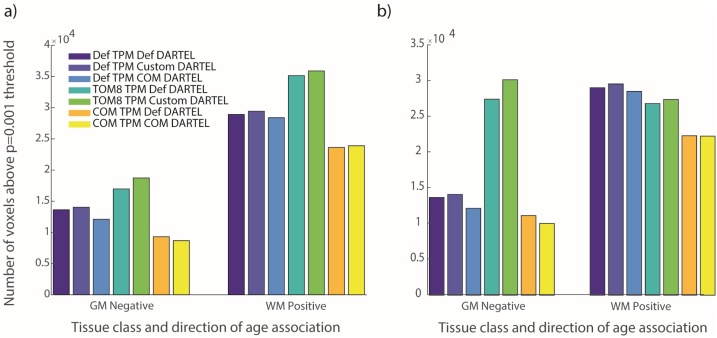
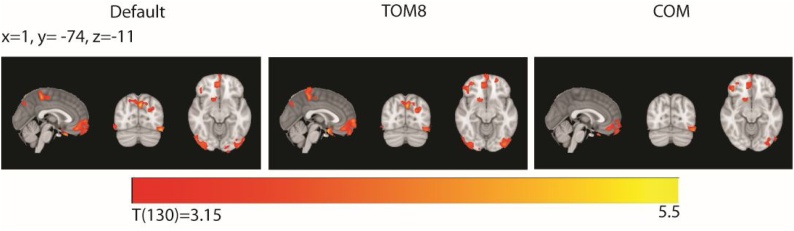
Early childhood is an important period of sensory, motor, cognitive and socio-emotional maturation, yet relatively little is known about the brain changes specific to this period. Voxel-based morphometry (VBM) is a technique to estimate regional brain volumes from magnetic resonance (MR) images. The default VBM processing pipeline can be customized to increase accuracy of segmentation and normalization, yet the impact of customizations on analyses in young children are not clear. Here, we assessed the impact of different preprocessing steps on T1-weighted MR images from typically developing children in two separate cohorts. Data were processed with the Computational Anatomy Toolbox (CAT12), using seven different VBM pipelines with distinct combinations of tissue probability maps (TPMs) and DARTEL templates created using the Template-O-Matic, and CerebroMatic. The first cohort comprised female children aged 3.9-7.9 years (N = 62) and the second included boys and girls aged 2.7-8 years (N = 74). We found that pipelines differed significantly in their tendency to classify voxels as grey or white matter and the conclusions about some age effects were pipeline-dependent. Our study helps to both understand age-associations in grey and white matter volume across early childhood and elucidate the impact of VBM customization on brain volumes in this age range.
儿童早期是感觉、运动、认知和社会情感成熟的重要时期,但对于这一时期特有的大脑变化知之甚少。体素形态计量学(VBM)是一种从磁共振(MR)图像估计区域脑体积的技术。默认的 VBM 处理流水线可以进行定制,以提高分割和归一化的准确性,但定制对幼儿分析的影响尚不清楚。在这里,我们在两个独立的队列中评估了不同预处理步骤对正常发育儿童 T1 加权 MR 图像的影响。使用计算解剖工具箱(CAT12)处理数据,使用七种不同的 VBM 流水线,这些流水线具有不同的组织概率图(TPM)组合和使用 Template-O-Matic 和 CerebroMatic 创建的 DARTEL 模板。第一个队列包括年龄为 3.9-7.9 岁的女性儿童(N=62),第二个队列包括年龄为 2.7-8 岁的男孩和女孩(N=74)。我们发现,流水线在将体素分类为灰质或白质的趋势上存在显著差异,并且一些与年龄相关的结论依赖于流水线。我们的研究有助于了解儿童早期灰质和白质体积的年龄相关性,并阐明 VBM 定制对该年龄段脑体积的影响。