Sung Dajung, Park Bumhee, Kim Bora, Kim Hayeon, Jung Kyu-In, Lee Seung-Yup, Kim Bung-Nyun, Park Subin, Park Min-Hyeon
Department of Psychiatry, College of Medicine, Eunpyeong St. Mary's Hospital, The Catholic University of Korea, Seoul, South Korea.
Department of Biomedical Informatics, Ajou University School of Medicine, Suwon, South Korea.
Front Psychiatry. 2021 Jul 13;12:686174. doi: 10.3389/fpsyt.2021.686174. eCollection 2021.
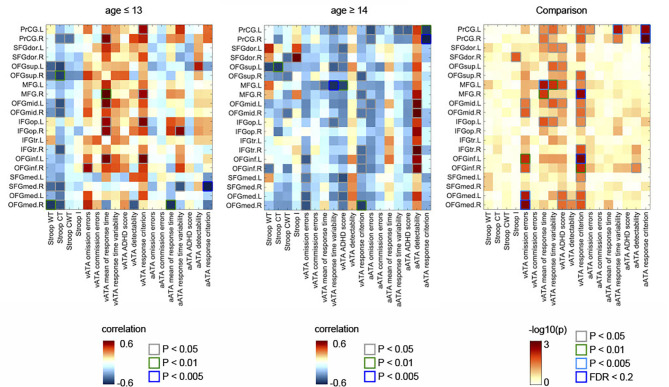
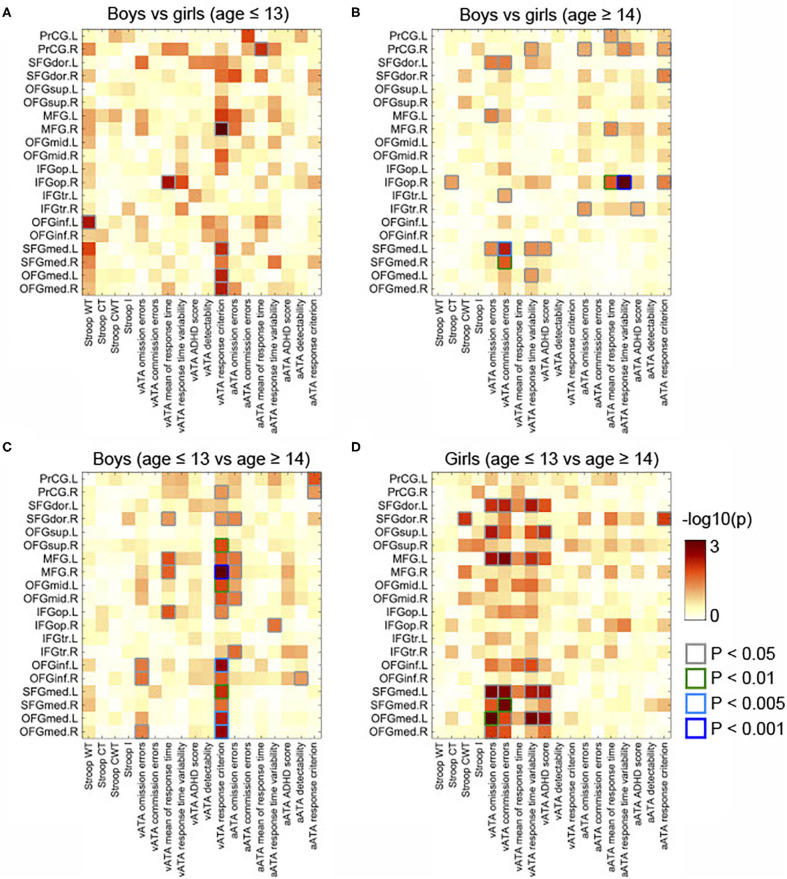
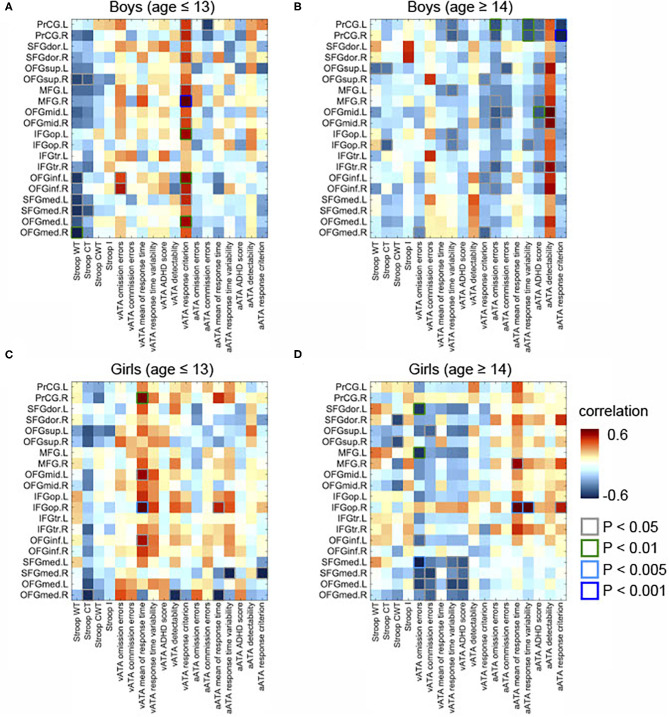
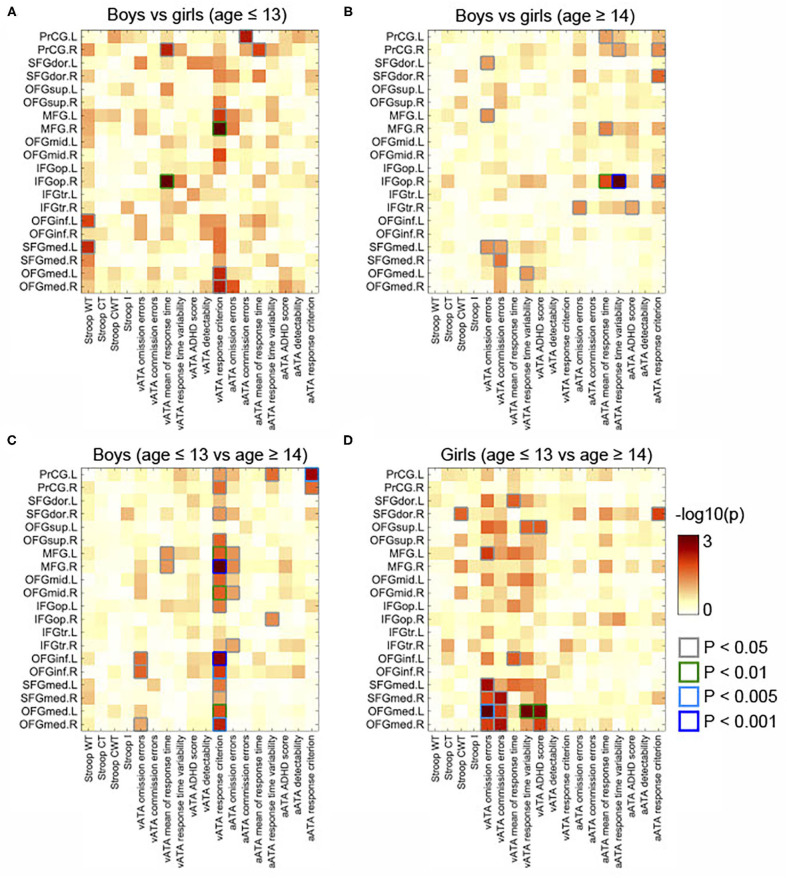
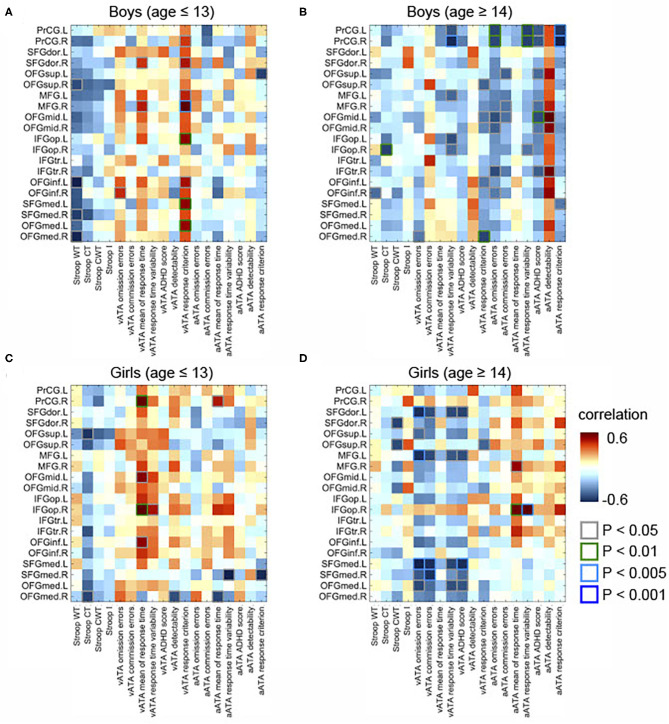
During late childhood and adolescence, the frontal lobe undergoes critical developmental changes, affecting a wide range of executive functions significantly. Conversely, abnormality in the maturation of the frontal lobe during this period may result in a limited ability to effectively use various executive functions. However, at present, it is still unclear how the structural development of the frontal lobe is associated with different aspects of executive functions during this developmental period. To fill the gap in evidence, we aimed to elucidate gray matter volume (GMV) in the frontal lobe and its relationship with multiple aspects of executive functions in late childhood and adolescence. We recruited our participants aged between 6 and 17 years to assess GMV in the frontal lobe and its relationship with different domains of executive functions in late childhood and adolescence. We used the voxel-based morphometry-DARTEL procedure to measure GMVs in multiple frontal sub-regions and Stroop test and Advanced Test of Attention (ATA) to measure executive functions. We then conducted partial correlation analyses and performed multiple comparisons with different age and sex groups. Overall, 123 participants took part in our study. We found that many regional GMVs in the frontal lobe were negatively correlated with ATA scores in participants in late childhood and positively correlated with ATA scores in participants in adolescence. Only a few correlations of the GMVs with Stroop test scores were significant in both age groups. Although most of our results did not survive false discovery rate (FDR) correction (i.e., FDR <0.2), considering their novelty, we discussed our results based on uncorrected -values. Our findings indicate that the frontal sub-regions that were involved in attentional networks may significantly improve during late childhood and become stabilized later in adolescence. Moreover, our findings with the Stroop test may also present the possibility of the later maturation of higher-order executive functioning skills. Although our findings were based on uncorrected -values, the novelty of our findings may provide better insights into elucidating the maturation of the frontal lobe and its relationship with the development of attention networks in late childhood and adolescence.
在儿童晚期和青少年期,额叶经历关键的发育变化,对广泛的执行功能产生显著影响。相反,这一时期额叶成熟异常可能导致有效运用各种执行功能的能力受限。然而,目前尚不清楚在此发育阶段额叶的结构发育如何与执行功能的不同方面相关联。为填补证据空白,我们旨在阐明儿童晚期和青少年期额叶的灰质体积(GMV)及其与执行功能多个方面的关系。我们招募了6至17岁的参与者,以评估额叶的GMV及其与儿童晚期和青少年期执行功能不同领域的关系。我们使用基于体素的形态测量-DARTEL程序来测量多个额叶亚区域的GMV,并使用Stroop测试和注意力高级测试(ATA)来测量执行功能。然后我们进行了偏相关分析,并对不同年龄和性别组进行了多重比较。总体而言,123名参与者参与了我们的研究。我们发现,额叶的许多区域GMV与儿童晚期参与者的ATA分数呈负相关,与青少年参与者的ATA分数呈正相关。在两个年龄组中,GMV与Stroop测试分数的相关性仅有少数显著。尽管我们的大多数结果未通过错误发现率(FDR)校正(即FDR<0.2),但考虑到其新颖性,我们基于未校正的p值讨论了我们的结果。我们的研究结果表明,参与注意力网络的额叶亚区域在儿童晚期可能会显著改善,并在青少年后期趋于稳定。此外,我们在Stroop测试中的发现也可能表明高阶执行功能技能较晚成熟的可能性。尽管我们的发现基于未校正的p值,但我们发现的新颖性可能为阐明额叶成熟及其与儿童晚期和青少年期注意力网络发育的关系提供更好的见解。