Ianni Aldo, Rossi Nicola
Laboratori Nazionali del Gran Sasso - INFN, Via Acitelli 22, 67100 Assergi, Italy.
Eur Phys J Plus. 2020;135(11):885. doi: 10.1140/epjp/s13360-020-00895-7. Epub 2020 Nov 4.
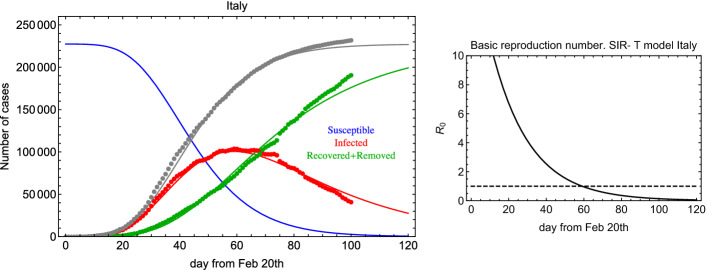
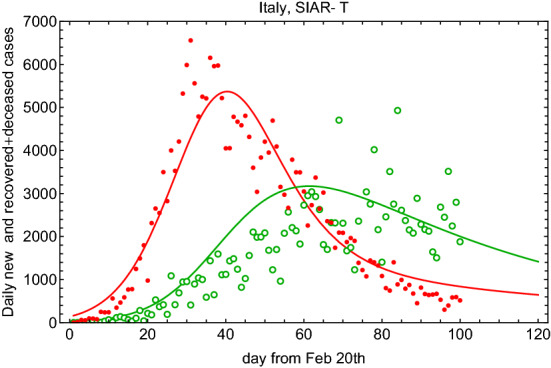
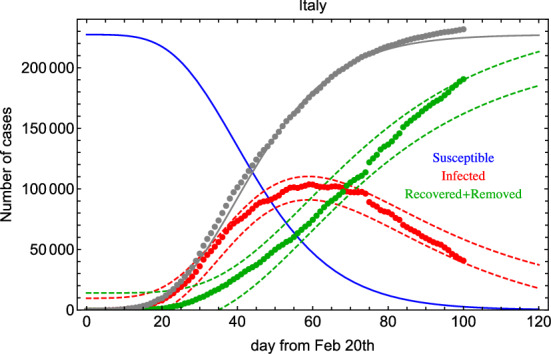
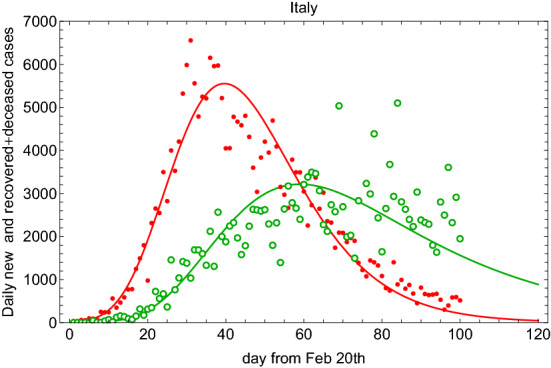
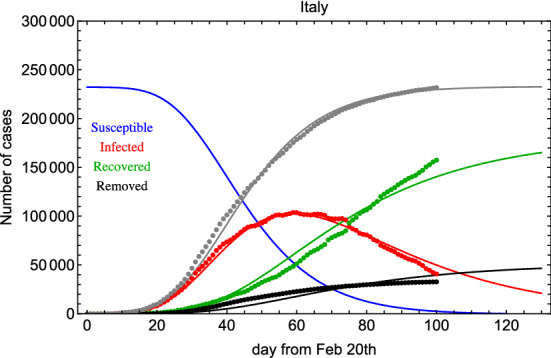
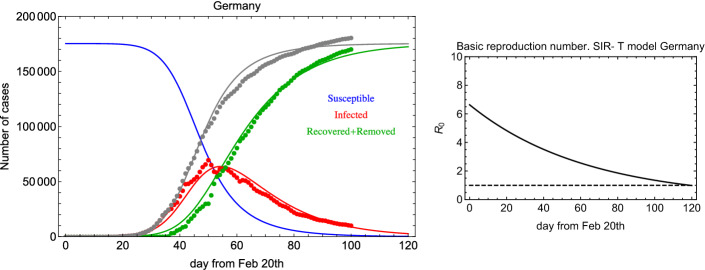
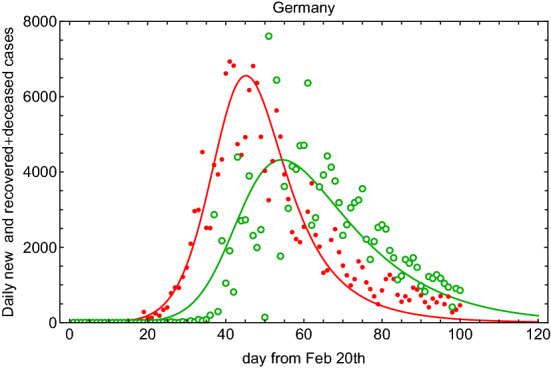
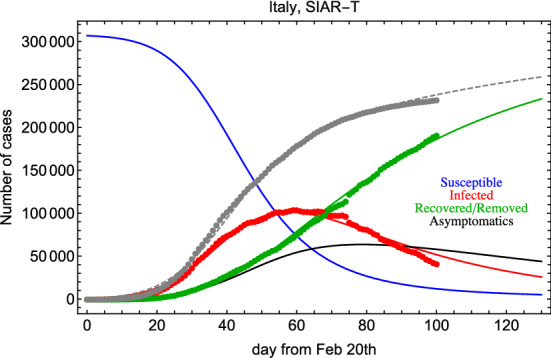
In this paper, we analyse the COVID-19 outbreak data with simple modifications of the SIR compartmental model, in order to understand the time evolution of the cases in Italy and Germany, during the first half of 2020. Even if the complexity of the pandemic cannot be easily described, we show that our models are suitable for understanding the data during the application of the social distancing and the lockdown. We compare and contrast different modifications of the SIR model showing the strengths and the weaknesses of each approach. Finally, we discuss the reliability of the model predictions for estimating the near- and far-future evolution of the outbreak.
在本文中,我们通过对SIR compartmental模型进行简单修改来分析新冠疫情数据,以便了解2020年上半年意大利和德国病例的时间演变情况。尽管疫情的复杂性难以简单描述,但我们表明,我们的模型适用于理解在实施社交距离措施和封锁期间的数据。我们比较并对比了SIR模型的不同修改方式,展示了每种方法的优缺点。最后,我们讨论了模型预测对于估计疫情近期和远期演变的可靠性。