Guirao Antonio
Department of Physics, Universidad de Murcia, Ed. CIOyN, Campus de Espinardo, 30100, Murcia, Spain.
Infect Dis Model. 2020;5:652-669. doi: 10.1016/j.idm.2020.08.010. Epub 2020 Aug 26.
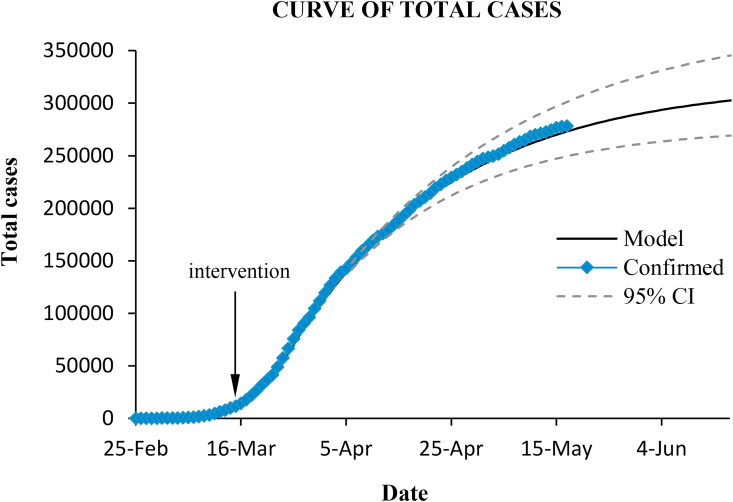
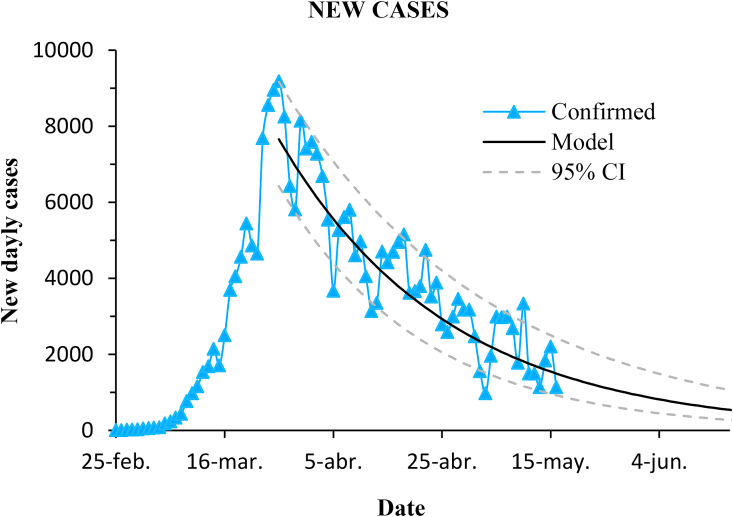
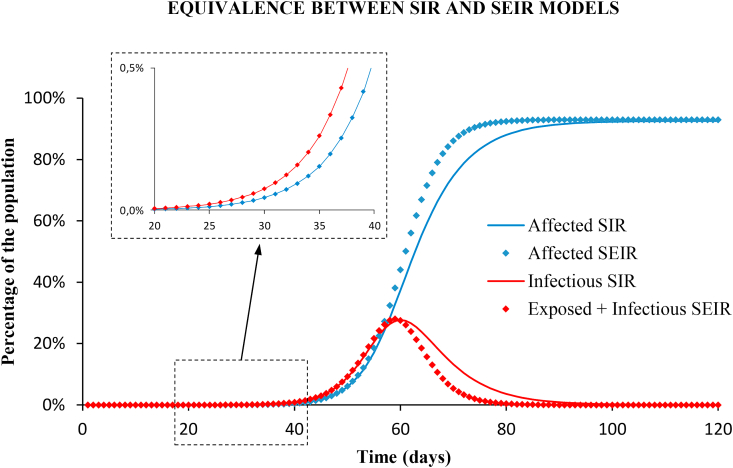
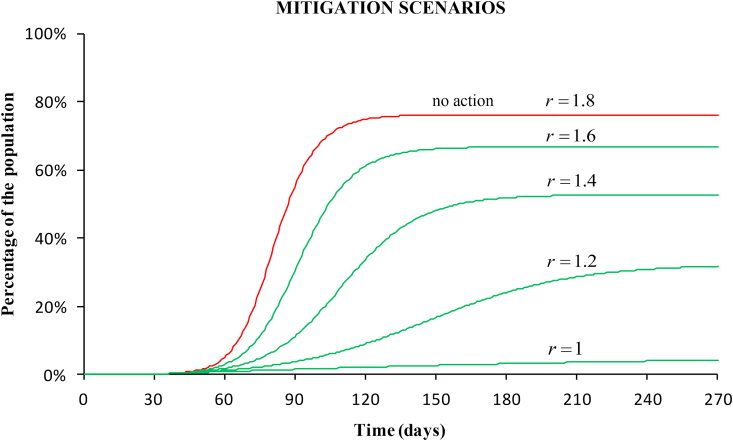
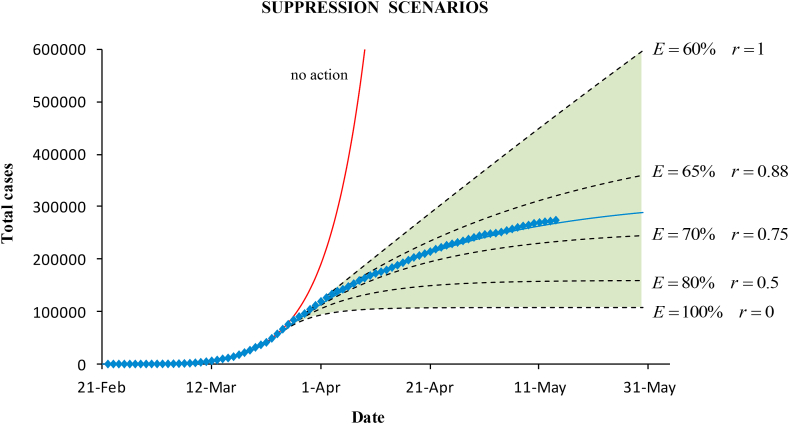
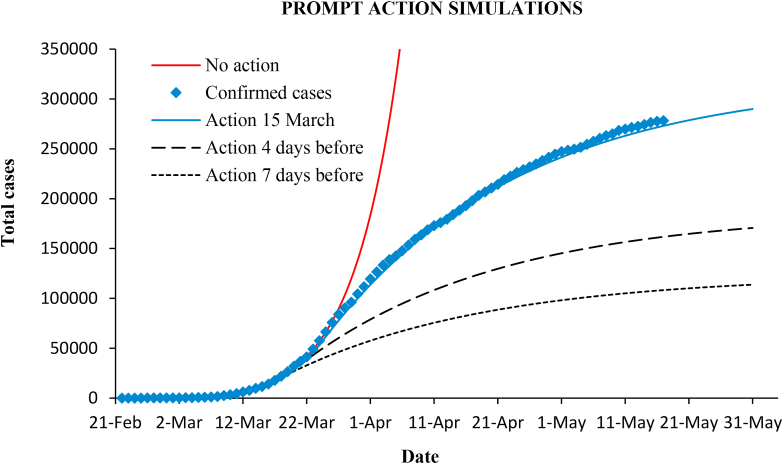
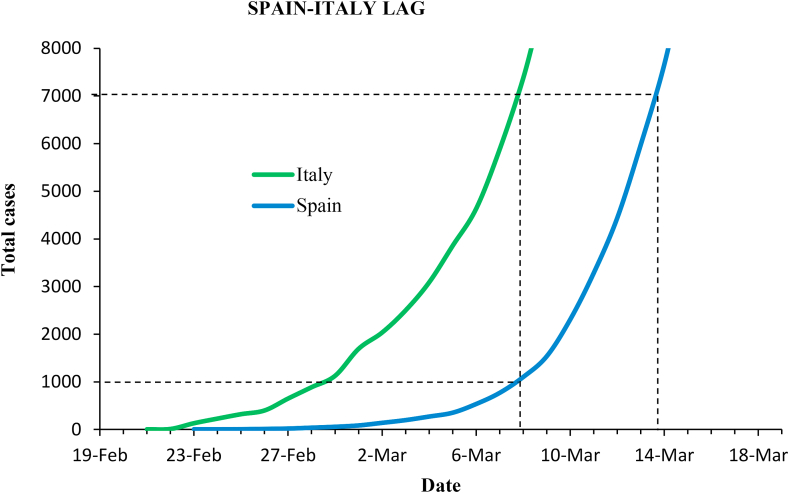
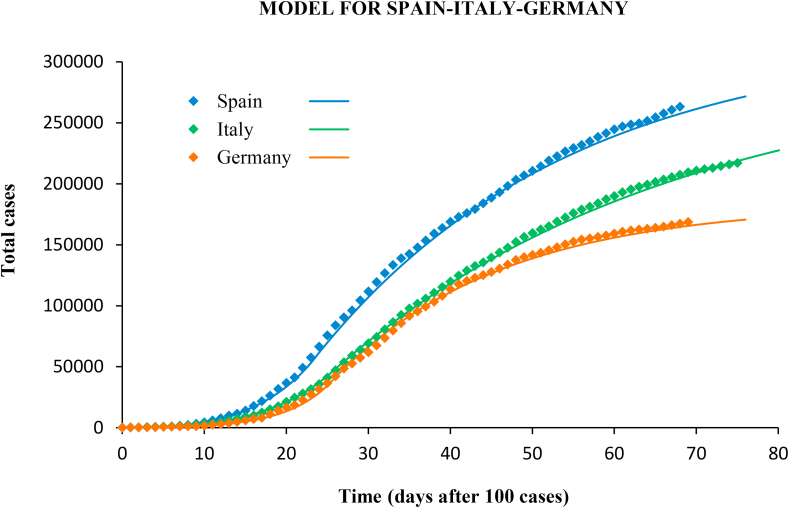
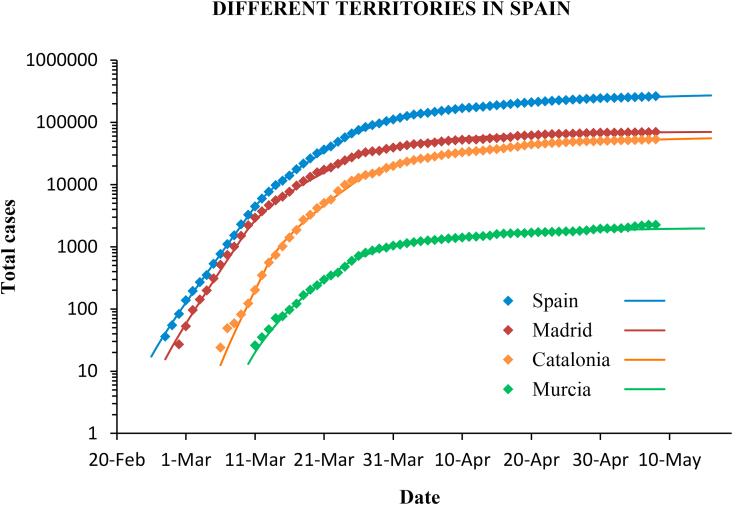
Spain is among the countries worst hit by the Covid-19 pandemic, with one of the highest rate of infections and deaths per million inhabitants. First positive was reported on late January 2020. Mid March, with 7,000 confirmed cases, nationwide lockdown was imposed. Mid May the epidemic was stabilized and government eased measures. Here we model the dynamics of the epidemic in Spain over the whole span, and study the effectiveness of control measures. The model is also applied to Italy and Germany. We propose formulas to easily estimate the size of the outbreak and the benefit of early intervention. A susceptible-infectious-recovered (SIR) model was used to simulate the epidemic. The growth and transmission rates, doubling time, and reproductive number were estimated by least-mean-square fitting of daily cases. Time-series data were obtained from official government reports. We forecasted the epidemic curve after lockdown under different effectiveness scenarios, and nowcasted the trend by moving average sliding window. Exponential growth expressions were derived. Outbreak progression remained under the early growth dynamics. The basic reproductive number in Spain was 2.5 ± 0.1 (95% CI 2.3-2.7), and the doubling time was 2.8 ± 0.1 days (95% CI 2.6-3.0). Slight variations in measures effectiveness produce a large divergence in the epidemic size. The effectiveness in Spain was 68%, above control threshold (60%). During lockdown the reproductive number dropped to an average of 0.81 ± 0.02 (95% CI 0.77-0.85). Estimated epidemic size is about 300,000 cases. A 7-days advance of measures yields a reduction to 38%. The dynamics in Spain is similar to other countries. Strong lockdown measures must be adopted if not compensated by rapid detection and isolation of patients, and even a slight relaxation would raise the reproductive number above 1. Simple calculations allow anticipating the size of the epidemic based on when measures are taken and their effectiveness. Spain acted late. Control measures must be implemented immediately in the face on an epidemic.
西班牙是受新冠疫情影响最严重的国家之一,每百万居民中的感染率和死亡率位居前列。2020年1月下旬报告了首例阳性病例。3月中旬,确诊病例达7000例,全国实施封锁。5月中旬疫情趋于稳定,政府放宽了措施。在此,我们模拟了西班牙疫情在整个期间的动态,并研究了防控措施的有效性。该模型也应用于意大利和德国。我们提出了便于估计疫情规模和早期干预效益的公式。采用易感-感染-康复(SIR)模型来模拟疫情。通过对每日病例进行最小均方拟合来估计增长和传播速率、倍增时间以及再生数。时间序列数据取自政府官方报告。我们预测了在不同有效性情景下封锁后的疫情曲线,并通过移动平均滑动窗口对趋势进行了实时预测。推导了指数增长表达式。疫情进展仍处于早期增长动态阶段。西班牙的基本再生数为2.5±0.1(95%置信区间2.3 - 2.7),倍增时间为2.8±0.1天(95%置信区间2.6 - 3.0)。措施有效性的轻微变化会导致疫情规模出现很大差异。西班牙的有效性为68%,高于控制阈值(60%)。在封锁期间,再生数降至平均0.81±0.02(95%置信区间0.77 - 0.85)。估计的疫情规模约为30万例。措施提前7天实施可使疫情规模降至38%。西班牙的疫情动态与其他国家相似。如果不能通过对患者的快速检测和隔离来弥补,就必须采取严格的封锁措施,而且即使稍有放松也会使再生数升至1以上。简单的计算能够根据采取措施的时间及其有效性来预估疫情规模。西班牙行动迟缓。面对疫情必须立即实施防控措施。